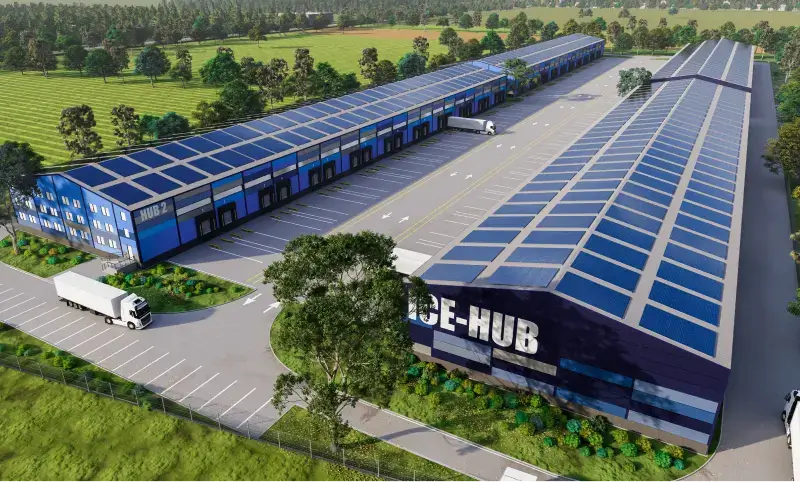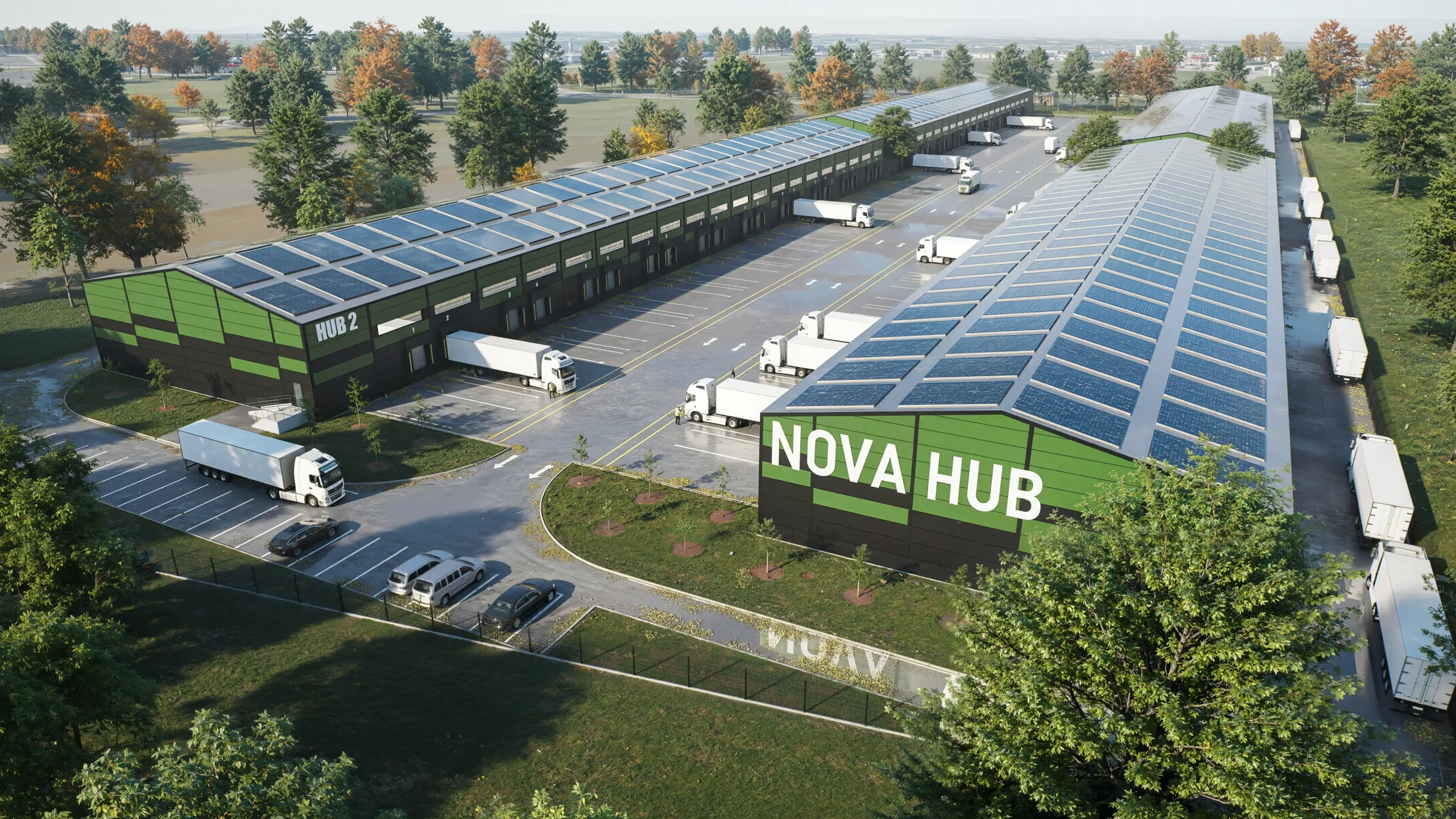


Supply chain leaders are shifting from “grid-dependent” to “resilient-by-design.” For a Class A facility, that means on-site generation sized for real operations, not just signage. At NovaHub, a 2,000 kW solar power station is engineered as a backbone for an eco-friendly warehouse complex, stabilizing electricity costs, cutting downtime risk, and supporting a modern logistics center built to European quality standards. Below is what this scale of autonomy looks like in practice and how it integrates with the NOVA HUB logistics center in Odesa.
⚡ 2,000 kW at work: what autonomy means for your warehouse
Right-sized capacity for multi-tenant logistics
A 2 MW photovoltaic system can offset a substantial share of daytime consumption across several warehouse blocks and offices. In a solar power station warehouse scenario, we plan generation to match peak operational windows, cold-chain baseloads, and office HVAC patterns. The objective is simple. Deliver predictable kWh during business-critical hours and reduce exposure to volatile tariffs.
Core design principles that protect operations
For sites like NOVA HUB, reliability is a design requirement. Redundant string inverters, selective overcurrent protection, and segmented arrays support maintenance without shutting down the field. Weatherproof cable management, comprehensive grounding, and IR thermography readiness ensure a long lifecycle. Energy metering is split per block for transparent tenant billing and ESG reporting.
Smart integration with site infrastructure
Real autonomy is not just panels on a roof. It is orchestration. Solar PV ties into low-voltage switchgear with export limitation where required, battery-ready interfaces for future storage, and SCADA visibility through the facility’s BMS. You can Monitor construction online! to see how this integration is deployed step by step.
🧭 Siting, build sequence, and Odesa-specific advantages
Location and layout planning
Odesa’s solar resource supports high-performing south-oriented arrays with low tilt shading losses. Roof structures in our modern logistics center plan are verified for additional dead load and wind uplift. Where roof utilization is capped, carport arrays add both covered parking and generation. See the facility context in the Master plan and verify access and utility tie-ins via Location and contacts.
Phased build aligned with four construction stages
NovaHub’s development advances in four phases. The 2,000 kW scope can be staged accordingly. Each stage commissions a dedicated PV block, then synchronizes to the campus main board. This approach minimizes cashflow spikes, allows early energy savings, and simplifies commissioning and testing.
Due diligence and transparency
Design packages and approvals are available in the Project documents. For investment visibility, review the site-wide development Roadmap. This is part of our reliability-first model, matched with SK GROUP professional management to keep timelines and quality on track.
🏗️ How the PV system supports the NOVA HUB logistics center
Operational continuity and cost stability
For tenants and investors, the value proposition is straightforward. Lower operating expenses, better uptime, and ESG-ready reporting. A solar-equipped NOVA HUB logistics center reduces peak procurement and provides hedge value against price shocks. When combined with demand management, the site can cap loads during tariff spikes, protecting margins.
Technical coordination and safety
Our teams coordinate structural checks, electrical selectivity studies, and fire safety clearances. Array zoning supports firefighting pathways and compliance with equipment spacing. Autonomy also means water independence and fire suppression integration at the complex level. The result is a cohesive, safe, and scalable energy layer for the entire campus.
ESG and asset positioning
Institutional buyers increasingly prefer assets that are both efficient and verifiable. With PV generation and transparent metering, NovaHub positions the campus as an eco-friendly warehouse complex. Explore the Characteristics of the “Nova Hub” logistics center and the full set of Advantages of “Nova Hub” to understand how energy autonomy strengthens the asset story.
🎯 From concept to commissioning: your path with NovaHub
Design, visualization, and stakeholder alignment
We start with consumption profiles and expansion forecasts. Then we model energy yield scenarios that match business hours and future electrification plans such as EV fleets or automation. To clarify decisions early, visit the live Visualization of the investment project. This helps align stakeholders on scope, placement, and aesthetics.
Construction quality and timelines
Speed and quality go together here. Pre-approved vendors, European-standard equipment, and QA checklists keep works on schedule. You can follow each milestone and contractor report as we Monitor construction online!. This discipline protects both the schedule and the long-term performance of your PV asset.
What you gain on day one
On commissioning, tenants receive metered, clean power that feeds directly into daily operations. Owners gain an immediate operational upgrade and a stronger market narrative. In short, the solar power station warehouse approach turns a cost center into a differentiator.
Holiday note. This season, many are shortlisting resilient assets and clean energy upgrades. If Black Friday energy savings and year-end sustainability goals are on your agenda, explore NovaHub’s solar-ready logistics campus. Visit our pages for current details and availability. No hype, just timely opportunities to lock in value.
Ready to discuss a 2,000 kW plan tailored to your operations? Connect with NovaHub today. Review the site Master plan, check the Roadmap, and dive into the Advantages of “Nova Hub” to see why reliability, modern standards, and speed of delivery set this campus apart.
How is the 2,000 kW solar system phased across NovaHub’s four construction stages?
Each phase delivers a dedicated PV block tied to the campus main board. This staged approach enables early savings, smoother commissioning, and simpler testing as new areas come online.
What reliability features are included in the solar design for NOVA HUB?
Redundant string inverters, segmented arrays, selective protection, and metering per block are included. These measures allow maintenance without full shutdown and add transparent tenant billing.
How does the PV plant integrate with future batteries or EV fleets?
Interfaces are battery-ready, with controls at the switchgear and SCADA/BMS layers. This lets the system coordinate storage or EV loads without redesigning the core electrical backbone.
Where can I verify technical characteristics and project documents?
You can review the facility’s characteristics and documents via the site sections linked in the article. The Master plan, Characteristics, and Project documents pages show the key specifications.
Can I monitor build progress for the solar integration?
Yes. NovaHub provides live oversight tools. Use the Monitor construction online page referenced in the article to track milestones and contractor updates in real time.
{
“@context”: “https://schema.org”,
“@type”: “FAQPage”,
“mainEntity”: [
{
“@type”: “Question”,
“name”: “How is the 2,000 kW solar system phased across NovaHub’s four construction stages?”,
“acceptedAnswer”: {
“@type”: “Answer”,
“text”: “Each phase delivers a dedicated PV block tied to the campus main board. This staged approach enables early savings, smoother commissioning, and simpler testing as new areas come online.”
}
},
{
“@type”: “Question”,
“name”: “What reliability features are included in the solar design for NOVA HUB?”,
“acceptedAnswer”: {
“@type”: “Answer”,
“text”: “Redundant string inverters, segmented arrays, selective protection, and metering per block are included. These measures allow maintenance without full shutdown and add transparent tenant billing.”
}
},
{
“@type”: “Question”,
“name”: “How does the PV plant integrate with future batteries or EV fleets?”,
“acceptedAnswer”: {
“@type”: “Answer”,
“text”: “Interfaces are battery-ready, with controls at the switchgear and SCADA/BMS layers. This lets the system coordinate storage or EV loads without redesigning the core electrical backbone.”
}
},
{
“@type”: “Question”,
“name”: “Where can I verify technical characteristics and project documents?”,
“acceptedAnswer”: {
“@type”: “Answer”,
“text”: “You can review the facility’s characteristics and documents via the site sections linked in the article. The Master plan, Characteristics, and Project documents pages show the key specifications.”
}
},
{
“@type”: “Question”,
“name”: “Can I monitor build progress for the solar integration?”,
“acceptedAnswer”: {
“@type”: “Answer”,
“text”: “Yes. NovaHub provides live oversight tools. Use the Monitor construction online page referenced in the article to track milestones and contractor updates in real time.”
}
}
]
}
{
“@context”: “https://schema.org”,
“@type”: “Article”,
“headline”: “Solar Power Station 2000 kW: NOVA HUB Autonomous Energy”,
“description”: “Discover how NovaHub’s 2,000 kW solar power station adds autonomy, lowers energy risk, and boosts ESG for a modern logistics center in Odesa.”,
“datePublished”: “2025-11-21T11:52:22.000000Z”,
“author”: {
“@type”: “Organization”,
“name”: “NovaHub”
}
}