

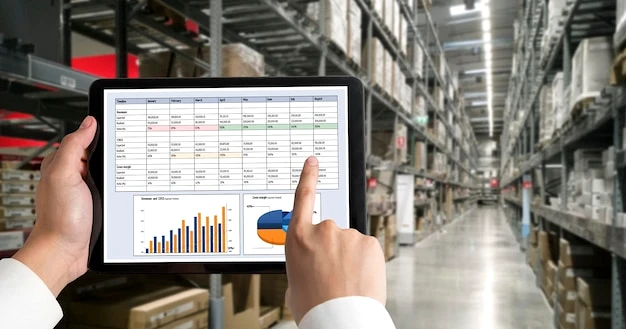
Model total costs, realistic NOI, and lease-up, then evaluate payback, yield, NPV, and IRR. Use conservative scenarios and modern, well-located warehouses to shorten payback and stabilize returns in Ukraine.
Warehouse assets in Ukraine have become one of the most discussed segments of commercial real estate. Manufacturers, e‑commerce players, and logistics operators are rethinking their networks, while investors are looking for resilient cash flow and inflation protection. Yet many projects fail to meet expectations because the payback math was optimistic or incomplete. Understanding how to calculate окупність складських інвестицій with realistic local assumptions is now a core skill for any serious investor or operator.
This article explains how to evaluate the profitability of a warehouse complex in Ukraine, from basic ROI and payback formulas to more advanced approaches like discounted cash flow and scenario analysis. We will look at local market specifics, typical cost and revenue drivers, common mistakes, and practical tips. You will also see worked examples and learn where a partner such as NovaHub, with modern European-standard logistics facilities, can reduce risk and shorten time to positive returns.
📦 What drives the profitability of a warehouse complex in Ukraine?
Key revenue sources for a warehouse project
For most investors, the main driver of profitability is rental income. In Ukraine this usually comes from long-term leases with logistics operators, retailers, or manufacturers who need reliable storage and distribution space. Modern class A and B+ facilities in and around Kyiv, Lviv, and Odesa typically command a premium compared with older stock because they reduce tenants’ operating costs.
Additional revenue can come from value-added services such as cross-docking, light assembly, or order fulfillment, especially when the landlord also operates the facility. Some projects also generate income from parking, office blocks on the same site, or rooftop solar power. When calculating expected доходи від інвестування в нерухомість, each of these streams should be estimated separately and then combined into a conservative forecast.
Core cost components that impact returns
On the cost side, the biggest items are land acquisition, construction, and fit-out. For new developments, site preparation, engineering networks, and road access can easily add 10–25 percent to the headline construction budget, particularly for large greenfield projects. Modern insulation, fire protection, and floor specifications that meet European standards are not cheap but they strongly influence both achievable rent and operating efficiency.
Operating expenses include maintenance, utilities, security, insurance, and property management. Even if tenants reimburse part of these, an investor should model them in detail, because empty space and indexation caps can leave some costs uncovered. Financing costs and taxes complete the picture, so a realistic capital structure and local tax assumptions are essential when evaluating інвестиції у логістику в Україні.
Market and regulatory factors in Ukraine
Location near major transport corridors, customs terminals, and large consumer centers strongly affects achievable occupancy and rent. Areas around Kyiv ring roads, Lviv’s logistics clusters, and key ports often provide faster lease-up and higher base rents, though land costs are higher. Political and currency risks remain relevant in Ukraine, so international investors typically demand higher returns than in Western Europe.
Local building codes, fire safety rules, and environmental requirements influence both timelines and costs. Working with developers that already build to high European standards, such as NovaHub, can reduce permitting risks and help secure international-grade tenants who value safety and reliability.
📊 Which financial metrics should you use to measure payback?
Simple payback period
The basic payback period shows how many years it takes for cumulative net cash inflows to cover the initial investment. It is calculated by dividing the total project cost by the average annual net cash flow after operating expenses but before loan principal repayment. Many local investors still use this metric because it is intuitive and easy to explain.
Although simple payback is useful for a quick screening, it ignores the time value of money and cash flows after payback. In a volatile market this can be misleading, so it should always be complemented with more advanced indicators when you analyze окупність складських інвестицій.
Return on investment and cash-on-cash return
Return on investment (ROI) typically compares average annual profit to the total invested capital. For an income-producing warehouse, a practical approach is to use net operating income (NOI) divided by total development cost to approximate the unlevered yield. This is often benchmarked against market cap rates for comparable assets near Kyiv or other regional hubs.
Equity investors also track cash-on-cash return. This measures annual pre-tax cash flow to the cash equity invested, after interest payments. Leveraged projects can show a higher cash-on-cash return than unlevered ROI, but they also carry higher risk if rents or occupancy fall below plan.
Net present value (NPV) and internal rate of return (IRR)
More sophisticated investors rely on discounted cash flow (DCF) models to capture the time value of money and varying cash flows over the life of the project. Net present value is the difference between the discounted value of expected cash inflows and the total initial and replacement investments. A positive NPV at your chosen discount rate indicates that the project creates value.
The internal rate of return is the discount rate at which NPV equals zero. For logistics projects in Ukraine, target levered IRRs commonly range from the mid-teens upward, depending on risk and development phase. In short, combining payback, ROI, NPV, and IRR gives a far more complete view of the profitability of a warehouse complex than any single metric.
🧮 How to build a simple payback model for a Ukrainian warehouse
Step 1. Define total project cost
Start by listing all investment items. These usually include land, construction works, engineering networks, internal roads, office space, warehouse fit-out, professional fees, permits, and contingencies. For example, suppose you plan a 20,000 square meter class A distribution center near Lviv.
If land costs 50 USD per square meter of plot, construction and fit-out cost 450 USD per square meter of gross leasable area, and additional infrastructure adds 10 percent, your total capital expenditure might look like the data in the table below.
| Cost item | Assumption | Estimated amount (USD) |
|---|---|---|
| Land purchase | 40,000 m² plot at 50 USD/m² | 2,000,000 |
| Construction & fit-out | 20,000 m² at 450 USD/m² | 9,000,000 |
| Infrastructure & contingencies | 10% of construction | 900,000 |
| Professional fees & permits | Approx. 7% of construction | 630,000 |
| Total project cost | 12,530,000 |
Step 2. Estimate annual net operating income
Next, estimate your NOI by calculating rental income and subtracting operating expenses. Assume you can lease the entire space at an average rent of 6.5 USD per square meter per month, with 95 percent occupancy. That implies gross annual rental income of roughly 1.48 million USD.
If operating expenses that are not fully recoverable from tenants consume 20 percent of gross income, NOI would be about 1.18 million USD per year. This is the key input for both yield and payback calculations before financing.
Step 3. Calculate yield, ROI, and payback period
The unlevered yield is NOI divided by total project cost. In this example, 1.18 million divided by 12.53 million equals about 9.4 percent. Many investors compare this yield to market expectations for інвестиції у логістику в Україні with similar risk profiles.
The simple payback period is total project cost divided by annual NOI. In the example, the payback period is around 10.6 years. Even though this does not reflect financing or exit value, it offers a quick sense of the time horizon to recover your capital.
📉 Pros and cons of investing in modern Ukrainian warehouses
Main advantages of warehouse logistics investments
- Resilient demand: Growth in e‑commerce, FMCG, and manufacturing supports long-term demand for modern logistics space in hubs like Kyiv, Lviv, and Dnipro.
- Attractive yields: Initial yields are often higher than in Western Europe, which can enhance доходи від інвестування в нерухомість for investors comfortable with Ukrainian risk.
- Inflation protection: Index-linked leases and the ability to re-lease at higher rents help protect real returns in an inflationary environment.
- Value creation potential: Upgrading old stock or developing new class A complexes offers room for rental growth and capital appreciation.
- Strategic importance: Warehouses support supply chains, so high-quality assets are often prioritized by tenants even in uncertain periods.
Key limitations and risks to consider
- Political and security risk: Geopolitical uncertainty in Ukraine raises required returns and can affect financing conditions.
- Currency volatility: Exchange rate movements between hryvnia and hard currencies impact both costs and effective returns for foreign investors.
- Lease-up risk: Overestimating the speed of reaching stabilized occupancy can significantly extend payback and reduce ROI.
- Regulatory complexity: Permitting, land use, and construction approvals may be slower than expected, particularly without experienced local partners.
- Construction cost variability: Material and labor prices can change quickly, so weak budgets may erode the anticipated profitability of a warehouse complex.
🏗️ How NovaHub’s development standards influence returns
Impact of modern European-standard design
High-quality building envelopes, efficient insulation, and durable industrial floors increase upfront cost but often reduce long-term operating expenses for tenants. Facilities that meet or exceed European standards typically achieve stronger tenant demand and lower vacancy, particularly among international logistics operators and large retailers.
NovaHub focuses on modern layouts, optimal column grids, and sufficient clear height, which improve storage density and automation potential. In practice this means tenants can operate more efficiently, so they are prepared to pay a premium rent and sign longer leases, which improves cash flow stability for investors.
Reliability and speed of delivery
Time overruns during construction directly affect окупність складських інвестицій because no rent is received while capital is tied up. Developers who consistently deliver on schedule shorten the pre-income period and bring forward payback. Reliable project management is therefore an economic advantage, not just an operational feature.
NovaHub emphasizes both rapid build times and controlled quality. By using standardized design modules, experienced contractors, and clear quality control procedures, the company helps investors minimize delay penalties and unexpected cost overruns.
Long-term asset performance and tenant retention
Investors sometimes underestimate how much tenant churn impacts returns. Every vacancy period reduces cash flow and may require leasing incentives. Warehouses with robust engineering systems, comfortable office blocks, and well-planned yards usually retain tenants for longer lease cycles.
When a logistics complex is built with high reliability and modern specifications, tenants see it as an integral part of their network rather than a temporary solution. This dynamic often translates into lower capex for re-leasing and more predictable payback periods for owners.
📚 Practical examples of warehouse investment payback
Example 1. Stabilized income asset near Kyiv
Consider an investor who acquires a fully leased 15,000 square meter class A warehouse on the outskirts of Kyiv. The property generates 1.1 million USD of NOI per year and is purchased for 11 million USD including transaction costs. The initial yield is therefore 10 percent.
The buyer finances 50 percent of the purchase with a bank loan at 8 percent interest, amortizing over 15 years. After interest and principal payments, annual cash flow to equity is around 450,000 USD, which equates to a cash-on-cash return of roughly 8.2 percent on the 5.5 million USD equity contribution. If rents index modestly and the exit cap rate remains stable, the projected levered IRR over 10 years could be in the mid-teens.
Example 2. New development in Lviv logistics cluster
A developer plans a 25,000 square meter logistics complex in Lviv region with an expected total cost of 14 million USD. Based on current leasing discussions, the developer expects stabilized NOI of 1.35 million USD by year four. Construction and lease-up are forecast to take three years in total.
A simplified DCF model shows negative cash flows in years zero to two, partial rental income in year three, and full income from year four onward. Using a 14 percent discount rate, the NPV is slightly positive, and IRR is about 15.5 percent. In summary, this scenario is acceptable but sensitive to changes in construction cost and lease-up speed, which is why the developer partners with NovaHub on design and project management to protect margins.
Example 3. Redevelopment of outdated warehouse in Odesa
An investor acquires an old 10,000 square meter warehouse near Odesa at a distressed price of 2 million USD. Renovation and partial reconstruction are budgeted at another 3 million USD. Post-upgrade, the facility is expected to achieve NOI of 650,000 USD per year if repositioned as a cross-dock terminal serving regional distribution.
On a total cost of 5 million USD, this corresponds to a 13 percent yield. However, the project involves permitting risk and potential structural surprises during renovation. Careful due diligence and conservative contingencies are required to keep the payback period within the targeted 8–9 years.

⚠️ Common mistakes when calculating logistics investment returns
Ignoring realistic vacancy and lease-up periods
Many spreadsheets assume full occupancy from day one or unrealistically rapid lease-up. In real Ukrainian markets, even high-quality assets can take 12–24 months to reach stable occupancy, especially outside the largest hubs. Ignoring this reduces the apparent payback period on paper but leads to disappointment in practice.
To avoid this error, build separate lease-up assumptions for each tenant group, and test what happens if occupancy reaches the target one year later than planned. If the project only works under optimistic timing, it may be too risky.
Underestimating capital expenditure and contingencies
Investors often assume that construction and fit-out costs follow the initial budget exactly. In reality, changes in building codes, material prices, or tenant requirements can raise capex by 10 percent or more. This is particularly true for projects that do not use standardized, proven designs.
Partnering with experienced developers such as NovaHub, who apply modern planning and cost control practices, can reduce this risk. It is also good practice to add a contingency line of at least 5–10 percent of total construction cost in your financial model.
Overlooking operating expense escalation
Another frequent mistake is keeping operating expenses flat in nominal terms while allowing rents to grow with inflation or indexation. In practice, energy, labor, and maintenance costs tend to rise as well. If this is ignored, NOI and returns are overstated.
Investors should model separate inflation paths for rent and key cost items and check how sensitive payback and IRR are to different scenarios. In some cases, implementing energy-efficient design from the start improves both tenant satisfaction and long-term expense ratios.
Using an inappropriate discount rate
Choosing a discount rate that is too low can make almost any project look attractive on paper. Yet Ukrainian logistics projects carry specific country, market, and project risks that must be reflected in the required return. Using cap rates from more mature European markets without adjustments is a common pitfall.
Many professional investors build discount rates from risk-free yields plus premiums for country, asset type, and project phase. This approach results in more realistic NPVs and IRRs and helps screen out marginal schemes early.
🧠 Practical tips to improve payback and manage risk
Optimize design and specification from the start
Careful early design decisions can significantly affect both capex and long-term income. Choosing the right clear height, column spacing, loading dock ratio, and office proportion makes the facility attractive to a broader pool of tenants. Practical, efficient layouts usually command better market rents and lower vacancy.
Working with a developer like NovaHub that already builds to modern European standards shortcuts many trial-and-error cycles. Their experience with what tenants actually use and value can prevent costly over- or under-specification.
Secure anchor tenants early
Pre-leasing a significant share of the space to reputable anchor tenants improves financing conditions and reduces lease-up risk. It also helps define technical requirements more precisely, which decreases change orders during construction. For investors, early tenant commitments provide clearer visibility on future cash flows.
In many Ukrainian projects, logistics operators or large retailers are prepared to sign long-term leases if they trust the developer’s reliability. Track record in timely delivery and quality, which NovaHub emphasizes, becomes a tangible financial advantage in these negotiations.
Use scenario and sensitivity analysis
Rather than modeling a single future, build at least three scenarios: conservative, base, and optimistic. Vary key inputs such as rent level, occupancy, construction cost, and financing terms. Then compare payback period, ROI, and IRR in each scenario to see how robust the investment case is.
It is also helpful to test one variable at a time, for example by reducing rent by 0.5 USD per square meter or delaying full occupancy by one year. This reveals which factors your project is most sensitive to and where additional risk mitigation is needed.
Plan for professional asset and property management
A modern logistics complex is not a passive investment. Active management is needed to maintain technical systems, handle tenant issues, and keep occupancy high. Professional management can often increase NOI through better service charge recovery and timely maintenance.
Some investors choose to outsource this function to specialized providers or to partner with developers who offer integrated management solutions. While this adds a cost line, it often pays for itself through higher net income and stronger tenant retention.
International research consistently shows that well-managed logistics properties with modern specifications outperform older, poorly maintained warehouses in both occupancy and long-term total return.
Global Logistics Real Estate Outlook, 2023
🧾 Comparing different warehouse investment profiles
Yield and risk profiles by asset type
Not all logistics investments in Ukraine have the same risk and return profile. Core stabilized assets with long leases typically offer lower initial yields but lower risk, while speculative developments and redevelopments promise higher returns with more uncertainty. The table below offers a simplified comparison.
| Asset type | Typical initial yield | Risk level | Typical payback horizon |
|---|---|---|---|
| Stabilized class A warehouse (Kyiv) | 8–10% | Lower | 9–12 years |
| New development (regional hub) | Projected 10–13% | Medium | 10–14 years |
| Redevelopment of older stock | Projected 12–15% | Higher | 8–11 years |
How location affects returns and окупність
Prime locations near major highways and urban centers can justify lower yields because of higher liquidity and lower vacancy risk. Secondary locations may require a premium yield to compensate for longer lease-up and less diversified tenant demand. Investors should align location choice with their required returns and risk tolerance.
NovaHub typically develops in strategically positioned logistics corridors where transport accessibility, labor availability, and infrastructure support both national and cross-border flows. These factors help support consistent warehouse occupancy and rental levels over the long term.
Balancing debt and equity
Using moderate leverage can enhance equity returns if the asset yield exceeds the cost of debt. However, too much leverage increases the risk of breaching covenants if cash flows fall or interest rates rise. Balancing debt and equity is therefore central to sustainable доходи від інвестування в нерухомість in logistics.
Investors should test their models under stressed conditions, such as higher interest rates or temporary vacancy, to ensure they can still service debt comfortably. Conservative leverage and stable tenants can make the payback trajectory much more predictable.
✅ Conclusion: Turning warehouse math into reliable returns
Evaluating warehouse and logistics projects in Ukraine requires more than a quick rent-per-meter check. By understanding the local cost structure, realistic lease-up dynamics, and the full set of financial metrics from simple payback to IRR, investors can make more confident decisions and avoid common traps. Robust design, disciplined cost control, and professional management significantly improve both the speed and stability of returns.
Reliable partners who build to modern European standards, such as NovaHub, help reduce development risk and attract high-quality tenants, which shortens the payback period and supports long-term asset performance. As you plan your next logistics or warehouse investment, build a transparent model, stress-test your assumptions, and choose assets where design, location, and management quality work together in your favor.
If you are preparing your portfolio for the upcoming New Year season and looking to position your logistics network for the next cycle, explore NovaHub’s modern warehouse and logistics complexes. A well-timed upgrade to efficient, reliable facilities can turn seasonal demand peaks into long-term growth. Visit our website to discover current projects and see how the right warehouse today can power your results throughout the next year.
— Global Logistics Real Estate Outlook (2023)
— Statista Research on E‑commerce and Warehousing (2024)
— Industry Report by McKinsey on Emerging European Logistics (2023)
— Ukrainian Commercial Real Estate Market Overview, Local Consultancy (2024)
FAQ
What is the typical simple payback period for a new warehouse in Ukraine?
In the example of a 20,000 square meter class A warehouse near Lviv, the simple payback period was about 10.6 years based on an unlevered yield of around 9.4 percent. In practice, payback for new developments often ranges from roughly 10 to 14 years depending on location, rents, and construction costs.
Which financial metrics should I use beyond simple payback?
You should combine simple payback with ROI or yield, cash-on-cash return, net present value, and internal rate of return. Together these metrics capture both the time it takes to recover capital and the overall profitability of a warehouse complex over its full life cycle.
How do construction and fit-out costs affect окупність складських інвестицій?
Construction and fit-out are usually the largest components of total project cost, as shown in the 12.53 million USD example for a 20,000 square meter facility. Increases in these costs without corresponding rent growth can significantly extend the payback period and reduce yields, so contingencies and cost control are critical.
Why are modern European-standard warehouses more profitable?
Modern facilities with high-quality insulation, floors, and layouts tend to attract stronger tenants, command higher rents, and experience lower vacancy. Developers like NovaHub that build to European standards help improve operating efficiency for tenants, which supports rental premiums and more stable cash flows for investors.
How do I factor vacancy and lease-up into my payback calculation?
Instead of assuming full occupancy from day one, model a ramp-up over 12–24 months and test slower scenarios. Then calculate payback based on the resulting annual cash flows, as this better reflects real Ukrainian market conditions and reduces the risk of overestimating returns.
What are the main risks that can delay warehouse investment payback?
Key risks include political and security issues, currency volatility, slower lease-up, construction cost overruns, and regulatory delays. Common modeling mistakes like underestimating operating expenses or using an overly low discount rate also create a false impression of fast окупність.
How does partnering with NovaHub influence my returns?
NovaHub focuses on reliable delivery, fast construction timelines, and modern European-standard designs, which help reduce delay and specification risks. This improves the likelihood of attracting quality tenants quickly, stabilizing income, and achieving the targeted payback and IRR.
Is redevelopment of older warehouses more profitable than building new?
Redevelopments can offer higher projected yields, such as the 13 percent example from Odesa, but they carry additional permitting and technical risks. The choice depends on your risk appetite and expertise, so both options should be modeled with conservative assumptions and sensitivity analysis.
What role does location play in warehouse investment performance?
Prime locations near highways and major cities like Kyiv and Lviv usually deliver faster lease-up, lower vacancy, and more predictable rents, which support shorter payback horizons. Secondary locations may require higher yields to compensate for greater demand uncertainty and longer stabilization periods.