


Food in Ukraine must be stored below 5°C or above 60°C, with freezers at or below -18°C and minimal time in the 4–60°C danger zone. Modern temperature-controlled warehouses like NovaHub’s complexes enable safe, efficient cold chain logistics.
Food manufacturers and retailers in Ukraine are under increasing pressure to keep products safe, reduce losses, and comply with tightening regulations. At the same time, consumers expect fresh, high-quality food delivered faster than ever, regardless of season or region. In this context, a temperature-controlled warehouse is no longer a “nice to have” but a critical element of safe and efficient food logistics.
This article explains how a modern temperature regime should be organized in a food warehouse in Ukraine, what temperature ranges different product groups require, and how cold chain logistics works from port to retail shelf. We will also review design principles for climate-controlled storage, common mistakes, practical tips for operators, and how projects like NovaHub’s innovative logistics complex near Odesa set a new standard for the market.
Along the way you will see realistic scenarios, pros and cons of specialized storage, and clear recommendations that help you plan or upgrade your own facility so it matches current food safety expectations and business goals.
❄️ What does temperature regime mean for food warehouses in Ukraine?
Legal and practical basics of food temperature control
In simple terms, a temperature regime is a defined range within which food must be stored, processed, or transported to remain safe and of acceptable quality. For a warehouse with temperature control in Ukraine, this regime is central to both regulatory compliance and commercial success.
Cold food must be held at 5°C or below, while hot food must remain at 60°C or above. The temperature danger zone for food lies between 4°C and 60°C, where bacteria can grow rapidly and increase the risk of foodborne illness. Warehouses that work with food products must design their infrastructure, equipment, and processes so that products avoid this danger zone as consistently as possible.
Main temperature zones in food logistics
In practice, most food warehouses operate several distinct temperature areas. Each supports specific product groups and logistics operations, from receiving to dispatch.
- Ambient zone: For shelf-stable products that do not require refrigeration but still benefit from controlled humidity and protection from extreme heat or freezing.
- Chilled zone: Typically between 0°C and 4°C. This range corresponds to recommended refrigerator temperatures and is used for dairy, chilled meat, and ready-to-eat foods.
- Frozen zone: At or below -18°C. This range is required for frozen products, including frozen fish and seafood, to keep them safe and maintain quality.
- Special regimes: Some products need narrow temperature windows close to the melting point of ice or specific humidity levels, for example thawed seafood or certain premium confectionery.
Why the danger zone matters for warehouse design
Because the danger zone lies between 4°C and 60°C, warehouse operations must be organized to minimize the time food spends in that range. According to food safety guidance, cooked food that needs to be cooled should reach 21°C within two hours, and then 5°C within four hours.
This means that temperature-controlled docks, fast transfer between zones, sufficient refrigeration capacity, and well-planned workflows are not optional. They are part of the core design specification for any professional склад для харчових продуктів that wants to serve demanding retailers and international brands.
🧊 Which temperature ranges apply to the main food categories?
Chilled foods: dairy, meat, and ready-to-eat products
Refrigerated foods are particularly sensitive. Refrigerators in a warehouse or distribution center should maintain between 0°C and 4°C. This range slows bacterial growth while keeping products attractive in terms of texture and taste.
As a rule of thumb, chilled zones must be stable enough that door openings, loading activities, and defrost cycles do not push temperatures into the danger zone for long periods. Continuous monitoring and rapid corrective action are essential, especially during peak seasons when turnover is high.
Frozen foods and seafood requirements
For frozen products, the key figure is -18°C. Freezers must keep products at or below this temperature. Frozen fish products are explicitly required to be stored at temperatures not exceeding -18°C. Deviations above that point, especially if repeated, damage product quality and may create safety risks.
Thawed seafood products form a separate category. They should be kept at temperatures close to the melting point of ice. In practice this means just above 0°C in special chillers or ice-packed containers that are handled inside a controlled chilled zone.
Hot holding and prepared foods
For food that must be held hot, for example in central kitchens linked to retail, the minimum safe temperature is 60°C. Below this point products quickly enter the danger zone and become risky to consume.
Some warehouses and logistics complexes combine production or kitchen units with storage. In these cases, the building layout and airflows must ensure that hot areas do not negatively affect adjacent chilled or frozen zones.
Comparison of temperature regimes by product group
The table below summarizes typical storage temperatures based on widely accepted safety recommendations.
| Product group | Recommended storage temperature | Key safety notes |
|---|---|---|
| Ambient packaged foods | 10°C to 25°C | Protect from humidity and extreme heat or freezing. |
| Chilled dairy and meat | 0°C to 4°C | Cold food must be held at 5°C or below. |
| Frozen foods (incl. fish) | At or below -18°C | Frozen fish products must not exceed -18°C. |
| Thawed seafood | Around 0°C, near melting ice point | Very sensitive to temperature fluctuations. |
| Hot held ready meals | 60°C or hotter | Hot food must be 60°C or above to stay safe. |
📦 How should a climate-controlled warehouse be designed for food?
Zoning, insulation, and building envelope
A modern клімат-контрольований склад for food relies on careful separation of zones. Insulated panels, high-performance doors, and tight building envelopes limit heat exchange between cold rooms and ambient areas.
Loading docks for chilled or frozen goods are ideally temperature-controlled themselves, which reduces heat shock when doors are open. Dock shelters, air curtains, and rapid-roll doors help keep stable temperatures even during intense loading operations.
Refrigeration equipment and capacity planning
Cold rooms and freezers must be sized not only for static storage, but also for peak loads during seasonal campaigns or harvest periods. Systems should comfortably maintain target temperatures even on the hottest summer days in southern regions of Ukraine.
Redundancy is important. Backup compressors or parallel systems reduce the risk of losing control if one unit fails. For large facilities it is good practice to segment refrigeration so that a malfunction in one chamber does not compromise the entire complex.
Monitoring, alarms, and documentation
Temperature monitoring is one of the most critical elements of a склад з контролем температури в Україні. Continuous measurement with sensors in key points of each chamber, plus data logging, allows operators to prove compliance and quickly react to deviations.
Alarm systems should send notifications when temperatures approach critical limits, not only when they are already exceeded. In well-organized facilities, procedures define who must respond, within what time, and how corrective actions are documented.
Materials, hygiene, and Ukrainian requirements
Ukrainian law requires that food contact materials do not release harmful substances or odors into products. This applies to packaging, pallets, racks with direct contact, and any surfaces in processing areas.
Manufacturers and warehouse operators must implement Good Manufacturing Practices for food packaging and contact materials. In storage areas this means selecting coatings, sealants, and accessories that resist cleaning chemicals and do not contaminate food. It also affects how you choose conveyors, bins, and handling equipment.
🚚 How does cold chain logistics work from port to shelf in Ukraine?
From seaport arrival to the first temperature-controlled hub
Many imported products arrive through Black Sea ports near Odesa. Here, cold chain logistics begins the moment containers are discharged. If the cold chain is broken at this early stage, even the best warehouse later cannot fully compensate for the damage.
Reefer containers should remain powered until cargo is transferred to temperature-controlled trucks. The receiving warehouse must be ready with pre-cooled chambers so that products immediately enter the correct regime, without long waits on a warm yard.
Domestic distribution to Kyiv and other regions
Once products are in a central hub, they are consolidated, palletized, and prepared for distribution to Kyiv, central Ukraine, and other regions. Here the design of the logistics complex matters. A location near the Odesa–Kyiv highway with access to rail and dry port infrastructure allows flexible routing and shorter delivery times.
When transport distances shrink, the risk of products spending excessive time in the danger zone also decreases. Coordinated scheduling ensures that trucks arrive when loads are ready, reducing waiting time with doors open.
Cross-docking, value-added services, and real example
Consider a scenario where imported frozen fish arrives in reefer containers. At the first hub, pallets are unloaded directly into a -18°C chamber. Some pallets are cross-docked within a few hours into outbound trucks for supermarket chains. Others are temporarily stored, then sent to processing plants.
Throughout this process, temperature is constantly monitored. If sensors register a trend toward -15°C, the system generates an alert and operators check door discipline, load distribution, and equipment. This proactive approach prevents minor deviations from turning into product loss.
Traceability and documentation along the cold chain
Traceability ties the entire cold chain together. Each batch should have records of storage temperatures, handover times, and any incidents. That level of documentation is increasingly required by international partners and large retailers.
In practice, this means integrating warehouse management systems with temperature monitoring data. When a product leaves the warehouse, you can demonstrate that it has consistently stayed in the correct regime, from seaport to retail distribution center.
✅ Pros and cons of specialized temperature-controlled storage
Advantages of temperature-controlled warehouses
Using dedicated climate-controlled storage gives food companies a clear set of benefits, especially when they handle sensitive or high-value products.
- Improved food safety: Correct regimes keep products outside the danger zone between 4°C and 60°C and reduce the risk of foodborne illness.
- Longer shelf life: Stable temperatures slow spoilage and oxidation, which means less waste and more time to sell.
- Brand protection: Reliable quality maintains consumer trust and supports premium positioning for imported or specialty products.
- Regulatory compliance: Proper documentation and monitoring simplify inspections and cooperation with international partners.
- Operational flexibility: Multiple zones in one complex support a wide product portfolio from frozen fish to chilled ready meals.
Limitations and challenges you should consider
At the same time, specialized temperature control introduces costs and operational complexity. A balanced view helps you plan realistically.
- Higher capital investment: Insulation, refrigeration systems, and monitoring equipment require substantial upfront spending compared to simple ambient storage.
- Energy consumption: Maintaining 0°C to 4°C or -18°C areas demands continuous power, which makes energy efficiency a strategic priority.
- Maintenance demands: Refrigeration plants and sensors need regular service to remain reliable, which means working with qualified technicians.
- Complex operations: Staff must be trained in door discipline, loading sequences, and emergency procedures.
- Space constraints: Thick insulated walls and equipment reduce net pallet positions compared to the same building footprint used for ambient goods.
When basic storage is not enough
For low-risk, shelf-stable products, a simple ambient warehouse might be sufficient. However, once you work with chilled, frozen, or high-value perishable items, the risk balance changes.
Even a single serious incident, such as a freezer failure that ruins a container of frozen fish, can cost more than the annual difference between a basic facility and a modern temperature-controlled one. That is why many companies view cold chain infrastructure as a form of insurance built into their business model.
Cost versus risk: how to think strategically
In short, decisions about temperature-controlled storage must consider more than rental rate per square meter. You need to factor in product value, brand impact, recall risks, and contract obligations with retailers.
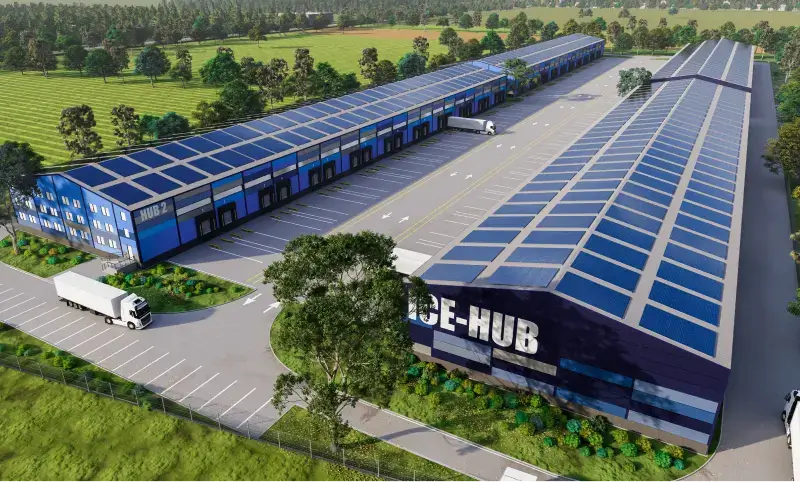
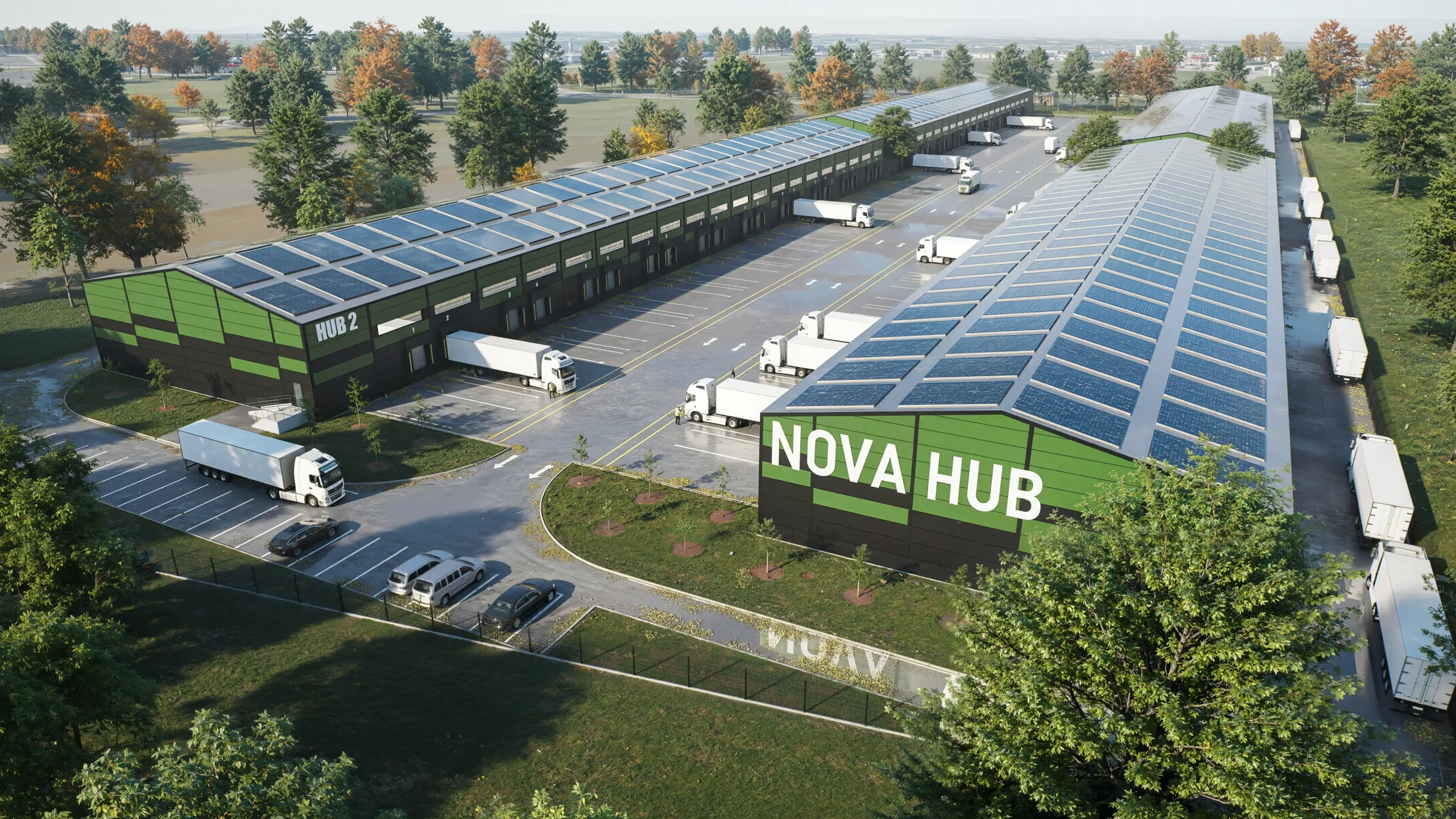
Projects like the NovaHub logistics complex investment illustrate how strategic locations, modern building technologies, and reliable utilities can create long-term value by aligning costs with reduced risk and higher service quality.
⚠️ Common mistakes in temperature management and how to avoid them
Design phase mistakes
Many problems start long before the first pallet arrives. Undersizing refrigeration capacity for peak summer conditions is a classic error. Another is poor zoning, where chilled and ambient areas are separated only by a basic door, without proper insulation or air barriers.
To avoid these issues, involve experienced designers and insist on realistic load calculations that consider local climate, future growth, and specific product categories.
Operational and process errors
In day-to-day operations, the most frequent mistake is leaving doors open too long. This allows warm air into cold rooms and forces equipment to overwork. Overloading chambers beyond design capacity also obstructs air circulation and creates hot spots.
Regular staff training, clear procedures, and visible performance indicators help maintain discipline. Simple measures such as staging pallets near doors before opening them can significantly reduce temperature swings.
Monitoring, calibration, and data gaps
Some operators rely on a single thermometer near the entrance of a chamber. This gives a false sense of security, because temperatures deeper inside the room or at product level may differ significantly.
A better practice is to use multiple calibrated sensors at representative positions and heights. Data should be logged automatically and reviewed, not just stored, so that trends and recurring issues are detected early.
Supplier and partner coordination problems
Even the best склад для харчових продуктів cannot compensate for poor practices in transport or at suppliers. Trucks that arrive uncooled or spend hours waiting in the sun compromise the entire cold chain.
Companies should set clear requirements for carriers and partners, including temperature documentation and maximum waiting times. Joint audits and shared training can dramatically improve consistency across the chain.
🛠 Practical tips for companies choosing a temperature-controlled warehouse
Technical checklist for site inspection
When you visit a potential warehouse or logistics complex, focus on more than just cleanliness and free space. Ask to see real-time temperature readings in different zones. Check whether refrigerators maintain 0°C to 4°C and freezers stay at or below -18°C.
Look at insulation quality, door types, and how docks are organized. Verify that there is reliable power supply, ideally with sufficient capacity and backup, because refrigeration depends entirely on energy stability.
Key questions to ask the warehouse operator
- Monitoring: How are temperatures recorded, how long is data stored, and can you access it on demand?
- Alarms: What happens if temperatures rise above 5°C in chilled rooms or above -18°C in freezers?
- Procedures: Are there written instructions for loading, door management, and emergency responses?
- Maintenance: Who services the refrigeration systems and how often?
- Compliance: How do they meet Ukrainian requirements for food contact materials and Good Manufacturing Practices?
Preparing your own processes for cold chain success
Even the most advanced facility cannot solve everything alone. Your internal processes must match the capabilities of the climate-controlled warehouse. Plan production schedules, dispatch times, and supplier deliveries so products do not sit in non-controlled areas.
Train your staff to understand the significance of the danger zone between 4°C and 60°C. When everyone, from procurement to drivers, knows why time and temperature matter, compliance becomes much easier.
Case example: partnering with a modern logistics complex
Imagine a mid-sized Ukrainian importer of dairy and frozen seafood that moves to a new logistics complex with temperature control near the Odesa–Kyiv highway. The complex offers chilled, frozen, and ambient zones, plus autonomous water supply, 1 MW of electrical power, and 24/7 video surveillance.
By using this infrastructure, the company can receive products from the seaport, quickly move them into appropriate zones, and distribute them efficiently to retailers. Their claim rates drop, shelf life improves, and they have clear temperature documentation for audits, which strengthens relationships with international partners.

🎯 How NovaHub approaches modern temperature-controlled logistics complexes
Reliability as a foundation
When you choose a partner to develop or supply a temperature-controlled facility, reliability comes first. NovaHub focuses on robust engineering solutions, from fire safety and 24/7 video surveillance to shelters built directly into logistics complexes.
This emphasis on reliability reduces unplanned downtime and protects sensitive food products, even in challenging operating conditions or during power disturbances.
Modern European standards and construction quality
NovaHub develops warehouses and logistics complexes that follow modern European standards of construction. High-performance insulation, efficient refrigeration, and well-planned zoning support precise climate control for different food categories.
The result is a склад з контролем температури в Україні that not only meets current regulations, but also aligns with expectations of international retailers and brand owners who demand consistent quality.
Speed and quality of project delivery
Time to market is critical. For NovaHub’s innovative logistics complex project, design, permitting, and construction are scheduled so that commissioning can take place within about sixteen months from the start of design. A clear timeline, coordinated by an experienced project manager and general contractor, supports predictable planning for investors and tenants.
Fast yet high-quality construction allows food companies to enter new regions, reorganize their distribution, or expand export operations without long waiting periods.
Investment efficiency, green energy, and future readiness
The total land and complex area, including dedicated office space, are designed to support both operations and management in one location. Solar power generation reduces dependence on grid electricity and supports sustainable operations, which is particularly attractive for brands with strong environmental commitments.
In essence, NovaHub’s approach combines reliability, modern standards, speed, and quality to create temperature-controlled infrastructure that is technically sound today and ready for stricter food safety and sustainability requirements in the future.
📊 Comparing key warehouse temperature specifications
Typical warehouse temperature zones side by side
To help you quickly compare requirements for different zones, consider the following simplified matrix. It shows the relationship between temperature ranges, typical products, and operational focus.
| Zone type | Temperature range | Typical products | Operational priorities |
|---|---|---|---|
| Ambient | 10°C–25°C | Dry goods, cans, non-perishables | Humidity control, pest management |
| Chilled | 0°C–4°C | Dairy, chilled meat, fresh ready meals | Door discipline, fast handling |
| Frozen | ≤ -18°C | Ice cream, frozen fish, frozen vegetables | Energy efficiency, backup systems |
| Special chill | Around 0°C | Thawed seafood, sensitive delicacies | Precise control, frequent monitoring |
| Hot holding | ≥ 60°C | Cooked meals awaiting dispatch | Short holding time, strict monitoring |
External guidance on safe temperatures
According to international food safety guidance, the safest storage conditions keep cold food at 5°C or below and hot food at 60°C or above, while minimizing time in the 4°C to 60°C danger zone.
World Health Organization, 2023
How this impacts your warehouse selection
For decision-makers, these numbers translate into concrete evaluation criteria. Facilities must not only claim specific temperature ranges, but also demonstrate how they maintain them during actual operations.
When reviewing offers, ask for real performance data, not just design specifications. Consistent, documented compliance with these ranges is what protects your products and brand.
🔚 Conclusion: building a safer, smarter temperature-controlled supply chain
Safe food storage in Ukraine depends on respecting clear temperature limits, especially keeping cold food at or below 5°C and frozen products at or below -18°C, while holding hot food at 60°C or above. A well-designed temperature-controlled warehouse with proper zoning, monitoring, and processes turns these numbers into everyday practice.
By understanding the advantages and limitations of climate-controlled storage, recognizing common mistakes, and applying practical selection tips, food companies can significantly reduce waste and risk. Modern facilities like those developed by NovaHub combine reliability, contemporary building standards, and fast, high-quality construction to support robust cold chain logistics.
As you plan for the coming year, consider upgrading your storage and distribution strategy so that it meets future regulatory and customer expectations, not just today’s minimums. For a fresh start in the New Year, explore how NovaHub’s modern logistics complexes can support your temperature-controlled supply chain and bring more confidence, stability, and peace of mind to every shipment.
Sources
— World Health Organization (2023)
— Ukrainian Food Safety Regulatory Overview (2024)
— Industry Report on Cold Chain Logistics in Eastern Europe (2024)
— NovaHub Internal Project Documentation Summary (2025)
FAQ
What is the temperature danger zone for food mentioned in the article?
The temperature danger zone for food lies between 4°C and 60°C, where bacteria can grow quickly. Warehouses and logistics operations should minimize the time products spend in this range to reduce food safety risks.
Which temperatures should a chilled warehouse area maintain for dairy and meat?
Chilled zones should maintain temperatures between 0°C and 4°C, with cold food held at 5°C or below. This range slows bacterial growth and helps preserve the taste and texture of dairy products and chilled meats.
How cold should freezers be for frozen fish and seafood?
Freezers must keep frozen products, including fish, at or below -18°C. The article notes that frozen fish products specifically must not be stored at temperatures exceeding -18°C to maintain safety and quality.
What are common design mistakes in temperature-controlled warehouses?
Typical mistakes include undersized refrigeration capacity for summer peaks and poor zoning between ambient and chilled areas. These issues lead to unstable temperatures and higher risk of entering the 4°C to 60°C danger zone.
Why is continuous temperature monitoring so important?
Continuous monitoring with multiple calibrated sensors allows operators to detect deviations before they become critical. It also provides documentation that products stayed within required ranges, which supports audits and retailer requirements.
What questions should I ask when choosing a temperature-controlled warehouse?
You should ask about monitoring methods, alarm procedures, maintenance of refrigeration systems, and compliance with Ukrainian rules on food contact materials and Good Manufacturing Practices. These points are detailed in the practical tips section of the article.
How does NovaHub’s logistics complex support cold chain logistics?
NovaHub’s complex offers separate chilled, frozen, and ambient zones, strong power infrastructure, and modern construction standards. Combined with a strategic location near the Odesa–Kyiv route, this setup supports stable temperature regimes and efficient distribution.
What are the main pros and cons of using a climate-controlled warehouse?
Pros include better food safety, longer shelf life, brand protection, and easier regulatory compliance. Cons involve higher capital and energy costs, more complex operations, and increased maintenance needs, all of which are discussed in the pros and cons section.
How should hot food be held in a warehouse or logistics kitchen?
Hot food must be held at 60°C or above to stay safe. If it drops below this level, it quickly enters the 4°C to 60°C danger zone, so holding times and monitoring in hot areas must be strictly controlled.
What cooling steps are recommended for cooked food before storage?
The article highlights that cooked food should be cooled from cooking temperature to 21°C within two hours, then to 5°C within four hours. This staged cooling helps keep products out of the danger zone for extended periods.