

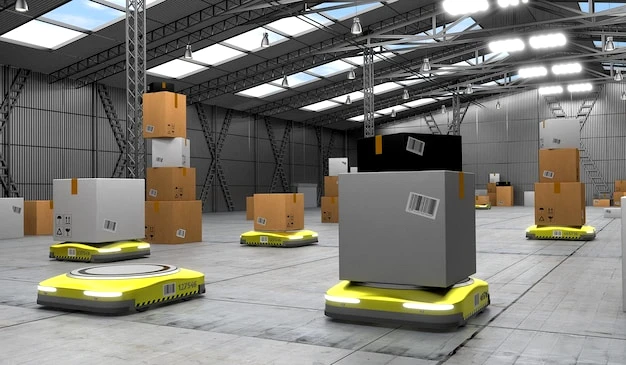
An innovative warehouse complex is a high spec logistics hub with advanced utilities, safety, and multimodal access. NovaHub’s project near the Odesa–Kyiv route offers 19,174 m² of space and a seven year payback.
Across Europe and especially in Ukraine, companies are rethinking how they store, process, and move goods. Rising customer expectations, unstable energy prices, and growing security requirements are putting classic warehouses under real pressure. Businesses that used to manage with basic storage now need reliable infrastructure that supports fast fulfillment, multimodal transport, and resilient operations during crises.
This article explains what an innovative warehouse complex is in practical terms, how it differs from a traditional facility, and who actually benefits from such projects. We will look at key design features, technology, sustainability aspects, investment performance, and typical implementation challenges. We will also examine the example of a large modern logistics center developed with NovaHub, including its specifications, timeline, and payback period, so that you can see what a truly інноваційний складський комплекс looks like in real life.
What exactly is an innovative warehouse complex?
Key characteristics beyond classic storage
An innovative warehouse complex is more than a large building with racks. It is a purpose designed logistics ecosystem that integrates storage, processing, office operations, security, and infrastructure for different transport modes. The goal is not just to hold inventory but to accelerate the entire supply chain while maintaining high reliability and safety.
Such a complex typically combines high quality construction, flexible internal layouts, and advanced engineering systems. These elements allow the owner or tenant to adapt the facility to changing product ranges, seasonal peaks, and new business models like e‑commerce fulfillment or light assembly.
How it differs from a standard warehouse
A standard warehouse often focuses on basic functions. It offers closed space, minimal utilities, and simple yard access. In contrast, a modern logistics center includes improved energy supply, automation readiness, and integrated office zones that support planning and customer service on site.
For example, a next generation complex will provide high power capacity, autonomous water supply, reliable fire safety systems, and structured security. This creates a platform for modern equipment, IT systems, and long term operational stability that a basic warehouse cannot match.
Typical components of a modern logistics center
Although each site is unique, successful complexes usually share a few core components. Together they turn a building into a productive logistics tool rather than a passive asset.
- Specialized warehouse space: High clear heights, optimized column grid, loading docks, and driveways for trucks.
- Office and administrative area: Dedicated space for management, customer service, and support teams directly at the facility.
- Engineering infrastructure: Stable electricity, water, heating or cooling systems, and communications for IT and automation.
- Safety and security systems: Fire detection and suppression, access control, and video surveillance that operate around the clock.
- Resilience features: Shelters, backup systems, and autonomous utilities to keep operations running in difficult situations.
What makes a warehouse complex “innovative” in Ukraine today?
Infrastructure and scale: the NovaHub case
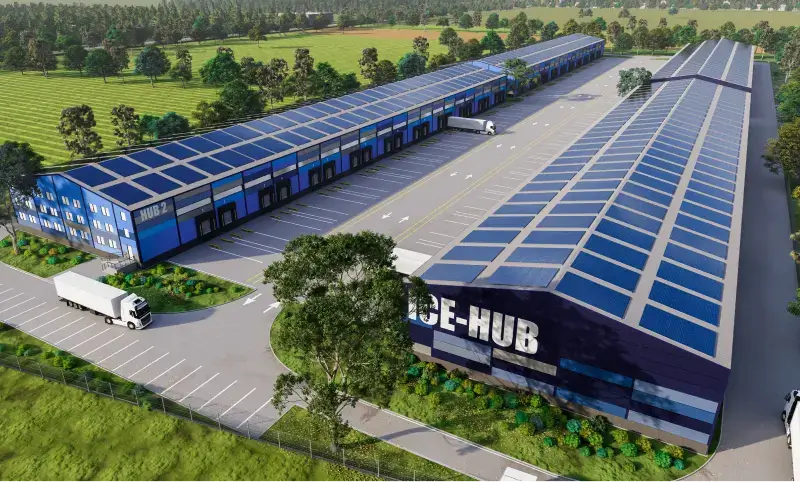
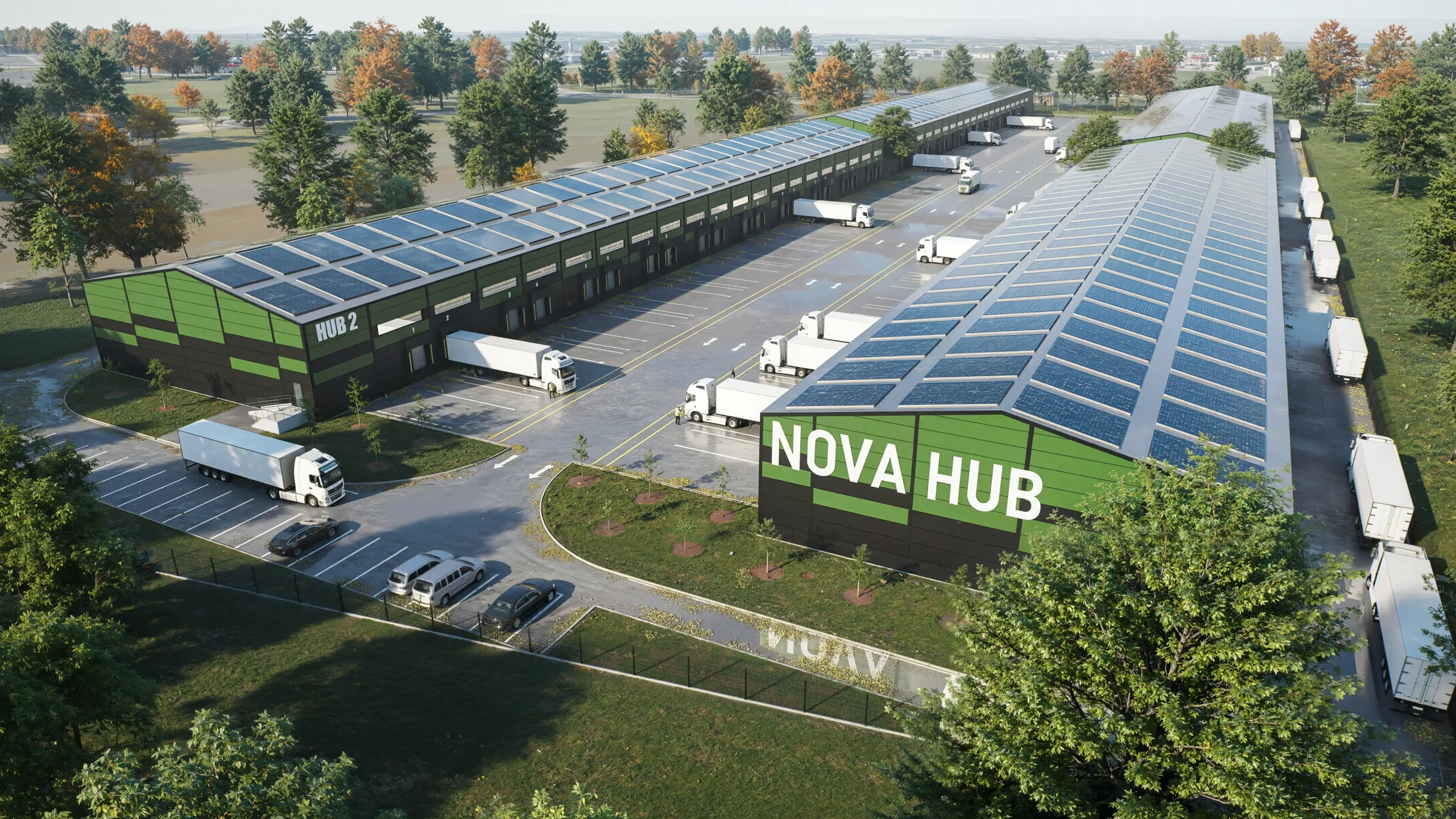
To understand what innovation means on the ground, consider the parameters of a large scale project promoted by NovaHub as an investment in an innovative logistics complex. The total land plot covers 41,970 square meters, while the entire built complex reaches 19,174 square meters. Within this area, 2,460 square meters are reserved for modern office premises.
This type of scale enables a full cycle logistics center in Ukraine. There is enough space both for storage operations and for administrative and commercial work under one roof. It also leaves room for maneuvering areas, parking, and protective infrastructure, which are often underestimated during early planning.
Strategic location and multimodal access
An essential feature of a modern logistics center is its connection to major transport corridors. In the NovaHub project, the site is located near the Odesa–Kyiv highway and has access to a sea port, a dry port, and a railway connection. This multimodal positioning allows operators to combine road, sea, and rail flows with minimal transfer times.
For shippers and 3PL providers, such a location shortens delivery lead times and improves route flexibility. It also helps to balance costs between different transport modes depending on market conditions or seasonal variations.
Engineering systems and safety as competitive advantages
In practical terms, the difference between a basic facility and an innovative complex often appears in the engineering design. The NovaHub project includes an autonomous water supply and an electricity capacity of 1 MW. This level of power supports intensive warehouse operations and leaves a reserve for future automation or temperature control if needed.
The complex is designed with an automatic fire alarm system, 24/7 video surveillance, and a dedicated shelter. These elements are not cosmetic additions. They are critical for protecting people, assets, and business continuity in a volatile environment, especially for international clients that require strict risk management standards.
Green energy and sustainability
An additional marker of innovation is the integration of renewable energy. The logistics complex promoted by NovaHub includes a solar power station that supplies green electricity. This reduces dependence on the grid and helps cut operating costs over the long term.
From a brand and compliance perspective, on site generation also supports environmental, social, and governance (ESG) goals. Many multinational clients now evaluate their partners based on real sustainability actions, not only declarations.
Who needs an innovative warehouse complex and when?
Growing retailers and e‑commerce operators
Retail chains and online sellers that are expanding across Ukraine often outgrow simple rented warehouses. As order volumes increase, inefficiencies in layout, loading areas, and IT infrastructure start to slow down fulfillment. A purpose built modern logistics center allows them to centralize stock, automate processes, and maintain consistent service levels.
For fast moving consumer goods, fashion, and electronics, the ability to process orders quickly and predictably is as important as the location itself. A complex with strong power supply, reliable security, and dedicated offices gives these companies the stability they need to plan long term.
3PL and logistics service providers
Third party logistics operators compete based on service quality, flexibility, and price. Innovative facilities give them a significant advantage. High specification buildings make it easier to onboard new clients, segment zones by client or product category, and implement advanced warehouse management systems.
When a 3PL can demonstrate that it operates in a certified, safe, and energy efficient complex, it also builds trust with international cargo owners who must comply with internal global standards.
Industrial and production companies
Manufacturers with regional or export oriented supply chains need stable storage and distribution platforms. In this case, a logistics center in Ukraine such as the NovaHub project can act as a consolidation point for raw materials and finished goods. The connection to highway, railway, and port infrastructure is especially valuable for export producers.
For many industrial businesses, the presence of a shelter, reliable utilities, and strong security systems is decisive. It allows them to protect critical components and equipment even under adverse conditions.
Institutional and private investors
Warehouse and logistics real estate has become a recognized asset class in many markets. Investors seek projects with predictable demand, long term tenants, and stable cash flows. The NovaHub complex, with an investment payback period of about seven years, demonstrates how a well designed facility can generate attractive returns.
In addition, the involvement of professional project management by TOV “SK GROUP” and a general contractor such as TOV “BAU-CENTER” reduces development risk. For investors who are not construction experts, working with such partners is crucial.
How does the NovaHub project perform as an investment?
Key technical and investment indicators
To see how the numbers align, it helps to compare the main parameters of the NovaHub logistics complex with the expectations of a typical investor. The table below summarizes the core specifications from an investment perspective.
| Parameter | NovaHub complex value |
|---|---|
| Total land area | 41,970 m² |
| Total built area | 19,174 m² |
| Office space | 2,460 m² |
| Electricity capacity | 1 MW |
| Water supply | Autonomous system |
| Security | Automatic fire alarm, 24/7 video, shelter |
| Energy | Solar power station for green energy |
| Estimated payback period | 7 years |
These characteristics illustrate a balanced configuration. The land area is sufficient to host the complex itself plus infrastructure. The built area provides a strong ratio of warehouse to office space, with utilities and safety systems that support demanding tenants.
Project timeline and delivery reliability
From an investor’s standpoint, the construction timeline is almost as important as the technical design. The NovaHub project follows a clear staged plan. Project design is scheduled from April 7, 2025 to November 28, 2025. Permitting is planned from August 18, 2025 to January 9, 2026.
Construction is expected to start on January 15, 2026, with commissioning in August 2026. This creates a transparent pathway from planning through to revenue generation. The presence of a competent general contractor, TOV “BAU-CENTER”, and organized project management by TOV “SK GROUP” supports on time and on budget delivery.
Risk and return balance
A payback period of seven years is a competitive indicator for logistics real estate with this level of specification. The combination of strategic location near the Odesa–Kyiv route, multimodal connectivity, and robust engineering systems increases the likelihood of strong tenant demand over many years.
At the same time, integrating a solar power plant and autonomous infrastructure lowers operating expenses and reduces exposure to energy price volatility. This improves net operating income and long term value.
How NovaHub strengthens the proposition
NovaHub focuses on the sale and construction of contemporary warehouses and logistics complexes that meet high European standards. Its value lies in reliability, strict quality control, and practical speed of implementation. For investors, this means fewer uncertainties during development and operation.
If you are evaluating an investment in a logistics complex, partnering with a company that combines modern design, strong contractors, and a clear commercial concept can make the difference between a stable asset and a problematic site.
What are the main advantages and limitations of innovative warehouse complexes?
Key advantages for operators and investors
In everyday operations, a modern logistics center offers several tangible benefits that justify its higher initial investment. Below is a concise summary.
- Operational efficiency: Optimized layouts, large power reserves, and integrated offices support faster and more accurate order processing.
- Risk reduction: Automatic fire alarms, 24/7 video surveillance, and shelters reduce the impact of incidents and improve insurance conditions.
- Attractiveness for tenants: Multimodal access and high quality infrastructure make it easier to attract reputable long term clients.
- Energy savings: Solar power generation and modern building envelopes can lower utility costs over the building’s life.
- Future readiness: High technical standards and flexible space planning simplify upgrades, automation, or process changes.
Potential drawbacks and constraints
No project is perfect. A balanced view is essential for informed decisions. The following limitations are typical.
- Higher upfront capital: Advanced engineering, security, and green energy solutions increase initial construction costs compared to basic warehouses.
- Longer preparation phase: Design and permitting for complex facilities can take many months before construction begins.
- Specialized management needs: Operating a technologically advanced site requires experienced facility and asset managers.
- Location sensitivity: To fully benefit from multimodal connectivity, the site must be placed near key transport routes, which may limit land options.
- Regulatory complexity: Compliance with safety, environmental, and construction standards is more demanding and needs professional oversight.
Comparing basic and innovative warehouse options
In short, the choice between a basic warehouse and an innovative complex depends on your growth ambitions, risk tolerance, and service promises. The comparison below illustrates the main differences.
| Aspect | Basic warehouse | Innovative complex |
|---|---|---|
| Initial investment | Lower | Higher |
| Operational efficiency | Limited, manual | High, automation ready |
| Energy and utilities | Standard grid, no renewables | Autonomous systems, solar energy |
| Safety and security | Minimal compliance | Fire systems, 24/7 video, shelter |
| Tenant appeal | Price focused | Quality and risk focused |
| Long term value | Moderate, limited upgrade scope | High, flexible and future proof |
For companies and investors who plan for at least one full economic cycle, the innovative option often proves more resilient and profitable despite its higher starting point.
Real world scenarios: how an innovative logistics center is used
Scenario 1: Regional distribution hub for a retail chain
Imagine a national retailer consolidating several small regional warehouses into one central hub located near the Odesa–Kyiv highway. By moving into a modern logistics center in Ukraine like the NovaHub complex, the retailer places its main inventory close to a key transport artery and within reach of a sea port and railway.
The 19,174 m² complex allows separate zones for fast moving items, seasonal storage, and returns. The 2,460 m² of offices host demand planners, buyers, and customer service teams. With 1 MW of power and autonomous utilities, the facility supports automated sorting, scanning, and reliable IT operations without brownouts.
Scenario 2: 3PL operator serving export manufacturers
A logistics provider signs contracts with several industrial exporters. These clients need storage, consolidation, and documentation services before goods move to the port. The 3PL chooses an innovative warehouse complex with multimodal access to road, dry port, and rail.
The automatic fire alarm system and 24/7 video surveillance help meet strict safety requirements from international partners. The on site solar plant lowers the operator’s electricity bills, improving their price competitiveness. The shelter and robust infrastructure give clients confidence that their goods remain protected even in emergencies.
Scenario 3: Long term investment with seven year payback
An institutional investor is looking for assets in real estate segments with stable cash flow. They analyze the NovaHub complex with its seven year payback horizon. The clear construction schedule, from design in 2025 to commissioning in August 2026, gives transparency on when rental income can start.
Because the project is managed by TOV “SK GROUP” and built by TOV “BAU-CENTER”, the investor sees lower construction risk. The strategic location and modern specifications attract both 3PLs and retailers, which supports steady occupancy and predictable returns.
Why these scenarios matter for your decision
These examples reflect common business situations in the region rather than theoretical models. They show how a well configured complex can support different strategies, from cost reduction to service differentiation or long term asset growth.
When evaluating your own needs, consider which of these patterns is closest to your reality. That will help you define the scale, location, and technical requirements of the facility you require.

Common mistakes when planning or choosing an innovative warehouse complex
Typical strategic and technical errors
Many companies and investors underestimate the complexity of a modern logistics project. According to industry reports, poor early decisions can lock in inefficiencies for decades.
“In logistics real estate, 70 percent of lifetime operating costs are influenced by design decisions taken before construction begins.” — Global Logistics Real Estate Insight Report (2023)
Below are frequent mistakes and how to avoid them.
- Underestimating future growth: Designing only for current volumes leads to capacity shortages within a few years. Always plan some buffer in space and power.
- Ignoring multimodal potential: Choosing land with weak connections to highways or rail limits your logistics options. Evaluate access to road, port, and rail together.
- Cutting corners on safety: Saving on fire systems, surveillance, or shelters may reduce upfront cost but increases risk and insurance premiums.
- Overlooking office needs: Locating managers far from operations slows decision making. Integrate enough office space into the complex itself.
- Weak project governance: Running complex construction without experienced project management increases delays and cost overruns.
Why these mistakes happen
These issues usually appear when decision makers focus too much on today’s budget and not enough on total cost of ownership. Short project deadlines and limited internal experience with logistics facilities also play a role.
In volatile markets, stakeholders sometimes fear committing to higher specifications, even when the long term business case is strong.
How to avoid them in your own project
The remedy is structured planning and the use of experienced partners. Analyze your five to ten year business plan, not just next year’s forecast. Engage technical and logistics experts early in the site selection and design process.
Work with a developer or partner like NovaHub that has a track record in contemporary warehouse projects and understands both construction and operational realities.
Practical tips for selecting or investing in an innovative logistics complex
Checklist for potential tenants and operators
If you plan to lease or operate a modern facility, focus on features that directly impact your daily performance. The following tips can guide your first evaluation.
- Verify power and water autonomy: Check that the facility offers at least the electricity and water capacity you need, with some margin for growth, and confirm any autonomous systems.
- Inspect safety and security design: Make sure there is a certified fire alarm system, 24/7 video surveillance, and physical protection measures such as shelters and controlled access.
- Assess location by total network impact: Do not look only at rent. Calculate how proximity to highways, ports, and rail will change your transport costs and delivery times.
- Review office functionality: Ensure the office areas support your organizational structure, including meeting rooms, open workspaces, and technical rooms for IT.
- Evaluate green energy benefits: Ask how the solar power plant or other energy solutions affect your utility costs and ESG reporting.
Guidelines for investors
For investors, the focus is on risk and return. A structured due diligence framework is essential.
- Analyze the payback period: A seven year payback, as in the NovaHub complex, is attractive for logistics assets with strong specifications and location.
- Check development partners: Confirm that experienced firms like TOV “SK GROUP” and TOV “BAU-CENTER” or equivalents are involved in design, management, and construction.
- Understand the tenant base: Target sectors that will likely use the site, such as 3PLs, retailers, or manufacturers, and assess their long term demand.
- Review the construction schedule: A clear timeline from design to commissioning reduces uncertainty and helps you plan financing.
Working effectively with NovaHub
To get the most value from a partnership with NovaHub, define your requirements early. Clarify your desired warehouse area, office needs, and preferred commissioning date. Share your operational profile, including type of goods, throughput, and any special conditions such as temperature or security levels.
NovaHub’s strengths in reliability, adherence to high European building standards, and speed of delivery are most effective when they are aligned with a clear client vision. This leads to a facility that fits your business instead of forcing your processes to adapt to the building.
When to start planning
In practice, you should start planning an innovative warehouse complex at least 18 to 24 months before you expect to operate it. As the NovaHub project schedule shows, design and permitting alone can require almost a year before construction begins.
Early planning lets you secure strategic land while it is still available and avoid costly last minute compromises on location or specification.
An innovative warehouse complex is a strategic asset that combines advanced engineering, multimodal access, and integrated offices to support high performance logistics operations. It differs from a standard warehouse by offering greater resilience, energy efficiency, and flexibility, which are critical in today’s volatile environment.
The NovaHub project near the Odesa–Kyiv route illustrates how such a modern logistics center in Ukraine can deliver both operational value and an attractive investment profile, including a seven year payback and strong safety and energy features. When planned and executed with experienced partners, these complexes support retailers, 3PLs, manufacturers, and investors alike.
The practical takeaway is simple. If your business depends on reliable, scalable logistics or you seek durable real estate income, it is worth engaging NovaHub early to explore options for a facility that matches your long term ambitions.
Sources
— Global Logistics Real Estate Insight Report (2023)
— Statista Research (2024)
— Industry Analysis by McKinsey & Company (2023)
— Forbes Real Estate Council
— European Logistics and Industrial Markets Overview (2023)
Frequently Asked Questions
What is the main difference between an innovative warehouse complex and a basic warehouse?
An innovative complex integrates advanced engineering, safety, and office functions to support efficient logistics and multimodal transport, not just storage. A basic warehouse usually offers simple space with minimal utilities and limited operational flexibility.
Why is the NovaHub logistics complex strategically located?
The complex is positioned near the Odesa–Kyiv highway and has access to a sea port, dry port, and railway. This combination enables efficient use of road, sea, and rail, which reduces delivery times and increases routing options for operators.
How large is the NovaHub warehouse and office area?
The total built area of the complex is 19,174 square meters, with 2,460 square meters dedicated to office space. This ratio allows both intensive warehouse operations and on site management, planning, and customer service functions.
What technical systems make the NovaHub project more resilient?
The complex includes an autonomous water supply, 1 MW of electricity capacity, an automatic fire alarm system, 24/7 video surveillance, and a shelter. Together, these features protect people and assets and help maintain operations during disruptions.
How does the solar power station benefit tenants and investors?
The solar plant generates green electricity on site, which reduces dependence on the external grid and lowers long term energy costs. This improves both operating margins for tenants and the net operating income that investors receive.
What is the expected payback period for the NovaHub logistics complex?
The investment payback period is estimated at seven years. This reflects the combination of high specification infrastructure, strong location, and expected tenant demand in the regional logistics market.
How long does it take to design and permit such a complex?
In the NovaHub project, design is scheduled from April 7, 2025 to November 28, 2025, and permitting from August 18, 2025 to January 9, 2026. This shows that nearly a year may pass before construction even begins, so early planning is crucial.
Who manages and builds the NovaHub logistics complex?
Project management is provided by TOV “SK GROUP”, while the general contractor is TOV “BAU-CENTER”. Their involvement supports professional planning, controlled execution, and a realistic commissioning target of August 2026.
Which types of businesses benefit most from an innovative logistics center in Ukraine?
Growing retailers, e‑commerce operators, 3PL providers, and export oriented manufacturers benefit most. They gain from better infrastructure, faster order processing, and more reliable transport connections to ports and rail.
What practical steps should I take before engaging NovaHub?
Define your required warehouse and office areas, your target commissioning date, and your expected throughput and product types. With this information, NovaHub can propose a configuration that matches your operational needs and investment horizon.