

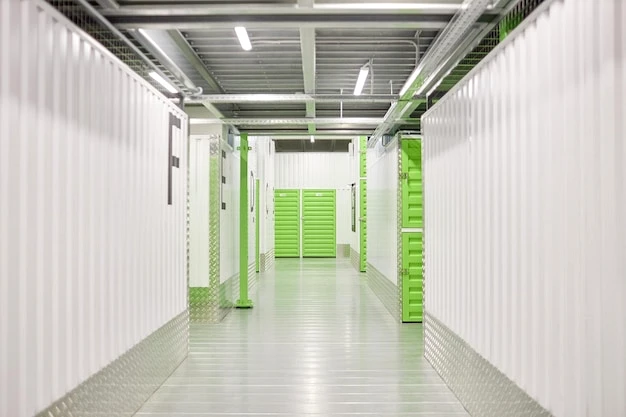
Choose a warm warehouse in Odesa for goods that only need protection from freezing and heat peaks, and a refrigerated warehouse for high-value, temperature-sensitive products that require a continuous cold chain.
For manufacturers in and around Odesa, the choice between a warm warehouse and a refrigerated facility is no longer a simple cost question. Rising energy prices, growing export requirements, and stricter quality standards mean that storage temperature strategy now directly influences product shelf life, logistics costs, and the payback of any new investment. The decision becomes even more complex when you factor in the regional specifics of southern Ukraine, from Odesa’s climate to port-oriented logistics chains.
This article explains how to choose between a warm and a refrigerated warehouse in Odesa, what different types of temperature control actually provide, how they affect costs and energy efficiency, and which option fits particular product groups. You will see practical examples, common mistakes to avoid, and a structured approach that helps you evaluate whether you need a simple warm space, a climate-controlled warehouse, or a fully refrigerated complex integrated into a larger logistics hub.
How does the storage temperature strategy influence your logistics in Odesa?
Why temperature control has become a strategic factor
For many years, manufacturers in Odesa focused on proximity to the sea port and transport corridors, while internal warehouse climate remained secondary. Today, temperature stability is critical for maintaining product quality, especially when goods spend more time in storage or during multimodal transport via road, railway, and sea. For export-oriented businesses, a consistent cold chain from plant to vessel has become a basic requirement rather than an extra feature.
A storage strategy that ignores temperature often leads to hidden losses. These can include increased scrap rates, customer complaints, or the need for additional rework and repackaging. When you compare a warm warehouse in Odesa with a refrigerated one, you are in fact choosing between different risk profiles and different levels of control over your supply chain.
Local specifics around Odesa and southern Ukraine
Odesa has a relatively mild but often humid climate, with significant temperature variations between seasons. In summer months, internal warehouse temperatures can exceed the comfort zone for many products if the building envelope and ventilation are not properly designed. In winter, unheated facilities can reach levels that damage certain raw materials, liquids, or packaging.
The city’s strategic position near the Odesa–Kyiv highway, sea port, dry port, and railway makes it ideal for integrated logistics complexes. When manufacturers consider a temperature-controlled warehouse in Ukraine, they increasingly look for sites that combine climate stability with direct access to these transport routes, which can shorten lead times and reduce risk of delays.
Regulatory and quality requirements
Many manufacturers supplying European markets face specific requirements for storage conditions, especially for food products, cosmetics, pharmaceuticals, and sensitive chemicals. Even for non-food sectors, customers often include temperature limits in supply contracts. This means that your warehouse temperature regime is not just a technical parameter. It becomes part of your compliance and quality assurance system.
As a result, the choice between a warm and a refrigerated warehouse in Odesa must consider not only current needs but also potential future certifications, client audits, and expansion of export activities.
What types of products require warm or refrigerated storage?
Products that usually need a refrigerated warehouse in Odesa
A refrigerated warehouse is typically justified for products where even short-term overheating leads to irreversible quality loss. This group usually includes fresh and frozen food, dairy products, meat, fish, and certain semi-finished products. Some pharmaceutical goods, vaccines, and specific chemicals also require narrow temperature ranges that only refrigeration systems can provide.
When such goods move through Odesa, the port city often becomes the key node in the cold chain. Using a refrigerated warehouse in Odesa allows you to consolidate cargo, perform quality checks, and synchronize truck arrivals with vessel schedules while maintaining stable low temperatures.
Products that work well in a warm warehouse
A warm warehouse is suitable for products that cannot be stored in freezing conditions but also do not require strict refrigeration. Examples include certain food ingredients, beverages without strict chill requirements, many cosmetics, paints and coatings, packaging materials, and a wide range of industrial components.
For these categories, the main risks are condensation, deformation, or chemical instability at very low or very high temperatures. A warm warehouse that keeps the environment above freezing and smooths seasonal peaks is often more than sufficient and much more economical.
When a climate-controlled warehouse is the best compromise
Some manufacturers operate with mixed product portfolios, where part of the assortment needs low temperatures, while another part simply needs stability. In such cases, a climate-controlled warehouse with zoned temperature regimes can be the optimal solution. It allows you to maintain moderate heating in some zones and lower controlled temperatures in others.
This approach is especially useful for companies in Ukraine that serve both domestic and export markets from a single hub. They can combine different goods in the same logistics complex while preserving specific storage conditions for each category.
How to classify your own products
To choose between warm and refrigerated storage, start with a simple classification. Identify products that absolutely require temperatures below a certain threshold, those that cannot be frozen, and those that are relatively tolerant. Then add the expected storage duration and transport route for each group.
Once you understand these basic categories, you can align them with the technical capabilities of either a warm or refrigerated facility and decide whether zoned climate control would create a meaningful benefit for your business.
Technical differences between warm, climate-controlled, and refrigerated warehouses
Building envelope and insulation
Warm warehouses usually have improved insulation compared to unheated industrial buildings, yet their construction is not as demanding as in fully refrigerated facilities. The goal is to reduce heat loss in winter and prevent overheating in summer without maintaining precise low temperatures. Wall and roof structures are chosen to keep energy consumption within reasonable limits while providing a stable background climate.
Refrigerated warehouses require significantly higher insulation levels and careful design of thermal breaks. Any thermal bridge or poorly sealed opening can lead to moisture problems, ice formation, and increased energy use. For climate-controlled warehouses in moderate ranges, design parameters typically sit between these two extremes.
Engineering systems and power supply
Heating systems in warm warehouses focus on keeping temperatures above a defined minimum. This may be combined with ventilation and sometimes simple air-conditioning for certain zones. In contrast, refrigerated warehouses rely on industrial cooling systems with precise controls, safety devices, and backup arrangements.
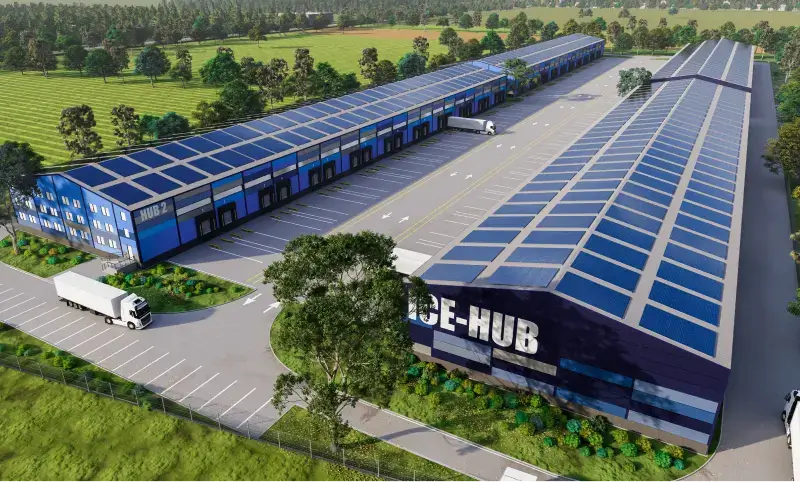
Such facilities usually need robust and reliable power supply. For example, an innovative logistics complex near Odesa with autonomous water supply and a dedicated 1 MW electricity connection can better support demanding temperature-control systems than a standard industrial site. The presence of a solar power station for green energy also helps partially offset the substantial electricity consumption of refrigeration equipment.
Monitoring, controls, and automation
Climate-controlled and refrigerated warehouses rely on continuous temperature and sometimes humidity monitoring. Automatic control systems adjust equipment operation to maintain parameters within the set limits. Data logging is important for audits and for proving to customers that storage conditions were maintained.
Even in a warm warehouse, basic monitoring is advisable. When integrated with an automatic fire alarm system and 24/7 video surveillance, it forms part of a broader risk management concept that protects both goods and infrastructure.
Comparison of key technical characteristics
| Parameter | Warm warehouse | Climate-controlled warehouse | Refrigerated warehouse |
|---|---|---|---|
| Typical temperature range | Above freezing, up to about 20–22°C | Defined range, usually 5–25°C | From deep-freeze to chilled zones below 5°C |
| Insulation level | Medium | Medium to high | High, with strict thermal break design |
| Energy consumption | Moderate | Moderate to high | High |
| Monitoring requirements | Basic temperature tracking | Continuous temperature and sometimes humidity logging | Continuous logging and alarms, strict control |
| Investment complexity | Lower | Medium | High |
Cost, energy efficiency, and payback: what matters financially
Capital expenditure and project timelines
Refrigerated warehouses require more complex engineering and specialized construction, which increases capital expenditure. Project timelines are typically longer compared with warm warehouses, especially when permitting and special technical approvals are needed. However, integrating a refrigerated facility into a larger logistics complex can improve overall project economics.
For example, when a manufacturer invests in an integrated logistics hub with a total complex area of around 19,000 square meters, including office spaces and technical infrastructure, the fixed costs of power, water, and security can be shared between different functions. With a clear construction schedule from design to commissioning, such projects often reach a payback period of several years, provided that capacity utilization is carefully planned.
Operating costs and energy efficiency
Refrigeration is energy-intensive. That is why energy efficiency becomes a central factor in operating cost optimization. Research on refrigeration equipment in trade enterprises has shown that by applying various energy-efficiency measures, it is possible to achieve up to 30 percent reduction in energy consumption and up to 25 percent increase in productivity.
By using different methods to increase energy efficiency in refrigeration equipment, enterprises can reduce energy consumption by up to 30% and increase productivity by up to 25%.
Energy efficiency of refrigeration equipment in trade enterprises
These principles are directly applicable to refrigerated warehouses. High quality insulation, accurate control systems, and the use of renewable energy sources can significantly change the total cost of ownership. Warm warehouses also benefit from efficient building envelopes and smart heating control, although their baseline energy use is lower.
Effect of location and infrastructure on costs
A warehouse that is strategically located close to the Odesa–Kyiv highway and to port-related infrastructure can reduce transportation costs, waiting times, and empty runs. This is especially important for temperature-sensitive goods, where delays quickly turn into quality losses. When a logistics complex has autonomous water supply, reliable power, and integrated safety systems, the risk of costly downtime or product spoilage is significantly reduced.
For investors, the combination of strong infrastructure, office space for operational teams, and modern engineering systems often justifies a medium-term payback. A seven-year return period for an innovative logistics complex is realistic when occupancy and value-added services are managed professionally.
Cost comparison overview
| Cost aspect | Warm warehouse | Refrigerated warehouse |
|---|---|---|
| Initial construction cost | Lower | Higher |
| Energy cost per m² | Moderate | High, but reducible with efficiency measures |
| Risk of product loss | Low to medium, depending on product type | Low if systems are reliable and monitored |
| Regulatory and audit complexity | Lower | Higher, especially for food and pharma |
| Typical payback horizon | Shorter | Medium, often around several years for integrated complexes |
Pros and cons of warm and refrigerated warehouses
Advantages and limitations of warm warehouses
- Lower investment: Construction and equipment costs are significantly lower compared with refrigerated facilities, which simplifies funding and speeds up project approval.
- Reduced energy consumption: Heating and basic climate control require less electricity than full refrigeration, which stabilizes operating costs.
- Simpler operation: Staff training, maintenance, and monitoring are less complex, which is useful for smaller manufacturers.
- Flexibility of use: Warm warehouses can be repurposed more easily for different types of goods and tenants.
- Faster implementation: Design and permitting usually take less time, allowing quicker entry into operation.
- Limited product range: Goods requiring strict low temperatures cannot be stored safely, which restricts business opportunities.
- Seasonal risks: In very hot periods, product quality may still suffer if no additional cooling or shading is provided.
- Lower differentiation: A standard warm warehouse offers fewer value-added services for customers who demand documented temperature control.
- Potential need for later upgrades: As the business grows, retrofitting the building to support more advanced climate control can become costly.
Advantages and limitations of refrigerated warehouses
- Support for sensitive products: Refrigerated warehouses allow storage of high-value food, pharma, and other sensitive goods that would otherwise be impossible.
- Premium services: Proven cold chain integrity and detailed temperature logging allow higher service levels and potentially higher margins.
- Stronger market positioning: For Odesa-based exporters, a refrigerated hub close to the port provides a strategic advantage over competitors.
- Better risk control: Properly designed systems minimize the chance of mass spoilage due to temperature excursions.
- Higher capital cost: Refrigeration systems, specialized insulation, and engineering increase the initial budget.
- Complex maintenance: Regular technical service and staff training are required to keep systems efficient and safe.
- Higher energy bills: Operating costs are significant, especially without energy-efficiency measures or renewable sources.
- Longer project planning: Design, permitting, and commissioning take more time due to stricter technical requirements.
Balancing these factors for your business
When you compare these pros and cons, the key question is not which type of warehouse is “better in general” but which combination of temperature regimes, location, and investment scale fits your strategy. Some manufacturers choose a modest warm facility for basic storage plus a smaller refrigerated area for critical items.
Others decide to centralize all sensitive logistics functions into a single modern logistics complex with integrated warm and refrigerated zones. The optimal package depends on product mix, customer requirements, and long-term growth plans.
Practical examples: how different manufacturers can choose correctly
Example 1: Food manufacturer with export focus via Odesa port
Consider a medium-sized food producer that supplies chilled products to both domestic retail chains and international customers. The company currently uses a simple warm warehouse and rents refrigerated space far from the port. This leads to frequent temperature breaks and high last-mile costs.
By moving operations into a modern logistics complex near the Odesa–Kyiv highway and the sea port, with embedded refrigerated chambers and warm cross-docking areas, the producer can consolidate all flows. The company benefits from stable power supply, automatic fire safety, and on-site offices for quality and logistics teams. In this scenario, investment in refrigerated capacity is fully justified by reduced losses and improved export reliability.
Example 2: Industrial manufacturer with temperature-sensitive materials
Now imagine an industrial manufacturer using adhesives and paints that must not freeze but do not require refrigeration. The company has frequent shipments to domestic clients and occasional exports. For them, a warm warehouse in Odesa with reliable heating, good insulation, and basic monitoring is sufficient.
Instead of investing in complex refrigeration, the business focuses on layout efficiency, safe storage of chemicals, and integration with road and railway connections. A climate-controlled warehouse segment might only be needed for a small share of particularly sensitive materials, keeping capital expenses manageable.
Example 3: Multi-tenant logistics operator in a new complex
A logistics operator plans to become a 3PL provider for various manufacturers in Ukraine. They decide to enter a newly built logistics complex with around 19,174 square meters of total area and 2,460 square meters of office space. The site has autonomous utilities, strong electrical capacity, and 24/7 surveillance.
By fitting out part of the warehouse as refrigerated chambers and part as warm or climate-controlled areas, the operator can serve multiple sectors at once. The seven-year investment payback becomes realistic, because occupancy is diversified and energy-efficient design reduces operating costs. This example shows how combining different temperature regimes in one complex maximizes flexibility.
What these examples teach in practice
All three scenarios demonstrate that the “right” temperature regime depends on product requirements, transport routes, and growth ambitions. In short, a refrigerated warehouse in Odesa pays off when the product value and sensitivity are high and when the facility is integrated into a strong logistics location.
For many other manufacturers, a well-designed warm or climate-controlled warehouse is enough, especially if the building meets modern standards of reliability, energy efficiency, and safety.

Common mistakes when choosing a temperature-controlled warehouse
Underestimating future product portfolio changes
One frequent mistake is to design a warehouse only for current needs without considering potential new product lines. Manufacturers that later add more temperature-sensitive items often discover that retrofitting a standard warm building for refrigeration is complicated and expensive.
To avoid this, include at least conceptual provisions for future cold rooms, additional insulation, or upgraded power supply when planning a warm facility today. This offers flexibility without committing to full refrigeration from day one.
Ignoring energy-efficiency potential
Another mistake is to treat energy consumption as a fixed cost instead of a controllable parameter. Poor insulation, unoptimized refrigeration systems, and lack of monitoring quickly inflate operating expenses. Given that energy-efficiency measures can cut consumption by up to 30 percent, ignoring this potential directly reduces profitability.
When evaluating warehouse options, always ask how building design, equipment selection, and renewable energy sources will help manage long-term energy spend.
Focusing only on rent or construction price
Choosing a facility solely because it is cheap to build or lease often ends badly. Low base price might hide shortcomings such as unreliable power supply, absence of autonomous utilities, or lack of basic safety systems. For temperature-sensitive goods, each of these weaknesses increases the risk of losses.
A more balanced approach considers total cost of ownership, which includes location, infrastructure robustness, and potential downtime costs caused by failures.
Neglecting integration with transport infrastructure
Some manufacturers select warehouse sites far from main highways or ports to save on land cost. For Odesa-based operations, this can be a serious mistake. Every extra kilometer that refrigerated trucks travel increases fuel costs and temperature risk.
Selecting a site near the Odesa–Kyiv corridor, the sea port, and railway terminals provides much better control of delivery times and maintains product quality, especially during peak seasons.
Insufficient attention to safety and risk management
A final typical error is to view security, fire systems, and shelters only as formal requirements. In practice, these elements protect both people and high-value goods. A temperature-controlled warehouse without robust safety provisions is exposed to higher insurance costs and possible operational disruptions.
It is much more efficient to choose facilities where automatic fire alarms, smoke detection, 24/7 video monitoring, and protective shelters are fully integrated into the design from the beginning.
Practical tips and recommendations for manufacturers in Odesa and Ukraine
Build a clear decision matrix
A useful first step is to create a simple decision matrix that compares warm, climate-controlled, and refrigerated options for your specific product lines. Include factors like minimum and maximum allowable temperature, storage duration, product value, and potential penalty costs for quality issues.
This structured view quickly shows which goods absolutely require refrigeration and which can safely remain in warm storage, helping you avoid emotional or purely price-driven decisions.
Model energy and operating costs in advance
Before committing to any warehouse concept, ask for preliminary calculations of expected energy consumption and maintenance costs. Use realistic assumptions about occupancy levels and operating hours. Consider how energy-efficiency improvements, such as better insulation or advanced controls, could change these numbers.
Where possible, integrate renewable sources, such as a solar power station, to partially offset daytime consumption. This is especially relevant for refrigerated warehouses with significant daytime cooling loads.
Prioritize locations with strong infrastructure
Give preference to sites that combine proximity to the Odesa–Kyiv highway, sea port, dry port, and railway, along with autonomous utilities and reliable power. This combination reduces logistics risks and protects against unforeseen interruptions in municipal services.
Facilities with built-in office space make it easier to position quality, logistics, and customer service teams close to the warehouse, which improves decision-making speed and coordination.
Plan for scalability and future upgrades
Even if you start with a warm warehouse, consider designing the building shell, power infrastructure, and layout in a way that simplifies later addition of refrigerated zones. This may involve reserving space for machinery rooms, specifying stronger roof and floor structures, or planning suitable access for insulated doors and chambers.
Such planning slightly increases initial design effort, but it can save substantial costs if your portfolio or client base changes over the next three to five years.
Work with experienced project partners
Complex logistics projects benefit from experienced project managers and general contractors who understand modern European standards of warehouse construction. They can help choose the right combination of warm and refrigerated spaces, plan permitting timelines, and coordinate engineering trades.
Professional project management also improves the chances of delivering on time, which is essential when your business strategy depends on commissioning a new warehouse by a specific date.
How NovaHub’s logistics complex concept supports temperature-controlled storage
Integrated logistics hub near key Odesa routes
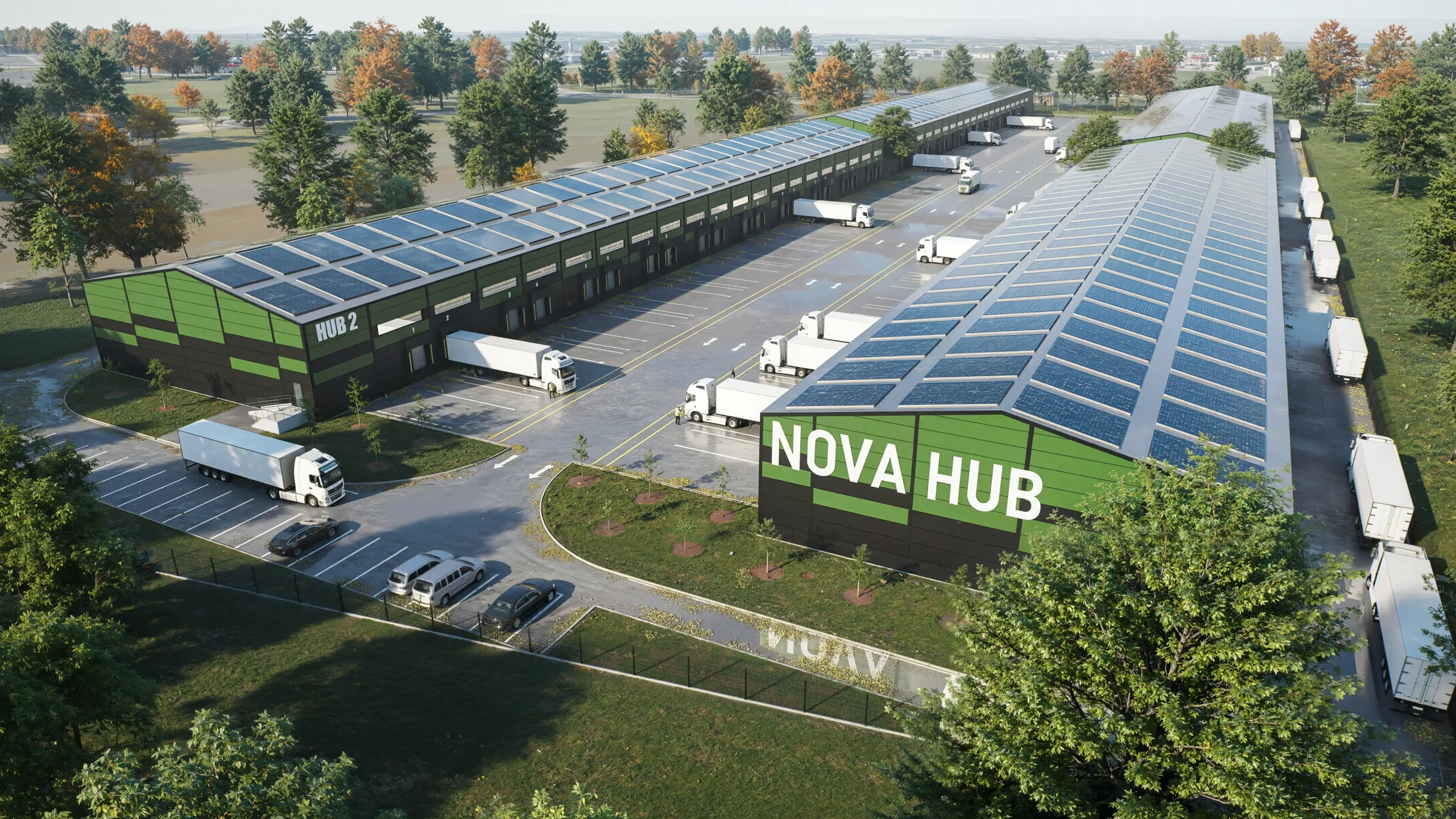
NovaHub focuses on modern warehouses and logistics complexes that combine strategic location with advanced engineering. One of the key advantages is integration with the Odesa–Kyiv corridor and proximity to the sea port, dry port, and railway. This layout supports both domestic distribution and export flows with minimal transit times.
For manufacturers who need a temperature-controlled warehouse in Ukraine, this type of location reduces the number of handovers and transfers that can compromise sensitive goods. It also creates a strong platform for value-added services such as consolidation, packaging, or light processing.
Modern infrastructure and energy solutions
The logistics complex concept promoted by NovaHub is based on reliable, modern infrastructure. This includes autonomous water supply, dedicated electrical capacity of around 1 MW, automatic fire alarm systems, and 24/7 video surveillance. A shelter is integrated into the design to protect people and operations in case of emergencies.
A solar power station contributes green energy, which is particularly valuable for energy-intensive refrigerated areas. Combined with high building standards, this helps maintain stable operating costs while meeting demanding client requirements.
Project management and construction quality
Project management for such complexes is carried out by experienced specialists, with a dedicated general contractor responsible for construction quality. Clear milestones are defined from the design phase through permitting to construction start and final commissioning.
This structured approach supports a realistic investment payback period, in this case targeted at around seven years. For tenants and buyers, it means that facilities are delivered on time and built using modern, reliable technologies that comply with high European standards.
Why this matters for your warm or refrigerated warehouse choice
When you place your warm, climate-controlled, or refrigerated warehouse within a larger innovative complex, you benefit from shared infrastructure, professional management, and location advantages that would be expensive to replicate on a smaller stand-alone site.
If you plan to expand or modernize storage around Odesa, it is worth considering how your needs for a warm or refrigerated warehouse can be met within an integrated logistics complex developed by NovaHub. This approach balances reliability, modern standards, speed of delivery, and construction quality.
Choosing between a warm and a refrigerated warehouse in Odesa is fundamentally a question of product requirements, risk tolerance, and long-term strategy. Warm warehouses are economical and flexible for goods that only need protection from freezing and extreme heat, while refrigerated facilities are essential for high-value, temperature-sensitive products and robust cold chains.
The most effective solutions often combine different temperature zones within one modern logistics complex that offers strong infrastructure, energy-efficient systems, and strategic access to Odesa’s transport network. When designed and executed to high standards, such facilities can achieve attractive payback periods while supporting business growth and export ambitions.
To move from theory to implementation, consider discussing your specific portfolio, logistics flows, and investment horizon with NovaHub, so you can align the right type of warehouse with the realities of your production and market.
FAQ
What is the main difference between a warm and refrigerated warehouse in Odesa?
A warm warehouse keeps goods above freezing and reduces seasonal temperature peaks, while a refrigerated warehouse maintains much lower, precisely controlled temperatures. The refrigerated option is necessary for fresh and frozen food, some pharmaceuticals, and highly temperature-sensitive products, whereas many industrial goods and less sensitive food items can safely stay in a warm environment.
When should a manufacturer choose a climate-controlled warehouse instead of full refrigeration?
A climate-controlled warehouse is ideal when products cannot freeze and need stable conditions, but do not require very low temperatures. It suits mixed portfolios where only part of the goods are highly sensitive, allowing moderate temperature ranges, zoned layouts, and lower energy use than full refrigeration while still providing documented control.
How do energy-efficiency measures impact operating costs in refrigerated warehouses?
Energy-efficiency measures such as better insulation and optimized refrigeration systems can reduce energy consumption by up to 30 percent and raise productivity by up to 25 percent according to research on refrigeration equipment. This significantly lowers operating costs and shortens the payback period, especially in energy-intensive refrigerated facilities.
Why is location near the Odesa–Kyiv highway and the port so important for temperature-controlled storage?
Being close to the Odesa–Kyiv corridor, sea port, and railway shortens transport routes, reduces delays, and minimizes temperature disruptions during loading and unloading. For cold chain logistics, fewer transfers and shorter distances directly translate into lower spoilage risk and more predictable delivery schedules.
What common mistakes do companies make when planning a new warehouse in Odesa?
Typical mistakes include designing only for current products without future-proofing, ignoring energy-efficiency potential, focusing solely on low rent or construction cost, and choosing locations far from key transport routes. Many also underestimate the importance of integrated safety systems and reliable utilities for temperature-sensitive operations.
How long is a realistic payback period for an innovative logistics complex with temperature-controlled areas?
For a modern logistics complex with around 19,174 square meters of total area, strong infrastructure, and mixed warm and refrigerated zones, a payback period of about seven years is realistic. This assumes professional project management, good occupancy, and energy-efficient design that keeps operating costs under control.
What infrastructure features should I prioritize for a temperature-controlled warehouse in Ukraine?
You should look for reliable electrical capacity, ideally around 1 MW or more for larger sites, autonomous water supply, and robust safety systems including automatic fire alarms and 24/7 video surveillance. Proximity to major highways and ports, along with available office space for operational teams, also has a strong positive impact on performance.
Can I start with a warm warehouse and later add refrigerated areas?
Yes, many manufacturers take this phased approach, but it requires planning from the start. The initial design should anticipate future cold rooms with suitable building structures, reserved plant space, and adequate power infrastructure so that later retrofitting is technically feasible and cost-effective.
How does NovaHub help manufacturers choose the right warehouse type?
NovaHub focuses on modern logistics complexes with high construction standards, strong infrastructure, and flexible layouts that can accommodate warm, climate-controlled, and refrigerated zones. By analyzing a client’s product mix, logistics flows, and investment goals, NovaHub helps align temperature regimes, location, and design choices into a coherent long-term solution.