


Autonomous warehouse water at NovaHub secures operations during municipal outages, improves staff conditions, supports safety systems, and strengthens ESG performance, giving tenants a more resilient and efficient logistics base.
In the current logistics landscape, resilience and predictability of operations are as critical as rental price or warehouse size. For tenants handling fast-moving goods, pharmaceuticals, food, or industrial components, any interruption in utilities can instantly translate into missed delivery slots and contractual penalties. That is why more investors and occupiers are paying close attention to infrastructure features that used to be taken for granted, such as autonomous water supply for the warehouse.
This article explains how independent water systems in logistics complexes work from the tenant’s perspective, what benefits they bring in everyday operations, and where their limitations lie. We will use the NovaHub project near Odesa as a practical reference point, since it combines an artesian well, a solar power station, and a powerful 1 MW electrical connection in a single, modern logistics ecosystem. You will see concrete examples, typical mistakes when evaluating such facilities, and clear recommendations to help you choose a warehouse that supports stable, safe, and cost‑efficient operations.
What does autonomous water supply in a logistics complex actually mean?
Core components of an independent warehouse water system
In simple terms, an autonomous water system means the complex is not fully dependent on a municipal network. At NovaHub, this autonomy is achieved through an artesian well integrated into the internal infrastructure, which serves as a primary and backup source for technical and domestic needs.
Such a system usually includes a borehole or well, pumping equipment, on-site storage tanks, treatment units when needed, and a distribution network throughout the buildings. The combination allows the hub to maintain service continuity even when city infrastructure faces disruptions or pressure drops.
How it differs from a standard municipal-only connection
Traditional warehouses rely entirely on city pipelines. If pressure falls or repairs start upstream, the entire site can lose supply. Tenants are then forced to suspend certain processes, limit staff presence, or bring in bottled or trucked water at emergency rates.
With autonomy, the facility can either operate in fully independent mode or in a hybrid configuration that supplements city water with its own resource. For a logistics complex that also uses solar generation and has a robust 1 MW grid connection, like NovaHub, water production and distribution can continue even during partial power outages through prioritized loads and backup planning.
Why water resilience has become a strategic issue near Odesa
Recent years have highlighted how vulnerable critical infrastructure can be in and around Odesa. Interruptions in city utilities, including water, have become a real risk factor that logistics managers must consider when selecting facilities for regional or national distribution.
For tenants whose supply chains depend on the Odesa–Kyiv corridor, locating inventory in a site that can operate through disruptions has tangible value. Independent water, coupled with on-site power generation and security infrastructure, transforms the warehouse from a simple storage box into a resilient node in the network.
How tenants actually use autonomous water in daily warehouse operations
Support for staff, offices, and amenities
Modern warehouses are no longer just large sheds. NovaHub, for example, includes 2,460 m² of office space integrated into a total built area of 19,174 m². This means hundreds of people can work on site during peak shifts, using restrooms, kitchens, and showers.
Consistent water supply keeps these amenities fully functional. Tenants can maintain normal hygiene and comfort standards for staff even if the municipal network is unstable, which is particularly important for long shifts, night operations, and emergency shelter use.
Operational processes that depend on water
Beyond staff needs, many warehouse processes rely on stable water availability. This includes cleaning of docks and ramps, maintenance of equipment, and sometimes basic technical uses such as humidification or temperature control in specific storage zones.
At a complex with working heights of 8 to 12 meters, regular cleaning and maintenance are essential for safety and dust control. An independent water system allows these routines to continue according to schedule rather than being postponed because of city supply constraints.
Fire safety integration with autonomous systems
NovaHub is equipped with an automatic fire alarm system and designed as a modern logistics hub. While alarm and suppression systems may use different technical circuits, their overall reliability is higher when water infrastructure is not exposed to single points of failure in the municipal network.
In practice, this means tenants can trust that both detection and firefighting resources have been planned together within a broader resilience concept that also includes 24/7 video surveillance and on‑site shelter facilities.
Key advantages and limitations for tenants: honest pros and cons
Advantages of autonomous water supply
From a tenant’s perspective, autonomous water brings a mix of operational, financial, and risk-management benefits. Below is a concise overview.
- Higher operational continuity: The warehouse can function during municipal outages, so loading, unloading, and office work remain uninterrupted.
- Better risk control: Companies reduce exposure to city infrastructure failures in the Odesa region and along the Odesa–Kyiv corridor.
- Improved working conditions: Staff facilities such as restrooms, kitchens, and showers can operate reliably, supporting productivity and morale.
- Support for safety systems: Water-dependent safety and cleaning routines are less likely to be compromised.
- Alignment with ESG goals: When combined with a solar station, the water system can contribute to a more environmentally responsible warehouse complex.
Limitations and trade-offs tenants should be aware of
There are also constraints that responsible tenants and investors should consider. A balanced view helps avoid disappointment and ensures realistic expectations.
- Not always potable by default: Water from an artesian well may need additional treatment before it can be used for drinking, which can limit direct consumption.
- Capacity is finite: Peak demand from several large tenants may require careful planning to avoid pressure drops or supply prioritization.
- Maintenance dependency: The reliability of autonomy depends on how well the owner maintains pumps, filters, and storage tanks.
- Regulatory constraints: Local regulations can affect how water is classified and used, especially for food or pharma operations.
- Cost allocation questions: There may be specific clauses in the lease about how investment and operating costs are reflected in service charges.
Simple comparison: municipal only vs autonomous + municipal
The table below summarizes the main differences between a purely municipal setup and a combined, independent configuration similar to NovaHub.
| Feature | Municipal-only warehouse | Autonomous + municipal complex |
|---|---|---|
| Primary water source | City pipeline | Artesian well plus city pipeline |
| Resilience to outages | Low, full dependence on city | High, independent supply available |
| Support for long outages | Limited, requires external trucks | Possible, subject to well capacity and storage |
| ESG profile | Standard, grid-only utilities | Enhanced when combined with solar power |
| Operational planning | Contingency plans rely on external vendors | Contingency built into site infrastructure |
How NovaHub’s infrastructure turns autonomy into a business advantage
Integrated infrastructure in a modern logistics center
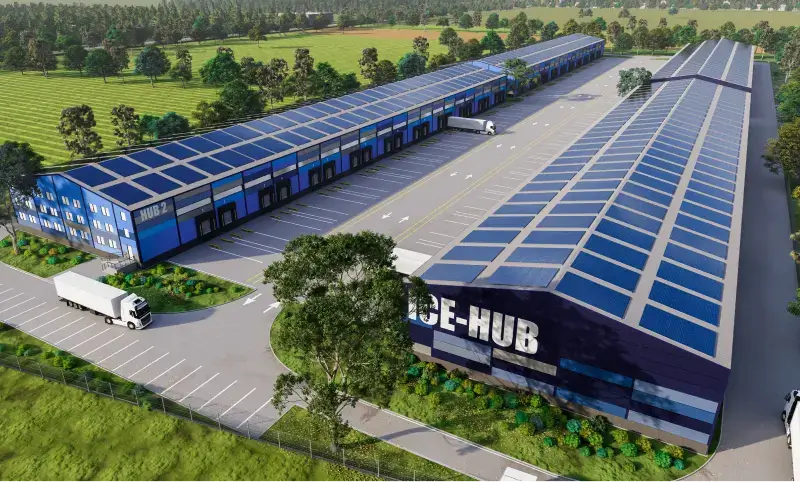
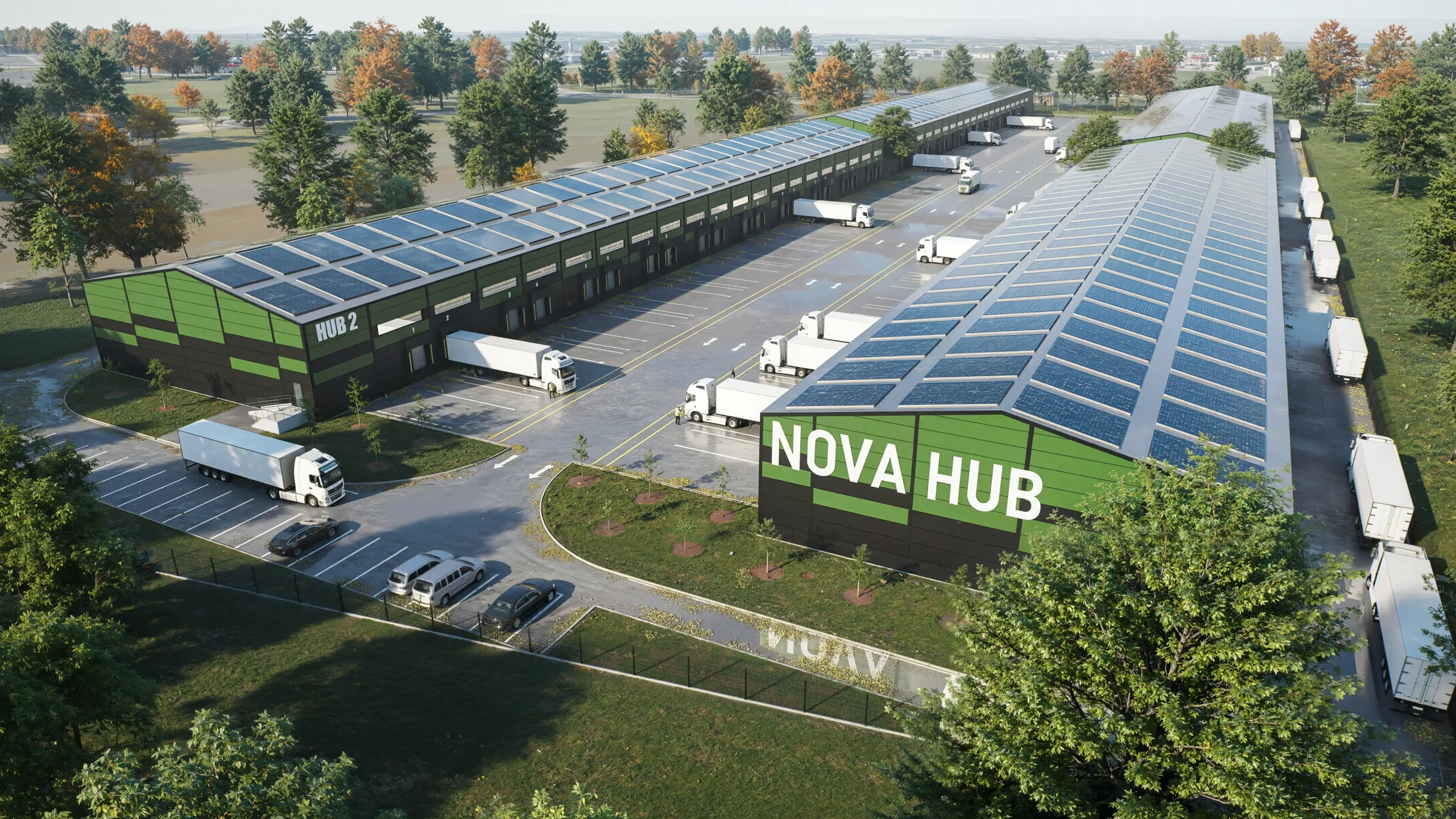
NovaHub is designed as a contemporary logistics complex with a total land plot of 41,970 m² and four separate warehouse buildings (HUB 1–4) that can work independently or as a single system. The total built area of 19,174 m² includes extensive warehouse space and modern offices.
The site is positioned near the Odesa–Kyiv highway and close to seaport, dry port, and rail connections. This location, combined with loading docks, ramps, and parking for both trucks and cars, makes it a prime distribution node for regional and international flows.
Technical synergy: water, power, and safety systems
The autonomous water system is only one element of a broader infrastructure package. The complex has a 1 MW electrical capacity and a solar power station that supports energy autonomy and reduces environmental impact.
Together with an automatic fire alarm system, 24/7 video surveillance, and on‑site shelter facilities, this creates a robust and secure environment for tenants that value reliability and staff safety as much as rental cost.
Project management and construction quality
The project is managed by TOV “SK GROUP” with TOV “BAU‑CENTER” acting as general contractor. The schedule includes project design from April to November 2025, permitting through early January 2026, construction start in mid‑January 2026, and commissioning planned for August 2026.
For tenants and investors, this structured roadmap and clear responsibilities signal reliability, contemporary standards, and fast yet controlled execution. According to the investment data, the expected payback period is about seven years, reflecting confidence in demand for a modern, environmentally responsible logistics hub with resilient utilities.
| Parameter | NovaHub logistics complex |
|---|---|
| Total land area | 41,970 m² |
| Total premises area | 19,174 m² |
| Office space | 2,460 m² |
| Power capacity | 1 MW plus solar station |
| Water infrastructure | Artesian well, autonomous supply |
| Buildings | 4 independent hubs (HUB 1–4) |
| Planned commissioning | August 2026 |
Fit for tenants seeking an environmentally responsible complex
Tenants that prioritize an environmentally clean warehouse complex with high construction standards will see added value in the combination of independent water and solar generation. This pairing reduces exposure to external utility issues and aligns with ESG targets, especially for international companies with reporting obligations.
In short, NovaHub is positioned not only as a storage facility but as a resilient, sustainable platform that supports higher service levels and long‑term operational planning.
Realistic scenarios: how autonomy protects tenant operations
Scenario 1: Municipal outage during peak season
Imagine a tenant running a distribution center for consumer electronics with significant volumes passing through before the holiday season. A sudden municipal network problem in the Odesa region cuts external water pressure for 24 hours.
In a conventional facility, management might have to reduce staff, close restrooms, and delay cleaning, which in turn can slow operations and damage brand reputation. In a complex with its own well and internal storage, the tenant can continue to operate almost normally, while simultaneously implementing conservation measures to extend reserves if the outage lasts longer than expected.
Scenario 2: Increased hygiene requirements for sensitive goods
Consider a company storing packaging materials and components for food producers. It must keep docks, floors, and storage areas clean to comply with client audits and contractual hygiene standards.
With independent water and a robust power supply, cleaning schedules can remain consistent, reducing the risk of non‑compliance. The fact that the complex uses high-quality construction and modern systems further supports audit readiness and client confidence.
Scenario 3: Coordinated emergency response on site
In an emergency such as a regional infrastructure incident, staff may need to use the on‑site shelter within the complex. Stable water and power supplies significantly improve the ability to maintain acceptable conditions inside the shelter and support staff until the situation normalizes.
For tenants with strong duty-of-care policies, this combination of shelter, autonomous utilities, and constant surveillance becomes a decisive argument when choosing between different facilities in the Odesa–Kyiv corridor.
Common mistakes when evaluating autonomous water in warehouses
Mistake 1: Assuming all autonomy is equal
Many tenants hear “autonomous water” and assume identical performance at every site. In reality, capacity, redundancy, and integration with electrical supply can vary widely from one warehouse to another.
To avoid this error, always request technical details on well depth, pumping capacity, storage volume, and how critical loads are prioritized during outages. Do not rely only on marketing labels.
Mistake 2: Ignoring quality and treatment requirements
Another common oversight is assuming that well water is automatically suitable for drinking and food-related uses. In practice, water quality can differ by region and geological structure.
Tenants should ask whether water at the chosen site is used mainly for technical and sanitary purposes or also for direct consumption, and whether any treatment systems are in place or required at tenant level.
Mistake 3: Underestimating maintenance responsibilities
Even the best-designed system will not deliver value if it is poorly maintained. Some tenants do not check how often equipment is serviced or tested and who bears which responsibilities under the lease.
Clarify maintenance schedules, response times for failures, and reporting obligations. This is especially relevant in a complex where four hubs can operate independently, since coordination between owner and multiple tenants is crucial.
Mistake 4: Focusing only on rent level, not total value
Decision makers sometimes treat rent price per square meter as the primary criterion while ignoring the value of reduced downtime and improved resilience. This narrow focus can lead to choosing cheaper but less reliable facilities.
When comparing options, include potential costs of outages, emergency water deliveries, staff downtime, and reputational impact. Often, a more advanced site with autonomous utilities and modern standards provides better total cost of ownership.

Practical tips for tenants considering an autonomous water warehouse
Questions to ask the landlord or developer
Before signing a lease, it is worth preparing a focused checklist. The following questions will help you understand the real capabilities of the water system and its integration into the broader infrastructure.
- Capacity and coverage: What is the maximum daily and hourly water output from the autonomous system, and which buildings does it serve?
- Backup planning: How long can the complex operate solely on its well and internal storage if municipal water is unavailable?
- Quality and usage: For which purposes is the water certified or intended: sanitary, technical, or drinking?
- Maintenance and monitoring: Who is responsible for preventive maintenance, and how are tenants informed about planned works or incidents?
- Cost structure: How are investment and running costs reflected in service charges or utility bills?
How to integrate site capabilities into your business continuity plan
Once you understand the facility’s capabilities, incorporate them into your internal continuity and safety plans. Define which processes are critical during outages and which can be postponed.
For example, when using a hub like NovaHub with its own well and solar station, you can prioritize operational and sanitary needs, while scheduling noncritical, water-intensive activities for periods of normal municipal supply.
Aligning ESG goals with infrastructure choices
Many international shippers and 3PLs must report on environmental and social performance. Choosing an environmentally clean warehouse complex with autonomous water and solar generation can support these commitments.
Document in your ESG reports how such infrastructure reduces reliance on stressed municipal resources and lowers the need for diesel-powered emergency water or power deliveries, especially in regions facing infrastructure challenges.
Leveraging NovaHub as a long-term logistics base
For companies focused on southern Ukraine and Black Sea trade lanes, building operations around a strategically located complex with resilient utilities can improve service reliability to clients. The clear construction schedule and expected seven-year payback period indicate a stable, long‑term project rather than a short-lived initiative.
If you plan multi-year distribution operations, consider how a modern logistics center with independent water, strong power infrastructure, high security, and high construction standards fits into your wider network design.
How NovaHub combines autonomy, reliability, and modern standards
Reliable, modern construction for demanding tenants
NovaHub has been conceived as a high-standard logistics asset with contemporary design, efficient loading operations, and flexible warehouse modules. Each of the four hubs can function alone or in combination with others, which allows tenants to scale space as their business grows.
This flexibility is backed by robust engineering. Independent water, 1 MW electrical capacity, a solar power plant, and advanced safety systems are integrated into a single concept rather than added as separate features.
Speed and quality in project delivery
The detailed project timeline, spanning design, permitting, construction, and commissioning up to August 2026, reflects a disciplined approach to development. Tenants and investors can plan ahead with a clear understanding of when space will be available.
Combined with modern engineering and high construction standards, this positions NovaHub as a reliable partner for companies seeking both speed and quality in establishing new warehouse operations.
Strategic location and investment perspective
The site’s proximity to the Odesa–Kyiv highway, seaport, dry port, and railway lines puts it at the heart of regional and international trade flows. This location, together with resilient utilities and security infrastructure, enhances its attractiveness as a core distribution hub.
According to project data, the expected investment payback period is about seven years. This supports the view that the combination of strategic location, modern engineering, and autonomous utilities is commercially compelling for long-term investors and occupiers.
For more details on the broader concept and specifications, potential tenants and investors can review the investment in the NovaHub logistics complex and discuss specific requirements directly with the project team.
Independent water supply in a warehouse complex is no longer a niche feature. In regions with infrastructure risks, it has become a key factor in operational resilience and staff safety. When combined with robust power systems, solar generation, and modern safety infrastructure, autonomous water turns a standard warehouse into a strategic logistics platform.
As the NovaHub project near Odesa shows, tenants can benefit from both higher resilience and alignment with environmental and social goals. When choosing a facility, evaluate water autonomy with the same rigor as location, loading technology, and security systems.
By asking the right questions and integrating site capabilities into your business continuity planning, you can secure a warehouse base that supports reliable service levels, protects staff, and strengthens your overall supply chain. Companies that make this choice early will be better prepared for future disruptions and more competitive in demanding logistics markets.
Sources
— World Bank Infrastructure Resilience Overview (2023)
— Statista Research: Global Logistics and Supply Chain Risks (2024)
— McKinsey & Company, “Warehousing of the Future” Industry Report
— Logistics Real Estate Council, Utilities and ESG Guidelines (2023)
— Regional Infrastructure Review, Black Sea Corridor (2024)
FAQ
What does autonomous water supply mean in a warehouse context?
It means the logistics complex is not fully dependent on the city pipeline and uses its own source, such as an artesian well, with pumps, storage, and internal distribution. At NovaHub, this allows the site to keep operations and staff amenities running even if municipal water is disrupted.
How does NovaHub’s autonomous water system benefit tenants during outages?
Tenants can continue using restrooms, kitchens, and cleaning processes when the municipal network has problems. This reduces downtime, helps maintain hygiene and safety standards, and supports uninterrupted operations in the Odesa–Kyiv corridor.
Is the autonomous water at NovaHub suitable for drinking?
The article explains that well water is primarily used for sanitary and technical purposes, and that potability always depends on local quality and treatment. Tenants should clarify intended usage and any treatment requirements with the landlord before relying on it as drinking water.
How does autonomous water interact with NovaHub’s power and solar systems?
The complex has a 1 MW electrical capacity supported by a solar power station, which helps run pumps and distribution equipment even during grid issues. This combination increases overall resilience and ensures the water system can function during many types of disruptions.
What are the main drawbacks of relying on an autonomous water system?
Limitations include finite capacity, the need for regular maintenance, potential regulatory constraints on usage, and possible additional costs reflected in service charges. The article recommends that tenants review technical specs and lease clauses carefully.
How large is the NovaHub logistics complex?
NovaHub’s land plot covers 41,970 m², with total premises of 19,174 m² and 2,460 m² of office space. The complex consists of four warehouse buildings (HUB 1–4) that can operate independently or as one integrated system.
When will NovaHub be ready for tenant operations?
The project plan foresees design completion in late November 2025, permitting by early January 2026, construction starting mid‑January 2026, and commissioning in August 2026. This allows tenants to plan their occupancy timelines in advance.
What questions should tenants ask about an autonomous water system before leasing?
The article suggests asking about capacity, backup duration, intended uses (sanitary, technical, drinking), maintenance responsibilities, and cost allocation. These questions help tenants understand how the system will perform during normal operations and emergencies.
How does NovaHub support ESG and sustainability goals for tenants?
NovaHub combines an artesian water source with a solar power station and modern construction standards, reducing reliance on stressed municipal resources and fossil-fuel-based emergency measures. This can strengthen tenants’ ESG reporting and environmental positioning.
Why is location near Odesa important for a resilient logistics hub?
The complex is close to the Odesa–Kyiv highway, seaport, dry port, and railway, which are central to regional and international trade flows. Having resilient utilities in such a strategic location helps tenants maintain service levels even when regional infrastructure faces stress.