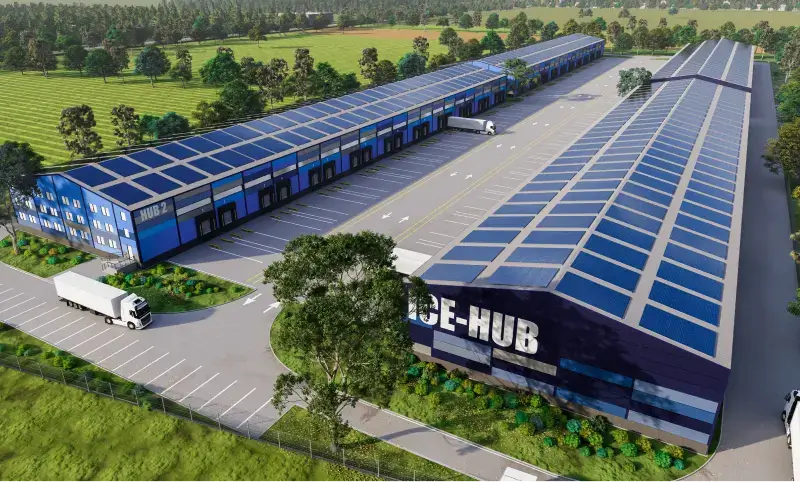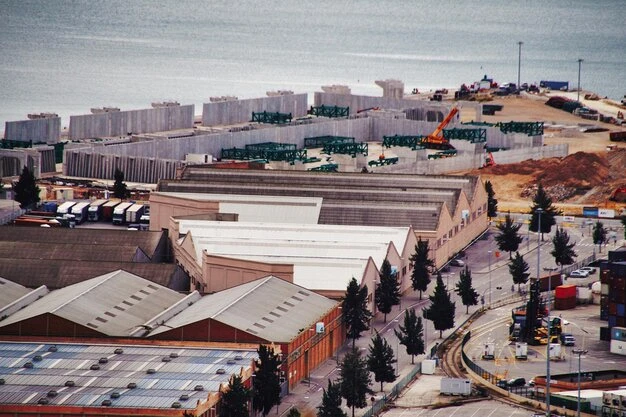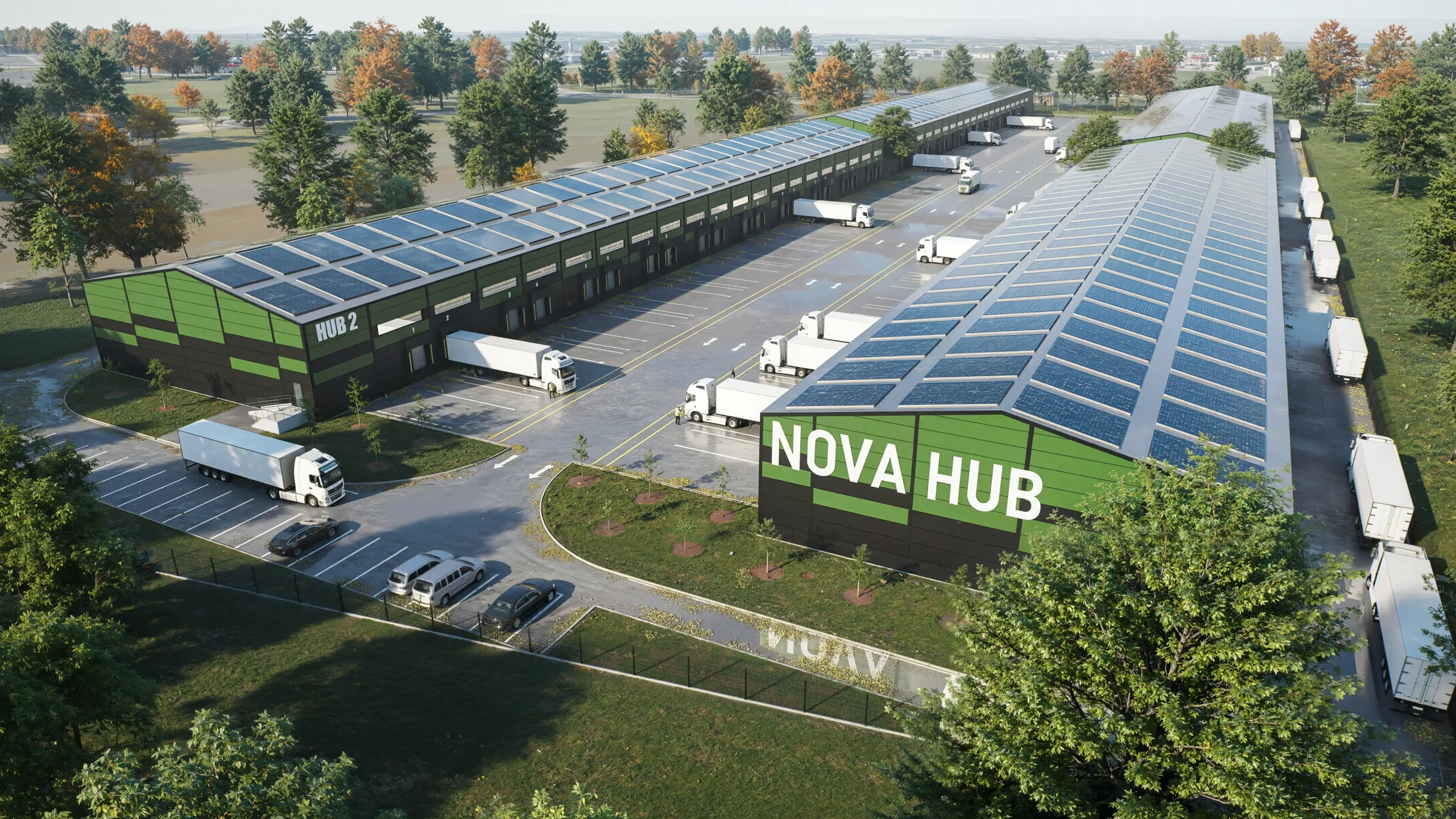


A modern logistics complex near the Port of Odesa benefits from concentrated cargo flows, lower transport costs, and value-added services, which together support higher occupancy, stronger pricing, and more stable long-term warehouse income.
Over the last decade, investors and shippers have watched Ukraine’s Black Sea gateways become strategic assets for regional trade. Among them, the Port of Odesa stands out as a natural magnet for containerized and bulk cargo. For warehouse owners and developers, the question is no longer whether to enter this market, but how to structure investments so that a warehouse or logistics complex generates stable and rising revenue.
This article explains why a logistics hub located close to the Port of Odesa often outperforms inland assets in terms of yield and resilience. We will examine cargo flows, land and construction economics, operational advantages, risk factors, and the real drivers behind higher profitability of a logistics complex. You will also see practical examples, common mistakes, and concrete recommendations based on how NovaHub designs and builds modern storage and logistics facilities that comply with high European standards.
By the end, you will understand which location criteria matter most, how to plan infrastructure and contracts, and what it takes to secure stable income from a warehouse while leveraging the unique position of Odesa in the wider logistics system of Ukraine.
📍 Why proximity to the Port of Odesa changes the business model
Strategic role of Odesa in regional trade
The Port of Odesa functions as one of the key maritime gateways for Ukraine and the wider Black Sea region. It concentrates container, general, and bulk cargo that serves not only domestic needs but also transit flows to Central and Eastern Europe. This concentration of demand creates a structural advantage for any logistics center of Ukraine positioned in the immediate catchment area.
Because many shippers must use Odesa for geographical or cost reasons, warehouse and distribution capacity around the port is less sensitive to short term shifts in demand. That translates into higher occupancy rates, more stable rental income, and better long term asset performance compared with isolated inland facilities that rely on a smaller customer base.
Shorter physical distance and lower transport cost
When a warehouse is located within a short drive from the port gates, trucking distances fall, which cuts fuel, driver, and maintenance costs for customers. For many cargo types, shaving even 20 to 30 kilometers off each leg of transport can be decisive when choosing a long term logistics partner.
Put simply, the closer a facility is to the quays, the fewer empty or partially loaded kilometers occur. That cost efficiency allows operators near Odesa to command slightly higher service fees without losing competitiveness, which improves the overall profitability of the logistics complex.
Speed and flexibility for shippers
Time is often more valuable than distance. Proximity allows cargo owners to move shipments quickly between vessel and storage, then onward to rail or road. This is critical for perishable goods, high value components, or urgent spare parts that cannot wait in congested terminals.
Fast turnaround also lets warehouse operators offer value added services such as cross docking, quality control checks, and consolidation for export. Those extra services generate additional revenue streams that would be difficult to capture from a remote site far from the Port of Odesa.
📦 How a port-adjacent logistics hub boosts revenue streams
Higher occupancy and better tenant mix
Facilities close to the port usually attract a diverse range of tenants. These may include freight forwarders, shipping lines, importers, exporters, and third party logistics providers. The diversity spreads risk and reduces dependence on a single industry. It also smooths seasonality because not all tenants peak at the same time.
In many cases, warehouses near Odesa operate with occupancy levels that remain high even during economic slowdowns. This directly supports the goal of achieving stable income from a warehouse and creates a stronger base for long term investment planning.
Premium pricing for integrated services
Operators that combine storage with customs clearance, packaging, labeling, and last mile distribution can charge a premium because clients receive an integrated solution in one location. The geographical advantage near the port amplifies this value proposition.
In practice, the profitability of the logistics complex does not come only from rent per square foot. It also emerges from margin rich services such as palletizing, temperature controlled storage, or bonded warehousing that are far more attractive when carried out close to the maritime gateway.
Better use of land and building specifications
Land near any major port is usually scarce and more expensive, so every square foot has to work harder. Modern developers like NovaHub design buildings with higher clear heights, optimized column grids, and loading dock configurations that allow more throughput per square foot.
As a result, even though land costs are higher, revenue per square foot from storage and throughput services also rises. In many cases, this ratio makes a well planned facility near the Port of Odesa more profitable than a larger but less efficient shed located far inland.
📊 Comparing port-adjacent and inland logistics facilities
To understand the economic difference, it helps to compare typical characteristics. Figures below are illustrative but reflect common patterns seen in port related developments.
| Parameter | Near Port of Odesa | Inland Location (100+ km) |
|---|---|---|
| Average occupancy | 90–95% | 75–85% |
| Rent per sq m per year | 10–15% higher | Baseline |
| Ancillary service revenue share | 25–35% of total | 10–20% of total |
| Truck turnaround time | 2–4 hours | 4–8 hours |
| Typical contract length | 3–7 years | 1–5 years |
In essence, near port facilities often balance slightly higher capital expenditure with stronger and more diversified income. For investors focusing on a logistics center of Ukraine, Odesa offers a combination of throughput potential and contract stability that is hard to replicate inland.
Example ROI comparison
| Scenario | Initial Investment | Net Yield (Year 3) | Payback Period |
|---|---|---|---|
| Port-adjacent hub | Higher by 15% | 8–9% | 9–11 years |
| Inland warehouse | Baseline | 6–7% | 12–14 years |
Although these numbers will change with market cycles, the structural premium for a well located asset close to the Port of Odesa remains visible. Investors accept a higher upfront cost because the long run income stream is stronger and more resilient.
⚙️ Pros and cons of building near the Port of Odesa
Main advantages
- Concentrated demand: Large and stable cargo flows around the port help maintain high occupancy levels and reduce the risk of vacant space.
- Service premium: Ability to combine storage, customs, and value added services allows operators to capture additional revenue per pallet or container.
- Competitive transport savings: Shorter trucking distances give customers measurable cost savings, which justifies slightly higher rents.
- Better tenant quality: International logistics providers and established cargo owners prefer strategic locations, which can improve payment discipline and contract length.
- Higher asset liquidity: Port related warehouses often attract more institutional buyers, which supports long term asset valuation.
Key limitations and risks
- Higher land prices: Scarcity of suitable plots near the port can increase entry cost and requires careful financial modeling.
- Regulatory complexity: Port areas may be subject to stricter zoning, environmental, and security requirements, which lengthen permitting procedures.
- Infrastructure congestion: Roads around terminals can become congested at peak times if public investment lags behind cargo growth.
- Geopolitical and trade risks: Maritime gateways can be impacted more directly by regional tensions or trade route shifts than some inland markets.
- Construction constraints: Limited land shapes may demand more sophisticated building design, which increases design and engineering costs.
When these pros and cons are modeled correctly, the net result for a well designed facility is normally a higher profitability of the logistics complex compared with comparable inland projects.
📚 Practical case examples from port-adjacent logistics projects
Case 1: Multi-user distribution center near Odesa
Consider a 30,000 sq m multi user distribution center developed within a short haul from Odesa’s container terminals. The facility is designed with clear heights above 12 meters, wide loading aprons, and a mix of ambient and temperature controlled zones.
In the first two years, the building secures a tenant mix of regional retailers, a freight forwarder, and an automotive spare parts distributor. Due to its location and specification, the hub maintains occupancy above 92% and generates around one third of revenue from value added services such as cross docking and labeling.
Case 2: Bonded warehouse supporting export flows
Another example is a medium sized bonded warehouse dedicated to agricultural exports. Positioned close to the port’s bulk terminals, it provides pre shipment storage, quality control, and blending services. Exporters use the facility to synchronize rail deliveries from inland elevators with vessel schedules at Odesa.
Because of tight integration with port operations, the warehouse charges service fees that are higher than inland grain silos. Yet customers accept these rates because delays at the quayside are far more costly. This illustrates how strategic location close to the Port of Odesa can secure stable income from a warehouse even in highly competitive commodity sectors.
Case 3: NovaHub style modern complex focused on flexibility
Developers like NovaHub emphasize contemporary design, reliable construction methods, and high European standards when building new logistics complexes around Odesa. A typical NovaHub project might feature energy efficient facades, modular office inserts, and dock equipment selected for quick throughput.
In practice, this modern and reliable specification reduces operating expenses, attracts higher quality tenants, and enables faster leasing. The combination of strategic location and high build quality supports sustainable rental growth and makes the income profile more predictable for investors.
🔍 Common mistakes when planning a logistics hub near Odesa
Underestimating infrastructure and access needs
One frequent mistake is to focus only on distance to the port while ignoring road quality, turning radii for trucks, or potential bottlenecks at nearby junctions. A site that is technically close but practically hard to reach will struggle to attract premium tenants.
Developers should work with traffic engineers early in the planning stage, ensure adequate access roads, and if possible coordinate with local authorities on planned upgrades to public infrastructure.
Overbuilding without market validation
Some investors are tempted to build too much space too quickly, assuming that every square meter near the port will automatically be leased. This approach can lead to longer ramp up periods and higher vacancy if the building’s features do not match current market needs.
Better practice is to phase construction, test demand with pre leases, and design flexible units that can be adjusted to different tenant sizes and sectors.
Ignoring value added services in the business model
If a financial model assumes income solely from basic storage rent, it may underestimate both potential upside and required investments. Near a major port, customers often seek integrated services, which require additional equipment and specialized staff.
Without planning for these services from the start, operators risk losing business to competitors who can offer full end to end solutions. Including realistic service revenues in the model provides a clearer picture of the true profitability of the logistics complex.
Weak attention to building standards and sustainability
Cutting corners on design or construction standards may reduce initial costs but often leads to higher maintenance expenses and lower tenant satisfaction. International clients increasingly demand energy efficient, safe, and modern facilities that comply with recognized norms.
NovaHub’s focus on speed and quality, along with compliance with European building standards, helps avoid this pitfall and supports long term value for both owners and users.
Insufficient risk diversification
Relying heavily on a single industry, such as one type of export commodity, can expose the asset to sector specific shocks. Even in a prime port location, this concentration can destabilize cash flow.
A more resilient strategy is to cultivate a balanced tenant roster that includes logistics operators, retailers, manufacturers, and service providers. That mix improves the chances of stable income from a warehouse over different economic cycles.
🧭 Practical recommendations for investors and operators
Focus on integrated location criteria, not just distance
When selecting a site, consider not only kilometers to the Port of Odesa, but also access routes, congestion patterns, and connectivity to national highways and rail corridors. An integrated view of accessibility will protect long term operating performance.
In the same spirit, assess flood risk, ground conditions, and potential future expansions to ensure that the site can support the full life cycle of the facility.
Design for flexibility and throughput
Practical experience shows that tenant needs near a port can change quickly. High clear heights, flexible bay widths, and modular office space allow the building to adapt from traditional warehousing to cross docking or light assembly without major reconstruction.
NovaHub projects typically prioritize generous truck courts, sufficient dock doors, and efficient internal circulation. This design philosophy supports higher processing speeds, which in turn increases revenue potential per square foot.
Build value added service capability from day one
To fully capture the economic benefits of being close to the port, plan zones for services such as kitting, re packaging, light manufacturing, and quality inspection. Equip these areas with appropriate lighting, power supply, and safety systems.
In the long run, these capabilities make it easier to sign longer contracts with sophisticated clients who seek more than simple storage and who value strategic cooperation over many years.
Use conservative but realistic financial modeling
In summary, a well located warehouse near Odesa has strong potential but should still be evaluated with disciplined assumptions. Model different occupancy scenarios, rent levels, and service revenue shares rather than assuming best case outcomes only.
Collaborating with experienced developers like NovaHub helps align technical design with financial goals so that projected cash flow and risk profile are grounded in real market behavior.
Strengthen resilience with robust contracts and operations
To secure stable income from a warehouse, pay close attention to lease structures, indexation clauses, and service level agreements. Longer leases with reliable tenants cushion short term volatility and reduce re leasing risk.
Operationally, invest in competent management, safety culture, and preventive maintenance. These elements protect asset value and preserve tenant confidence, which are both essential for long term profitability.

📈 How NovaHub’s approach amplifies profitability near Odesa
Reliability as a foundation
NovaHub emphasizes reliability in both construction and long term operation. This means using proven materials, clear technical specifications, and project management practices that reduce delays and defects.
When tenants experience predictable building performance, they are more likely to extend leases and commit to joint investments in equipment and process optimization. This creates a virtuous cycle that supports the overall profitability of the logistics complex.
Contemporary design and high European standards
Facilities delivered by NovaHub are designed according to modern European standards for structural safety, fire protection, energy performance, and workplace ergonomics. Those standards are not only marketing claims, they translate into tangible benefits for operators and staff.
For example, efficient insulation and lighting reduce utility costs, while well planned loading zones reduce the risk of accidents. These features matter especially in competitive port environments where international customers compare alternative facilities with similar rent levels.
Speed and quality in project delivery
In fast changing markets, timing is critical. NovaHub combines professional planning with efficient construction processes to deliver new facilities within tight schedules, without sacrificing quality.
In short, faster delivery allows investors and tenants to capture market opportunities sooner, which can significantly improve overall return on investment, particularly in strategic locations near the Port of Odesa.
🕊️ Long term outlook for port-adjacent logistics in Ukraine
Role in rebuilding and regional integration
As Ukraine deepens economic ties with European and global partners, the demand for efficient and resilient logistics infrastructure around key ports is expected to grow. Odesa is likely to remain a central platform for both import and export flows.
A well located logistics center of Ukraine near this port can therefore play a structural role in regional supply chains, supporting manufacturing, retail, and agriculture while delivering long term value to investors.
Technological and sustainability trends
Over the coming years, more automation, digital tracking, and green building practices will shape how logistics assets operate. Port adjacent hubs are natural candidates for early adoption because scale and cargo density justify investment in new technology.
Developers and operators that prepare now with flexible layouts, robust IT infrastructure, and energy efficient envelopes will be better placed to capture future demand and mitigate regulatory risks.
Resilience through diversification
No market is without risk, particularly one linked to international trade. However, assets that serve multiple industries, offer a range of services, and maintain high technical standards are better equipped to manage uncertainty.
Near the Port of Odesa, this resilience is strengthened by the broad mix of cargo types and trade partners. With thoughtful planning, investors can harness these structural advantages to ensure that the profitability of their logistics complex remains attractive over decades, not just single cycles.
✅ Conclusion
A logistics hub located close to the Port of Odesa usually generates higher and more resilient income because it benefits from concentrated cargo flows, lower transport costs for customers, and strong potential for value added services. When combined with modern design, high building standards, and professional management, these location advantages translate into superior occupancy, stronger pricing power, and better asset liquidity compared with many inland facilities.
To unlock this potential, investors and operators must avoid common planning mistakes, model risks conservatively, and design facilities that can adapt to changing customer needs. NovaHub’s focus on reliability, contemporary European quality, and fast project execution offers a practical path to creating port adjacent logistics complexes that deliver stable income from a warehouse and long term capital growth.
As you plan your next steps for the coming year, consider using the New Year period as a strategic moment to review your logistics footprint and investment pipeline. The holiday season is an ideal time to align budgets, explore modern warehouse solutions, and prepare for a fresh start in the next business cycle. Visit NovaHub’s website to discover how our modern, high standard logistics complexes near key Ukrainian ports can support your long term goals and bring a sense of confidence and optimism to your New Year plans.
Sources
— World Bank, Logistics Performance Insights (2023)
— European Logistics Real Estate Outlook, Regional Report (2024)
— Black Sea Port Infrastructure Review, Industry Study (2023)
— NovaHub Internal Development Guidelines, Summary Overview (2024)
FAQ
Why does a warehouse near the Port of Odesa usually have higher occupancy?
Facilities close to the port serve concentrated cargo flows and a diverse tenant mix of forwarders, retailers, and exporters. This demand base often keeps occupancy in the 90–95% range, higher than many inland warehouses.
How exactly does proximity to the port improve profitability of the logistics complex?
Shorter trucking distances reduce transport costs for clients, while fast turnaround enables value added services like cross docking and labeling. These factors support higher rents and service fees without losing competitiveness.
What are the main risks of building a logistics hub near Odesa?
Key risks include higher land prices, regulatory complexity in port areas, potential road congestion, and exposure to geopolitical or trade route shifts. Careful site selection and conservative financial modeling help mitigate these risks.
What common planning mistakes should developers avoid near the port?
Typical errors are underestimating access infrastructure, overbuilding without market validation, ignoring value added services in the business model, lowering building standards, and relying too heavily on a single industry segment.
How does NovaHub’s construction approach support stable income from a warehouse?
NovaHub combines reliable construction, modern European standards, and efficient project delivery. This attracts quality tenants, reduces operating issues, and supports longer leases, which together stabilize cash flow.
What kind of additional services should a port-adjacent warehouse provide?
High value services include customs related handling, palletizing, re packaging, quality control, temperature controlled storage, and cross docking. Near the port, these services are in high demand and add significantly to total revenue.
Is it better to build one large facility or phase development near Odesa?
Phased development is usually safer. It lets investors test demand, adjust building features, and reduce the risk of prolonged vacancy while still benefiting from the strategic port location.
How do modern building standards influence tenant attraction?
International tenants look for safe, energy efficient, and ergonomic facilities. High European standards in areas like fire safety, insulation, and dock design make a logistics center more attractive and support premium pricing.
When is the best time to plan a new logistics investment near the Port of Odesa?
Year end and New Year planning cycles are ideal, because many companies set budgets and revise logistics strategies then. Aligning a NovaHub style project with this schedule increases the chance of securing anchor tenants early.