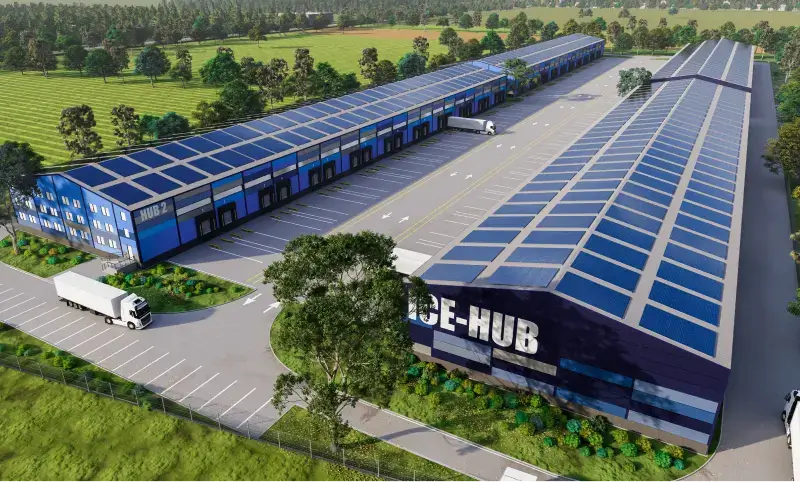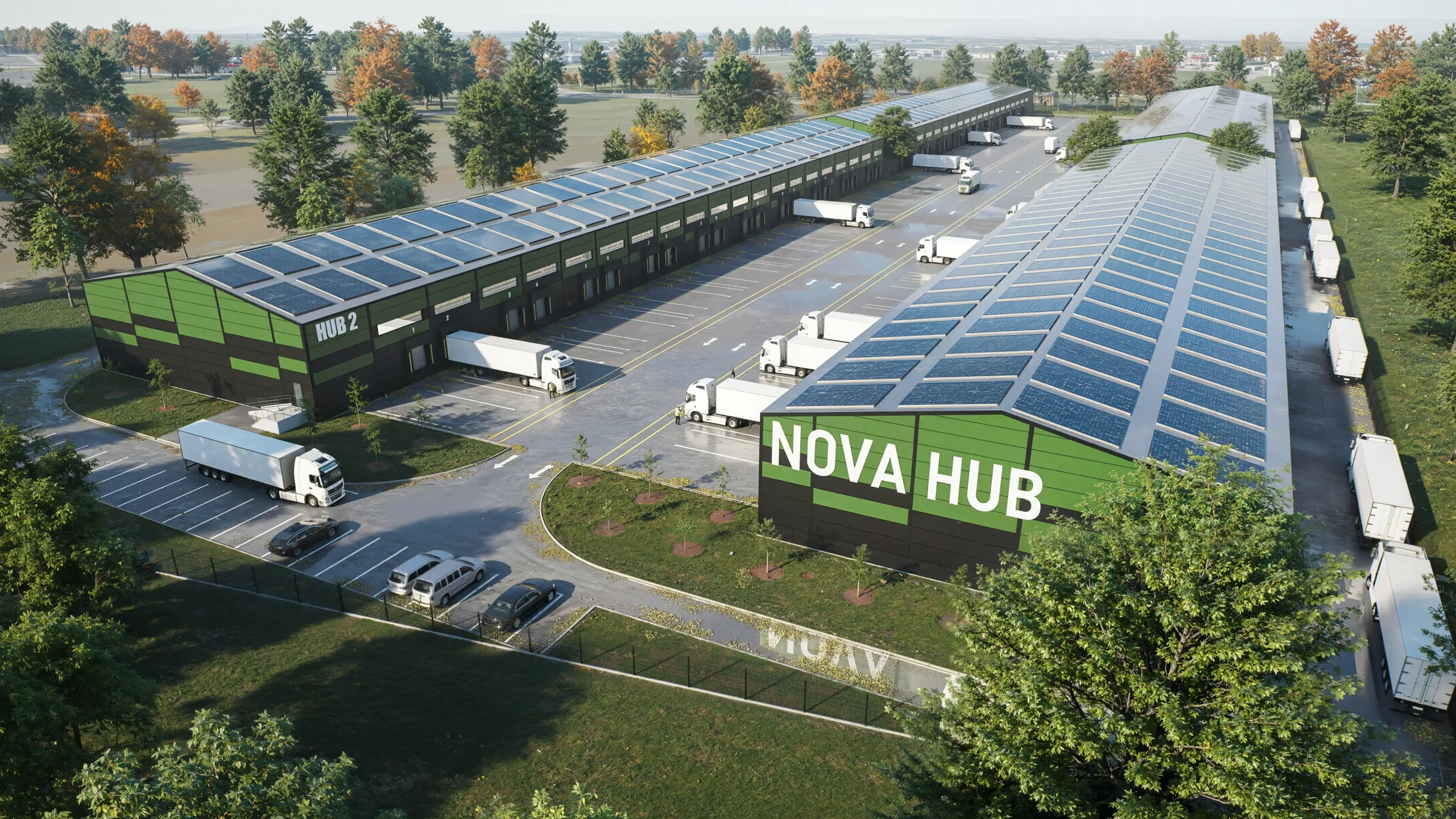



For scalable, multi region operations a modern logistics center in Ukraine is usually more profitable over 5–10 years thanks to higher efficiency and rental potential. A standalone warehouse suits stable, simpler flows with lower capital budgets. Analyze total cost of ownership, technical standards, and location, then match the asset type to your growth strategy and risk profile.
Logistics center or standalone warehouse: what is more profitable to buy?
For most growing companies in Ukraine, a modern logistics center is more profitable in the long term if you plan scalable operations, need multimodal access, and want to attract large clients. A separate warehouse can be better if your volumes are modest, your routes are simple, and you want a lower entry ticket with minimal management complexity.
Today the industrial property market in Ukraine is changing quickly. Tenants are turning into owners, e-commerce is expanding, and international standards of storage and handling are becoming the norm, especially around Odesa and other major hubs. From experience, the main mistake is to compare only the purchase price instead of the full economic effect over 5 to 10 years.
This article explains how to choose between buying a logistics center in Ukraine and a standalone warehouse. You will see cost structure, operational differences, pros and cons, practical cases, common mistakes, and step by step recommendations. We will also briefly show where NovaHub’s approach with modern European quality and reliable construction standards fits into this choice.
📦 What is the real difference between a logistics center and a standalone warehouse?
Before comparing investments, you need a clear, practical definition of each format. Many buyers mix the terms and then receive an asset that does not match their operational model.
Functional concept
A standalone warehouse is usually one or several storage buildings on a plot. It covers basic storage and sometimes simple handling functions. In contrast, a logistics center is a full-scale complex that supports flow management, cross-docking, value added services, and fast distribution to regions.
To summarize, a warehouse answers the question “where to store,” while a logistics center answers the broader question “how to move, process, and deliver goods with minimum cost and time.”
Infrastructure and components
Modern logistics centers often include class A or B storage modules, cross-dock zones, administrative and service areas, truck yards, car parking, and utility infrastructure designed for 24/7 operation. Good examples in the market combine several independent blocks for different tenant types.
A typical warehouse complex for sale can include one main storage building, simpler yard planning, and limited service space. It is still a solid asset, especially when you want to buy warehouse in Odesa closer to your import routes through the port, but it may lack scale or specialization.
Technology and management level
Advanced logistics centers are designed around digital tools and strict operating standards. Layout, ceiling height, and loading dock configuration are adapted to modern material handling equipment and warehouse management systems.
Many separate industrial premises in Odesa and other regions were built years ago and then adapted for storage. They may work well for low intensity operations, but upgrading them to a fully digital distribution hub often requires significant additional investment.
💰 How to compare total cost of ownership, not just the purchase price?
Purchase price is only the first line in your investment model. The economic result depends more on how efficiently the facility works in operations and how easily you can attract tenants or buyers in the future.
Initial acquisition and construction costs
As a rule, a logistics center in Ukraine with class A specifications requires higher capital expenditure per square foot than a basic warehouse. This is because of more complex engineering, better materials, and larger infrastructure around the building.
However, well planned modern complexes, such as those whose master plan is similar to what NovaHub presents, often compensate this capital intensity through higher rents and lower operating expenses per handled unit.
Operating expenses and efficiency
Key cost items include utilities, maintenance, security, insurance, and personnel. In a logistics center, these costs are optimized due to efficient planning, energy saving systems, and standard operating procedures.
A simple warehouse can be cheaper to maintain in absolute figures, but each unit of product handled may be more expensive because of longer routes inside the building, increased manual work, or older inefficient equipment.
Revenue potential and flexibility
Owners of modern logistics centers can attract diverse tenants. E-commerce, 3PL providers, retailers, and manufacturers value modern specifications and are ready to pay a premium. In addition, such facilities usually have better liquidity during resale, especially when located near international transport corridors.
In brief, the key takeaway is that the right logistics center often delivers higher net operating income with more stable demand, while a standalone warehouse is more of a tactical asset for specific operations or smaller tenant profiles.
Illustrative cost comparison table
| Parameter | Modern logistics center | Standalone warehouse |
|---|---|---|
| Capital cost per sq m | Higher due to complex infrastructure | Lower entry level |
| Energy efficiency | High, optimized engineering systems | Medium, often needs upgrades |
| Typical rental rate | Medium to high segment | Budget to mid segment |
| Tenant profile | International and national players | Local distributors, small firms |
| Liquidity on resale | High if location is strong | Medium and depends on niche |
📍 Why location and Ukrainian specifics matter so much?
Location is a critical factor both for logistics costs and the attractiveness of your asset. In Ukraine, with its changing transport routes and security context, this question becomes even more important.
Proximity to ports, highways, and borders
For import export oriented businesses, proximity to the Black Sea ports and international corridors is decisive. When you buy warehouse in Odesa or in nearby industrial zones, you reduce delivery time from the vessel to storage and then to inland clients.
A logistics center in Ukraine that sits near major highways and customs infrastructure can work as a regional hub for several regions at once. This multiplies the value of efficient design and modern standards of the complex.
Regional labor market and services
Large logistics centers need operators, drivers, technicians, and managers. Regions with strong industrial traditions and education infrastructure, such as Odesa, typically provide better labor availability and supporting services like truck maintenance and security.
Standalone industrial premises in Odesa that are far from the main clusters may face higher recruitment costs and less interest from 3PL and retail tenants that prefer agglomerations of industrial parks.
Security, regulations, and planning
Ukraine has particular regulatory requirements for industrial and logistics objects, including construction norms, fire safety, and land use. Professional developers design their logistics centers with these rules in mind from day one, which simplifies further operations and insurance.
Older warehouses or converted factories sometimes need extensive documentation work and retrofits to meet updated norms. This is one of the hidden costs that many first time buyers underestimate.
Local market demand
Demand for warehouse complex for sale strongly depends on local business activity. Regions with growing e-commerce, retail, and light manufacturing naturally show higher interest in class A and B facilities.
Bottom line, what matters most is matching the scale and concept of your facility to the realistic demand in its micro location, not just to your current operational needs.
⚖️ Pros and cons of buying a logistics center vs a standalone warehouse
Balanced evaluation requires a clear overview of strengths and limitations for each format. Use the lists below as a checklist during your investment planning.
Logistics center advantages and limitations
- Advantages of a logistics center
- Higher attractiveness for international and national tenants, which often means more stable occupancy and potential for long term contracts.
- Better operational efficiency due to modern planning, high ceilings, optimized loading docks, and advanced engineering systems.
- Potential for value added services such as cross-docking, light assembly, and returns processing, which can boost revenue.
- Higher liquidity on the secondary market when the complex meets European standards and is in a strategic location.
- Diversification of risk through several modules or buildings that can be leased to different tenants.
- Limitations of a logistics center
- Higher entry ticket in terms of initial investment and more complex financing or partnership structure.
- More demanding management that requires professional facility and asset management skills.
- Longer planning and construction period before you reach full operational capacity.
- Higher expectations from tenants regarding service level, technology, and maintenance quality.
Standalone warehouse advantages and limitations
- Advantages of a standalone warehouse
- Lower purchase price and simpler transaction structure, which suits small and medium companies.
- Faster entry into operations, especially when you buy an existing ready to use building.
- Simple management model when the warehouse serves mainly your own business without multiple tenants.
- Good option for specialized storage, for example spare parts or non standard cargo, where you control all processes.
- Limitations of a standalone warehouse
- Limited scalability when your volumes grow and your routes become more complex.
- Often lower level of engineering and energy efficiency, which increases long term operating expenses.
- Less attractive for large 3PL or retail operators that need full service logistics solutions.
- Higher dependence on one business model or a small group of tenants.
📊 How to evaluate technical characteristics and planning quality?
Not all logistics centers are equal, and not all warehouses are outdated. Technical characteristics and planning logic are crucial for operational efficiency and tenant interest.
Key technical parameters to review
Pay attention to clear height, floor load capacity, column grid, number and type of loading docks, and available office space. These parameters define what kind of racking and equipment you can install.
NovaHub, for example, focuses on modern European construction standards, reliable materials, and high speed construction quality control. When you evaluate any asset, check whether the developer follows similar principles.
Infrastructure and territory
Important elements include truck access, traffic circulation inside the site, parking capacity, security systems, and utility connections. For a large logistics center Ukraine location, you also need room for future expansion.
Standalone industrial premises Odesa buyers often underestimate yard planning. Poorly designed gates or narrow roads can create daily bottlenecks that destroy efficiency.
Comparison table of typical features
| Feature | Quality logistics center | Typical older warehouse |
|---|---|---|
| Clear height | 12 to 13 meters | 6 to 8 meters |
| Floor load | High, suitable for modern racking | Variable, may limit racking options |
| Dock doors | Every 600 to 800 sq m | Few or only ground level gates |
| Energy systems | Modern, energy efficient | Older, higher utility bills |
| Territory layout | Designed for safe truck flow | Often inherited from old factory use |
Using professional documentation and visualization
Projects that provide clear characteristics and master plans allow investors to understand the asset already at the concept stage. NovaHub, for instance, publishes detailed information about its logistics center features at the characteristics of the Nova Hub logistics center section.
In short, the key takeaway is that professional documentation and transparency significantly reduce your technical and legal risks before buying.
🏭 Practical scenarios: when is a logistics center better and when to choose a warehouse?
The right choice depends on your strategy, not on a universal rule. Below are real world style scenarios that show typical decision patterns for Ukrainian investors and operators.
Scenario 1: Regional e-commerce operator scaling nationwide
Imagine a mid sized e-commerce company based in Odesa that currently rents two separate warehouses scattered across the region. Order volumes grow rapidly and delivery times become unpredictable.
If this company buys a share or block in a modern logistics center, it can centralize operations, reduce last mile delivery times, and prepare for future automation. Higher initial investment is justified by increased capacity, better customer service, and the ability to attract third party clients into its own 3PL business.
Scenario 2: Importer with stable but modest volumes
Another example is a local importer of construction materials that supplies mostly within one region. Its SKU range is limited and turnover is stable, with rare peak seasons.
For this company, a compact warehouse complex for sale near the ring road of Odesa may be more rational. There is no need to pay for high level infrastructure that will stay underused. The focus should be on good access roads, appropriate ceiling height, and reliable floor loading.
Scenario 3: Investor building income generating asset
An institutional investor aims to build a long term portfolio of income generating industrial real estate. The plan is to attract large international tenants and maybe later sell the object as a stabilized asset.
Here, a class A logistics center in Ukraine with modern standards, flexible planning, and strong developer reputation is clearly more suitable. Professional tenants value quality and are usually ready to sign longer lease agreements.
Scenario 4: Owner occupier with niche operations
Some manufacturers or distributors need very specific technical conditions, for example heavy industrial equipment or oversized cargo. They may not require complex cross dock operations or high speed parcel handling.
For them, well located industrial premises Odesa with room for heavy equipment installation and customized internal layout can be the best compromise between cost and functionality.

🚫 Common mistakes when choosing between a logistics center and a warehouse
Understanding typical errors can save you months of rework and large unplanned costs. Many of these mistakes are repeated from project to project.
Focusing only on price per square meter
Investors often compare two assets solely by the purchase price per square meter without considering operational efficiency, service level, or revenue potential. This is especially risky when a cheaper building has much lower technical standards.
To avoid this, always model total cost of ownership and potential rental income for at least 7 to 10 years, not just the acquisition cost.
Ignoring planning and transport accessibility
Another frequent mistake is to underestimate yard planning, number of docks, and connection to main highways. A beautiful building that trucks cannot access efficiently quickly becomes a problem, not an asset.
Check access routes at different times of day, analyze potential congestion points, and verify whether future road projects might change logistics flows.
Underestimating regulatory and documentation issues
Some buyers rush into deals with older warehouses without full legal and technical due diligence. Later they discover that documentation, land designation, or construction permits are incomplete.
Always involve professional lawyers and engineers, and review not only current documents but also the history of the site and potential restrictions for reconstruction or expansion.
Not planning for growth and flexibility
Companies often evaluate warehouse needs only for current volumes and ignore growth scenarios. As a result, in two or three years the facility is too small or technically outdated.
Bottom line, when you choose, think in terms of your business in five years. If you see clear expansion, a modular logistics center from a reliable developer like NovaHub is usually a safer choice.
Overestimating internal management capabilities
Managing a large logistics center is a separate professional field. Some owners underestimate this and try to run everything with a small internal team not trained for complex facility management.
Consider outsourcing facility management or partnering with experienced operators, especially in the first years after commissioning.
🛠 Practical tips and recommendations for future buyers
Below are actionable steps that reflect best practices from Ukrainian and international logistics real estate projects.
1. Start with your business model and growth plan
Describe your expected cargo types, service levels, delivery geography, and growth dynamics. This document should lead your choice more than any market trend or external advice.
In brief, the key takeaway is that the building must follow your process, not the other way around.
2. Build several financial scenarios
Create at least three models: conservative, realistic, and optimistic. For each, estimate capital costs, operating expenses, rental income or internal savings, and potential exit value.
This will show whether you really need an advanced logistics center or if a well located warehouse complex for sale satisfies your financial logic.
3. Prioritize quality of construction and engineering
NovaHub emphasizes reliability, modern design, and adherence to European construction standards. Use this as a benchmark when evaluating any project. Weak engineering or low quality materials quickly translate into higher maintenance costs.
Visit actual or reference objects of the developer, speak with existing tenants, and inspect engineering rooms, not only the main storage areas.
4. Use master plans and visualization effectively
Study the layout before construction or purchase. For example, you can look at how NovaHub structures territory and buildings in its master plan section. Analyze traffic flows, expansion options, service areas, and safety zones.
Ask for 3D visualization or at least detailed 2D planning to understand future operations from the driver’s and operator’s viewpoints.
5. Assess location not only today but in the future
Try to anticipate how transport routes, city expansion, and industrial zones will develop. Logistics centers near growing corridors often increase in value faster than isolated warehouses.
Consult local experts, urban planners, or developers with a long term presence in the region to cross check your assumptions.
6. Check the developer’s track record and support tools
Reliable partners provide transparent documents, clear road maps, and even tools to monitor construction online. NovaHub, for instance, focuses on speed with quality and offers visibility over the building process.
Such support reduces your risk and lets you focus on building your logistics business rather than solving construction issues.
7. Benchmark advantages and unique selling points
When comparing several options, summarize for each project its strong sides in terms of reliability, modernity, and speed. The advantages section of NovaHub shows how professional developers clearly structure these benefits for investors.
Use similar lists for all alternative projects you evaluate to avoid emotional decisions based only on marketing materials.
📈 Evidence from global logistics and investment trends
Although each market has its specifics, international trends show where value is moving in industrial real estate. These trends help justify long term investment in modern logistics centers.
Shift toward class A facilities
According to many global logistics reports, demand for class A properties grows faster than for older stock. Tenants want energy efficiency, ESG compliance, and high throughput for omnichannel operations.
Ukraine is gradually following this pattern, especially around large cities and ports. Investors who buy or build to these standards now are better positioned for future cycles.
Integration of technology and data
Modern logistics is data driven. Facilities must support WMS, automation, and real time visibility. Buildings that cannot easily integrate these technologies lose competitiveness.
As one industry report states,
“The warehouse of the future is a data center with docks and racks, not just four walls around pallets.” — Global Logistics Insight (2023)
In short, what matters most is that your physical asset enables digital processes, not blocks them.
Resilience and diversification
Recent global disruptions highlighted the need for resilient supply chains. Companies diversify routes and prefer hubs that can handle different cargo types and partners.
Well designed logistics centers provide such flexibility better than one purpose standalone warehouses, which supports their long term investment appeal.
✅ Conclusion: how to decide what is more profitable for you?
Choosing between a logistics center and a standalone warehouse is a strategic decision. If your business expects growth, needs complex services, and wants to attract strong tenants or partners, a modern logistics center in Ukraine usually offers better long term profitability and flexibility.
A separate warehouse or compact warehouse complex can still be the optimal solution for stable, simple operations with limited geographic reach and lower capital resources. The main point is to analyze total value, not only the initial price.
NovaHub concentrates on reliability, modern European standards, and fast but controlled construction to give investors and operators a high quality base for scalable logistics. Bottom line, invest where planning, quality, and location align with your business model and growth plans.
If you are looking to secure capacity for the upcoming New Year season, now is the right moment to review your logistics infrastructure. A future ready warehouse or logistics center can turn holiday demand into stable profit and loyal customers. Explore NovaHub’s modern solutions and festive opportunities to start the new year with stronger, faster, and more reliable logistics.
Sources
— Global Logistics Insight Report (2023)
— Statista Research on Industrial Real Estate (2024)
— McKinsey & Company, Logistics Real Estate Outlook (2023)
— Ukrainian Industrial Property Market Overview, Local Consulting Group (2024)
FAQ
What is the main difference between a logistics center and a standalone warehouse?
A logistics center is a full scale complex that manages flows, cross-docking, and value added services, while a standalone warehouse mainly provides storage capacity. The center usually includes advanced infrastructure, offices, and engineered layouts for high throughput operations. This makes it better suited for scalable, multi client logistics.
When is it more profitable to choose a logistics center in Ukraine instead of a warehouse?
It is more profitable when you plan strong growth, serve several regions, or want to attract large 3PL and retail tenants. Over 5 to 10 years, higher efficiency and rental potential of a logistics center usually exceed its greater initial cost, especially in locations near ports and highways.
What are the main advantages of buying a standalone warehouse near Odesa?
A standalone warehouse near Odesa offers a lower entry price and quick start of operations for import focused businesses. It fits companies with stable but modest volumes and simple routes that do not require complex cross docking or multi client infrastructure. It can also be easier to manage with an internal team.
Which technical characteristics should I prioritize when evaluating a logistics facility?
Prioritize clear height, floor load capacity, column grid, number and type of loading docks, and layout of the yard for truck movement. These parameters directly affect racking options, throughput, and safety. The article also highlights energy efficiency and quality of engineering systems as key long term cost factors.
How does location in Ukraine influence the profitability of a logistics center?
Location defines access to ports, highways, and labor markets, which shapes transport costs and tenant demand. For example, logistics hubs near Odesa can serve import flows from the Black Sea and distribute inland efficiently. Strong locations also improve asset liquidity on the resale market.
What common mistakes do buyers make when choosing a warehouse complex for sale?
Typical mistakes include focusing only on price per square meter, ignoring yard and dock planning, underestimating legal and documentation issues, and failing to plan for future growth. Many buyers also overestimate their ability to manage complex facilities without professional support, which the article warns against.
How can I estimate total cost of ownership for a logistics center or warehouse?
Create financial models that include acquisition, construction, utilities, maintenance, personnel, and potential rental income for at least 7 to 10 years. Compare scenarios for conservative, realistic, and optimistic volumes. This approach, recommended in the article, shows whether a logistics center or a simpler warehouse offers better long term value.
Why does the article emphasize master plans and visualization when buying?
Master plans and visualization reveal traffic flows, expansion options, and risks before construction or purchase. The article notes that tools similar to NovaHub’s published master plan help investors understand how the site will function daily. This reduces technical risks and prevents expensive redesign later.
What role does developer reputation play when investing in industrial premises in Odesa?
Developer reputation reflects construction quality, adherence to standards, and transparency of documentation. As explained in the article, partners like NovaHub who focus on reliability, European standards, and controlled speed of construction reduce risks for buyers. This is especially important in complex projects like logistics centers.
How can a modern logistics center help during the New Year peak season?
A modern logistics center supports high throughput, efficient cross-docking, and real time control over orders, which are critical during New Year demand spikes. The article concludes that such infrastructure lets businesses turn holiday traffic into profit and loyalty instead of bottlenecks and lost sales.