

Modern warehouses in Ukraine deliver higher efficiency, storage density, safety, and energy savings than legacy buildings. With proper design and partners like NovaHub, they become a long-term competitive logistics asset.
Over the last few years, the Ukrainian logistics market has been forced to rethink how warehousing should work in a world of fast e-commerce, just‑in‑time manufacturing, and volatile supply chains. Many businesses still operate from Soviet‑era or improvised storage spaces, which limits automation, energy efficiency, and service quality. A new warehouse in Ukraine is no longer just a bigger building. It is a strategic tool that can cut costs, speed up order processing, and make your logistics resilient to disruptions.
This article explains how modern facilities differ from legacy warehouses, what a contemporary logistics center in Ukraine typically includes, and when it makes sense to build or buy a new asset instead of upgrading an old one. You will see practical examples, a balanced list of pros and cons, common mistakes to avoid, and concrete recommendations based on NovaHub’s experience in designing and constructing advanced warehouse and logistics complexes.
📦 What Makes a Modern Warehouse Different from Legacy Buildings?
Building design and layout optimized for logistics flows
Older warehouses often grew organically, room by room, which leads to narrow corridors, low ceilings, and dead zones where it is hard to move pallets or install racking. Modern projects start from the process map. Architects plan receiving, storage, picking, packing, and dispatch zones as one seamless flow so that trucks, forklifts, and people do not interfere with one another.
Clear separation between inbound and outbound docks reduces congestion and accidents. Higher clear heights, typically 10–12 meters, support multi‑level racking or mezzanines for e‑commerce operations. Wide column spacing and regular grid layouts make it easy to reconfigure zones as the business grows or changes its assortment.
Modern engineering systems and energy efficiency
Legacy buildings usually rely on outdated heating, ventilation, and lighting systems. As energy costs rise, they quickly become a financial burden. A modern logistics center in Ukraine is designed with energy efficiency in mind. LED lighting with motion sensors, high‑efficiency HVAC units, high‑insulation panels, and air curtains at loading docks help maintain temperature while cutting utility bills.
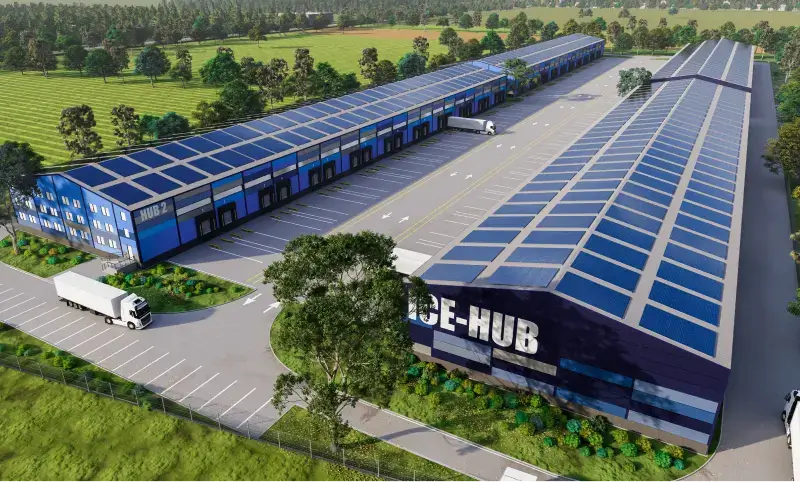
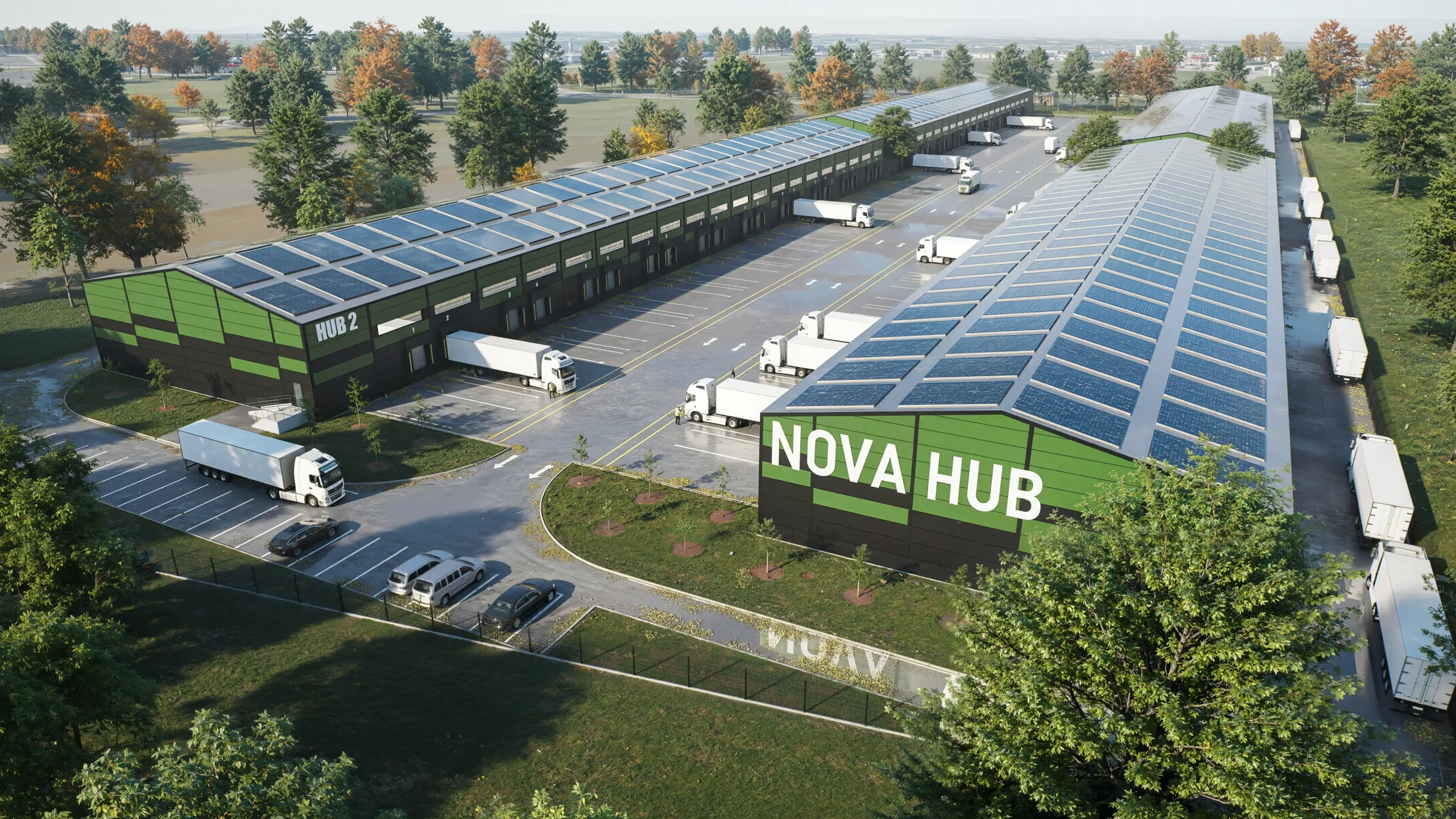
Many new sites also integrate rooftop solar, smart metering, and building management systems. These allow operators to monitor energy usage by zone and adjust regimes based on workload and weather. In short, the building becomes an active tool for cost control instead of a passive cost center.
Compliance with international standards and safety norms
Modern warehouses are engineered to meet EU‑level fire safety, occupational safety, and environmental requirements. This typically includes certified fire‑resistant materials, automatic sprinklers, smoke extraction, well‑marked evacuation routes, and proper separation of hazardous storage zones.
From a business perspective, compliance simplifies cooperation with international clients and 3PLs. Many global partners require that a logistics center in Ukraine meets specific safety standards before they sign a contract. A contemporary facility gives you that credibility from day one.
🚚 How Does a New Logistics Center Improve Operations?
Faster handling and shorter order cycle time
In many older warehouses, operators lose minutes on each pallet due to poor dock design, low doors, or lack of staging areas. Over a full shift this becomes hours of lost productivity. Modern facilities feature numerous docks with dock levelers, sheltered loading ramps, and wide maneuvering yards that fit large trucks comfortably.
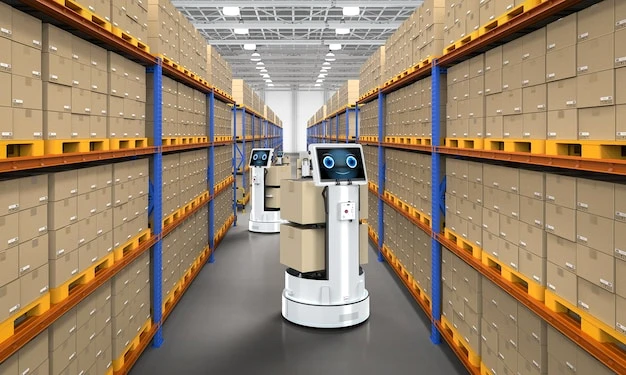
With clear pick paths, optimized storage layouts, and space for automation, businesses can reduce order cycle times from days to hours. For e‑commerce or retail replenishment, this may be the difference between keeping and losing a client.
Higher storage density and SKU flexibility
New buildings usually have greater clear height and floor load capacity. That means more pallet positions per square meter and more options for different racking systems, from drive‑in to mobile racks and mezzanines. If your assortment changes, you can reconfigure zones without structural rebuilding.
Older buildings often limit you to low racking or floor stacking because of structural weaknesses. As a result, you pay for volume that you cannot fully use. In contrast, a new warehouse in Ukraine can use vertical space safely and efficiently, which directly lowers the cost per stored unit.
Better working conditions and productivity
Comfortable temperatures, sufficient lighting, clean loading zones, and ergonomic workstations have a direct impact on staff performance. Modern facilities are usually brighter, quieter, and cleaner than legacy buildings. This matters in a labor market where skilled forklift drivers and warehouse operators can choose their employer.
Improved conditions typically lead to lower staff turnover and fewer accidents. In practice, this means less money spent on recruitment, onboarding, and unplanned downtime. It also makes it easier to run multiple shifts during peak seasons such as Black Friday or the New Year period.
🏗️ New Construction vs. Renovation: What Do the Numbers Say?
Key technical differences at a glance
To highlight the gap between typical legacy stock and a modern logistics center, consider the following comparison. Figures are illustrative yet reflect common ranges in the Ukrainian market.
| Parameter | Legacy warehouse | Modern facility by NovaHub |
|---|---|---|
| Clear height | 4–6 m | 10–12 m |
| Floor load capacity | 3–4 t/m² | 5–7 t/m² |
| Dock equipment | Basic ramps, often shared | Dedicated docks with levelers and seals |
| Lighting | Fluorescent or mixed | Full LED with motion sensors |
| Building insulation | Low to moderate | High‑insulation sandwich panels |
| Fire safety | Partial sprinklers, outdated systems | Automatic sprinklers and modern alarms |
These technical parameters influence not only daily operations but also insurance costs, compliance risks, and long‑term asset value.
Cost and payback considerations
Renovating an old facility can look cheaper at first. However, structural limits such as low height or weak floors often cannot be fixed without very high investment. In many cases, companies upgrade lighting and painting only to discover that layout constraints still block productivity growth.
In contrast, a new build requires a higher upfront budget but supports automation, dense storage, and lower operating costs. Over several years, the savings from energy efficiency and labor productivity can outweigh the initial difference, especially at scale.
Location, infrastructure, and connectivity
Many old warehouses in Ukraine were built for industrial plants, not for modern road networks. Access roads, turning radii, and distance from key highways may be poor. This leads to longer delivery times and higher fuel consumption. In peak season it can also create queues at the gate.
Modern sites are typically planned near major transport corridors, customs terminals, or multimodal hubs. For example, a modern logistics center in the Kyiv region with direct access to main highways can serve several regions overnight, which is essential for omnichannel retail and fast B2B replenishment.
⚖️ Pros and Cons of Investing in a New Warehouse in Ukraine
Advantages to expect
From a practical perspective, investing in new infrastructure is a strategic choice. Below are the main benefits that NovaHub clients usually highlight after commissioning a new facility.
- Higher efficiency: Optimized layout, modern docks, and better equipment reduce handling time per pallet and per order.
- Scalability: More height and flexible zoning make it easier to expand capacity without changing the address.
- Energy savings: Better insulation and efficient systems reduce utility bills and stabilize operating budgets.
- Client trust: International‑level standards and clean, safe premises improve your image in the eyes of partners and auditors.
- Asset value: A high‑quality building with modern specifications keeps its market value and liquidity for many years.
Limitations and challenges
At the same time, building or buying a new facility is not the right step for every company or every stage of growth. It is important to look at the constraints honestly.
- Higher initial investment: Construction, land, and permitting require significant capital compared to leasing or light renovation.
- Longer lead time: From design to commissioning, a modern complex can take 9–18 months depending on scale and approvals.
- Planning risk: Misjudging future volumes or client mix can lead to oversizing or undersizing the warehouse.
- Operational change: Teams need training to work effectively with new layouts, WMS tools, and safety rules.
- Regulatory complexity: Navigating local permits, utilities, and inspections requires experienced partners.
When does a new build make strategic sense?
In practice, a new warehouse in Ukraine makes most sense when your company faces stable or growing demand and is constrained by the physical limits of current facilities. Typical signals include chronic lack of space, inability to implement automation, or lost contracts due to poor infrastructure.
If your business is very seasonal or uncertain, a flexible leasing solution in an existing modern complex may be a safer first step. NovaHub often helps clients model several scenarios before committing to full construction.
📊 Real‑World Style Examples: How Modern Warehouses Change Business Results
Example 1: National distributor consolidates three legacy sites
Imagine a Ukrainian FMCG distributor operating from three separate older warehouses in different districts. Each site has low ceilings, limited docks, and poor temperature control. The company experiences frequent picking errors and delayed deliveries during peak weeks. Transport costs are high because trucks often visit multiple locations.
Working with NovaHub, the distributor invests in a single modern logistics center near a major ring road. With 11 m clear height, optimized pallet racking, and a consolidated WMS, the company reduces average order cycle time by nearly 30 percent and cuts internal transfers almost completely. In summary, centralization in a modern asset turns logistics from a bottleneck into a sales enabler.
Example 2: E‑commerce operator scales for New Year peak
An online retailer runs operations from a converted industrial space with only one loading ramp. During New Year and other holiday campaigns, couriers queue outside, orders pile up, and overtime costs skyrocket. Customer satisfaction drops because delivery promises are not met.
After moving to a new warehouse in the Kyiv region built to contemporary standards, the operator gains more docks, mezzanine picking zones, and modern packing lines. Through higher throughput and better ergonomics, the company handles peak volumes without chaotic night shifts. That directly improves brand reputation and repeat purchase rates.
Example 3: 3PL provider attracts international clients
A local 3PL provider aims to win contracts from European manufacturers that want to use Ukraine as a regional distribution base. Their current premises do not meet the required fire safety and temperature‑control standards. Inspections by potential clients always end with the same comment. Infrastructure is the weak point.
By partnering with NovaHub to construct a contemporary logistics center in Ukraine that follows high Euro‑standards of design and safety, the 3PL can finally pass client audits. As a result, they secure multi‑year contracts and reach a higher yield per square meter than with older assets.
🧱 Common Mistakes When Planning a New Warehouse
Underestimating process design and WMS integration
Many companies start with the building shell and postpone process design. They focus on square meters rather than on flows, system integration, and picking strategies. This often leads to beautiful but suboptimal layouts where staff walk too much or forklifts cross paths unsafely.
To avoid this, define processes, WMS logic, and equipment needs before finalizing the architectural plan. NovaHub typically conducts detailed flow simulations and capacity calculations at the concept stage.
Ignoring future growth and client mix changes
A frequent error is to dimension the site only for current volumes. When sales grow faster than expected, there is no room for additional docks, mezzanines, or temperature‑controlled zones. Companies are then forced to rent extra space elsewhere, which reduces the advantages of centralization.
It is better to plan at least two growth phases. You can build the core facility now while reserving structural capacity, land, and utilities for future expansion.
Choosing the wrong location for target transport flows
Land is often cheaper further from major roads or cities. Tempted by lower costs, companies select locations that look good on paper but generate hidden logistics expenses later. Long detours, poor access roads, and driver reluctance to serve remote sites all add up.
In short, always evaluate total landed cost over several years, not only initial land price. Good connectivity often pays for itself through faster deliveries and lower fuel consumption.
Cutting corners on safety and quality
Some developers try to save on fire systems, floor quality, or dock equipment. These savings are deceptive. Weak floors limit racking options, and poor docks cause accidents and product damage. Non‑compliant fire systems can make it impossible to insure the building properly.
Working with partners like NovaHub, who follow strict Euro‑standards, reduces such long‑term risks. The goal is reliability and safety, not just minimal cost.
Over‑customization without standard solutions
Another trap is over‑designing the building for a single current client, adding non‑standard heights or unusual structural elements. This makes it hard to repurpose the asset later if client needs change.
To keep flexibility and asset liquidity, combine standard warehouse design modules with client‑specific fit‑out that can be changed or removed when needed.

🛠️ Practical Tips for Planning a New Warehouse or Logistics Center
Clarify your functional requirements first
Before discussing concrete, steel, or elevation drawings, describe what the warehouse must achieve. Define target throughput, service levels, temperature regimes, and automation level. This functional brief will guide any design decision more reliably than a pure square meter target.
Include stakeholders from sales, procurement, and operations so that the facility supports the whole supply chain instead of just storage needs.
Benchmark against modern standards, not your current site
It is common to use the existing warehouse as a reference point. This can limit your thinking. Instead, benchmark against international standards and local best‑in‑class facilities. Look at clear height, dock ratio, energy intensity, and digitalization level.
For instance, many modern facilities in Europe aim for at least 10 m clear height and LED lighting throughout. Using such benchmarks helps you design a logistics center in Ukraine that will stay competitive for a decade, not just a year or two.
Model different growth and peak scenarios
Do not assume linear growth. In e‑commerce and retail, peak volumes during New Year or other holidays can be multiple times higher than average days. If the building cannot handle these peaks, you will need costly temporary solutions or external storage.
Create at least three scenarios. Conservative, base, and aggressive growth. Check whether the design can accommodate additional docks, temporary storage zones, or extended shifts without loss of safety or quality.
Use total cost of ownership to compare options
A cheaper initial build can end up more expensive when you factor in energy, maintenance, and labor. Try to calculate total cost of ownership over 10–15 years. Include expected utility bills, repairs, fit‑out replacements, and potential expansion costs.
As industry research from logistics consultancies often notes, energy‑efficient buildings tend to deliver a shorter payback period even if construction cost per square meter is higher.
Select partners with proven reliability and speed
Construction quality, adherence to timelines, and transparent communication are as important as design itself. In practice, delayed handovers can cause missed seasonal windows or force expensive temporary leases. Work with partners who demonstrate reliability, adherence to Euro‑level construction standards, and efficient project management.
NovaHub focuses exactly on these aspects. Strong engineering competence, fast execution, and consistent quality give clients confidence that the new facility will be ready when operations need it.
Plan for digital infrastructure and automation
Even if you do not plan immediate automation, provide sufficient space, floor quality, and network infrastructure for future technologies. This includes cabling, Wi‑Fi coverage, and possible conveyor or shuttle lines.
That way you can introduce WMS upgrades, handheld terminals, and automation modules gradually, without expensive structural changes.
📚 Regulatory and Market Context in Ukraine
Building and safety regulations to consider
Any new warehouse in Ukraine must comply with national building codes and fire safety regulations. Local authorities may also require environmental assessments and coordination with utility providers. Failing to meet these standards can delay commissioning or limit permitted activities.
Experienced developers know how to integrate regulatory requirements into the design phase to avoid redesigns. They also coordinate inspections and documentation so that clients can start operations faster.
Demand drivers in the Ukrainian logistics market
Despite challenges, the Ukrainian market shows structural demand for modern warehouse space. Growth in e‑commerce, regional distribution for manufacturers, and the gradual shift from outdated industrial stock create opportunities for new projects.
According to industry analyses, companies increasingly prefer facilities that meet international standards. As a result, modern logistics centers with strong technical specifications tend to maintain high occupancy even when the broader economy fluctuates.
External expert perspective
Analysts from global logistics reports emphasize that modern, energy‑efficient warehouses can reduce operating costs by 10–20 percent over traditional buildings, especially when combined with digital process optimization (Industry Logistics Review, 2023).
Industry Logistics Review, 2023
This general trend is visible in Ukraine as well. Companies that invest early in contemporary infrastructure are better positioned to win international clients and adapt to changing supply chain patterns.
🔍 How NovaHub Helps Build Reliable, Modern Logistics Assets
Engineering for modern and Euro‑standard quality
NovaHub specializes in the sale and construction of contemporary warehouses and logistics complexes designed to match high European construction and safety standards. Projects are engineered with robust structures, modern envelopes, and efficient engineering systems, which makes them suitable for demanding international clients.
Attention to details such as floor flatness, dock equipment, and racking compatibility allows clients to install advanced material handling systems without structural compromises. This precision reduces long‑term operational risks.
Reliable project delivery with speed and transparency
Timely delivery is crucial for any warehouse project. NovaHub combines experienced project teams, proven suppliers, and structured project management to keep design and construction on schedule. Clients receive realistic timelines and regular progress updates.
In many cases, the ability to complete a contemporary logistics center quickly and with consistent quality gives businesses a competitive advantage. They can relocate operations or launch new services ahead of rivals who still operate in older facilities.
From concept to operational go‑live
NovaHub supports clients from the first feasibility studies through to commissioning. This typically includes site selection support, conceptual design, detailed engineering, coordination with regulators, and construction management. Where needed, the team can also consult on storage solutions and process layouts.
Put simply, you receive a partner rather than only a construction vendor. That is especially important if your own team has limited experience with large‑scale industrial projects.
Illustrative feature comparison
To make the value proposition clearer, see how a typical NovaHub project compares to a generic legacy facility.
| Aspect | Old warehouse | Modern NovaHub complex |
|---|---|---|
| Design approach | Ad‑hoc, not process‑driven | Process‑based, optimized flows |
| Construction quality | Outdated materials and systems | Contemporary materials to Euro‑standards |
| Energy efficiency | High consumption, little control | Efficient systems with smart control |
| Project speed | Unpredictable schedules | Structured, predictable delivery |
| Operational flexibility | Hard to reconfigure | Flexible zoning and expansion options |
For businesses that want to compete regionally and internationally, these differences translate into tangible financial and strategic benefits.
✅ Conclusion: When Is It Time to Move to a Modern Warehouse?
When your current facility limits storage density, throughput, or safety, it is usually a sign that the building no longer matches your logistics strategy. A modern logistics center in Ukraine offers higher efficiency, flexibility, and compliance with international standards, which helps you serve clients faster and more reliably. While the initial investment is significant, long‑term savings in energy and labor, plus stronger client trust, often justify the step.
NovaHub combines reliability, modern design, and adherence to high Euro‑level construction standards to deliver warehouses and logistics complexes that support your growth. As you plan for upcoming seasons and the next New Year rush, consider whether your existing infrastructure can withstand future peaks and business ambitions. If not, exploring a new warehouse project may be the most practical next move.
Looking ahead to the New Year, many companies reassess their logistics and set bold targets for faster delivery and higher service levels. If you want the coming holiday seasons to bring growth instead of bottlenecks, explore NovaHub’s modern warehouse and logistics solutions on our website. You will find contemporary concepts that match the spirit of renewal, help you enter the new calendar year with confidence, and turn your supply chain into a true competitive advantage.
— Industry Logistics Review (2023)
— Statista Research on Warehouse Efficiency (2024)
— McKinsey Global Supply Chain Report (2023)
— European Logistics Real Estate Insight, Market Study (2023)
— Forbes Technology Council, Logistics and Automation Insights (2022)
FAQ
What are the main advantages of a new warehouse over a legacy building?
The main advantages are higher storage density, faster handling due to optimized layouts and docks, better energy efficiency, and improved safety that meets international standards. Together these features reduce operating costs and improve client service quality.
When does it make sense to build a new warehouse instead of renovating?
A new build makes sense when your current facility has structural limits such as low clear height, weak floors, or poor location that cannot be cost‑effectively fixed. It is especially relevant when demand is stable or growing and you need room for automation and future expansion.
How long does it usually take to commission a modern logistics center?
Depending on size, permits, and complexity, design and construction can take roughly 9–18 months. NovaHub uses structured project management to keep timelines predictable so that operations can move in according to business plans.
What common mistakes should I avoid when planning a new warehouse in Ukraine?
Typical mistakes include ignoring process design, underestimating future growth, choosing land only by price instead of transport access, and cutting corners on safety or construction quality. Planning with total cost of ownership and regulatory requirements in mind helps avoid these pitfalls.
How can a modern warehouse help during New Year and other holiday peaks?
Modern facilities offer more docks, better layouts, and ergonomic workstations, which together increase throughput during seasonal peaks. As shown in the e‑commerce example in the article, this allows companies to process high order volumes without chaotic overtime and delays.
What role does energy efficiency play in warehouse economics?
Energy‑efficient envelopes, LED lighting, and modern HVAC systems significantly reduce utility bills over the building’s life. External analyses cited in the article indicate that such improvements can cut operating costs by 10–20 percent compared to traditional facilities.
Why is clear height so important in a modern logistics center?
Higher clear height, often 10–12 meters in new facilities, allows multi‑level racking and mezzanines, which increase pallet positions per square meter. This lowers storage cost per unit and provides flexibility for different storage systems over time.
How does NovaHub ensure reliability and quality in its warehouse projects?
NovaHub designs and builds to high Euro‑level standards, uses modern materials and engineering systems, and manages projects with clear timelines and transparent communication. This combination of reliability, modernity, and speed helps clients receive functional, future‑ready logistics assets.
What should be defined first when starting a new warehouse project?
You should first define functional requirements such as target throughput, service levels, temperature regimes, and desired automation level. This functional brief guides design decisions and ensures the building supports actual logistics processes rather than just providing square meters.