


Passive income from warehouse real estate comes from leasing modern storage or logistics units to business tenants while outsourcing management. This guide explains key steps, from project selection and legal structuring to management and monitoring, and shows how Class A complexes like NovaHub can deliver stable 8–12% yields with reduced operational effort.
Passive income from warehouse real estate: a step‑by‑step guide
Passive income from warehouse property means buying or co-owning a storage unit or logistics facility, leasing it to a business tenant, and delegating day‑to‑day management so that rent flows in with minimal effort. When planned correctly, it can provide diversified income, protection against inflation, and attractive long‑term real estate investment returns compared with many residential and retail assets.
At the same time, the warehouse segment is getting more technical and professional. Investors must understand asset class standards, legal structures, and tenant risk instead of relying on “buy and forget.” In this guide, we will walk through how to build stable income from warehouse assets step by step, how to evaluate a specific project like a modern Class A logistics hub, what risks to watch, and how NovaHub’s approach can support reliable, contemporary, and fast implementation.
📦 What is passive income from warehouse property?
How warehouse real estate generates cash flow
Warehouse assets generate income primarily through long‑term leases to logistics, e‑commerce, manufacturing, or retail distribution companies. The tenant pays base rent and, in many cases, reimburses some operating expenses according to the contract structure. For the investor, the main goal is predictable cash flow with limited operational involvement.
According to CBRE Ukraine (2024), passive income from warehouse real estate in Ukraine typically comes from such lease agreements and can yield around 8–12 percent annually depending on asset quality and location. The key takeaway is that the more modern and functional the building, the easier it is to attract solvent tenants on stable terms.
Why warehouses differ from apartments and offices
Industrial and logistics properties behave differently from residential or office buildings. Tenants value ceiling height, dock doors, yard depth, and accessibility for trucks more than interior finishes. Lease terms are often longer, sometimes three to ten years, which supports income stability but also increases the importance of careful tenant selection.
In brief, a well‑located Class A warehouse is more of an infrastructure asset than a consumer product. Its value is tied to regional logistics flows, such as e‑commerce growth around cities like Odesa, where JLL Ukraine (2024) notes rising demand for high‑class storage space and stronger occupancy rates.
Core components of a passive warehouse strategy
A passive strategy focuses on outsourcing tasks that do not require your direct involvement. Professional property managers handle maintenance, rent collection, and communication with tenants. Legal advisors structure contracts, and technical experts supervise construction and compliance with standards.
NovaHub’s model aligns with this philosophy. A specialized developer and managing company accompany the logistics complex after commissioning and take over core operational functions. This structure allows investors to focus on strategic decisions instead of day‑to‑day facility operations.
🧭 Step‑by‑step: how to build passive income from warehouse assets
Step 1. Investment analysis and goal setting
The starting point is to define your financial goals and risk tolerance. Decide whether you seek higher yield with more development risk or a lower‑risk, income‑stabilized asset. Then analyze regional demand, tenant profiles, and infrastructure.
To summarize, you should compare potential yields with your minimum acceptable return, check what drives demand in the region, and specify how long you plan to hold the asset. For example, if you target 9–10 percent net annual return with a five‑ to seven‑year horizon, you will likely focus on well‑located Class A warehouses with strong tenant demand.
Step 2. Choosing the right warehouse project
Project selection determines the quality of your future cash flow. Evaluate location, transport access, and compliance with international engineering and safety standards. Modern warehouses with modular layouts and scalable areas are more resistant to changes in tenant needs.
On the NovaHub website, the project characteristics section describes a logistics center concept that includes Class A engineering, modular space planning, and the ability to scale units. Such features directly affect rental attractiveness and long‑term warehouse investment payback.
Step 3. Planning your future unit and layout
Once you select a project, you need to understand the physical unit you are investing in. This includes floor area, number of docks, office component, and potential expansion. A detailed master plan helps you align the unit with targeted tenant segments like 3PLs, e‑commerce sellers, or light manufacturers.
The NovaHub project plan showcases the overall master plan and location of units within the complex. Reviewing that type of document lets you evaluate truck circulation, access roads, and visibility, which all influence tenant demand and, ultimately, your stable income from warehouse leases.
Step 4. Structuring leases and legal protection
After selecting a unit, your focus shifts to the lease structure. Clear contracts define rent level, indexation, maintenance responsibilities, penalties for late payment, and conditions for early termination. According to Colliers Ukraine (2024), robust legal agreements are one of the main requirements for generating predictable passive income.
Bottom line, it is worth cooperating with legal professionals who know industrial real estate and local legislation. They can help you avoid clauses that shift hidden costs onto the owner or limit your ability to replace non‑performing tenants.
Step 5. Outsourcing management and monitoring performance
The last step is to formalize property management. Best practice is to sign a management agreement with an experienced operator who takes care of maintenance, utility contracts, reporting, and communication with tenants. Knight Frank (2024) identifies such professional stewardship as a key factor in reducing vacancy risk and preserving value.
NovaHub integrates this approach by providing a dedicated managing company that supervises the asset after completion. In addition, the project offers online construction monitoring so investors can track construction status and photos of their unit around the clock. This transparency increases trust and simplifies long‑term decision‑making.
📈 Pros and cons of passive income from warehouse real estate
Key advantages for long‑term investors
- Reliable yield potential Annual yields of about 8–12 percent in Ukraine, as reported by CBRE Ukraine (2024), compare favorably with many residential or office investments.
- Longer leases Logistics and industrial tenants often sign multi‑year contracts, which supports cash‑flow stability and simplifies financial planning.
- Resilient demand drivers Growth in e‑commerce, retail logistics, and regional distribution, especially around major transport hubs, supports occupancy and rent levels.
- Professional management options The ability to outsource management to specialized operators, as in the NovaHub model, truly enables passive ownership with limited involvement.
- Modern construction standards New Class A projects built with high European standards usually require less unplanned repair, which improves net real estate investment returns.
Main limitations and risks to consider
- Higher entry ticket Warehouse units require more capital than many small apartments, which limits access for some private investors.
- Tenant concentration risk Losing a single large tenant may create a longer vacancy period than in residential or small retail segments.
- Market and regulatory risk Changes in trade flows, logistics routes, or local regulations can influence demand and operating costs.
- Technical complexity Industrial assets require more technical due diligence, from floor load to fire safety, which increases initial analysis efforts.
- Liquidity Selling an industrial unit may take more time than selling an apartment, especially in smaller markets or during economic downturns.
🏗️ How modern Class A projects like NovaHub improve payback
Why technical characteristics matter for payback
Warehouse investment payback depends not only on rent level but also on how efficiently the building operates. Modern engineering reduces energy losses, and smart layout increases storage density and operational speed for tenants. These two factors make tenants more willing to pay fair market rent and stay longer.
The Nova Hub logistics concept emphasizes high‑grade engineering, modular layout of spaces, and scalability. This approach creates a flexible product that can be reconfigured for different tenants, which decreases re‑letting risk and prolongs the economic life of the asset.
Using visualization and planning to reduce risk
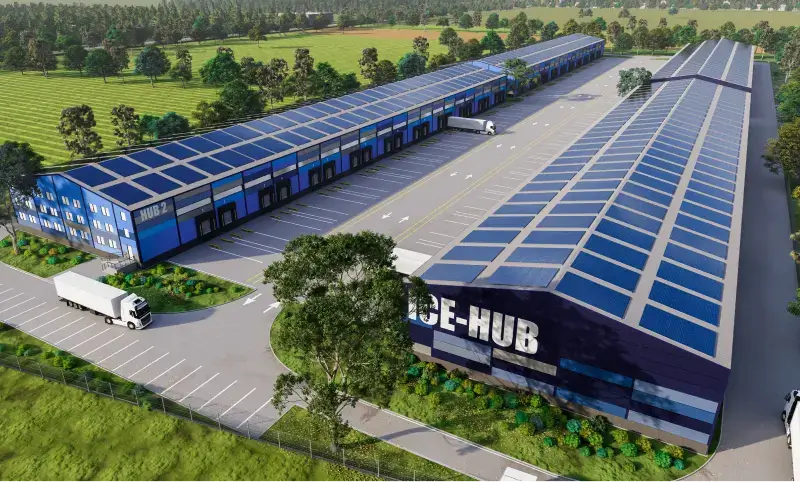
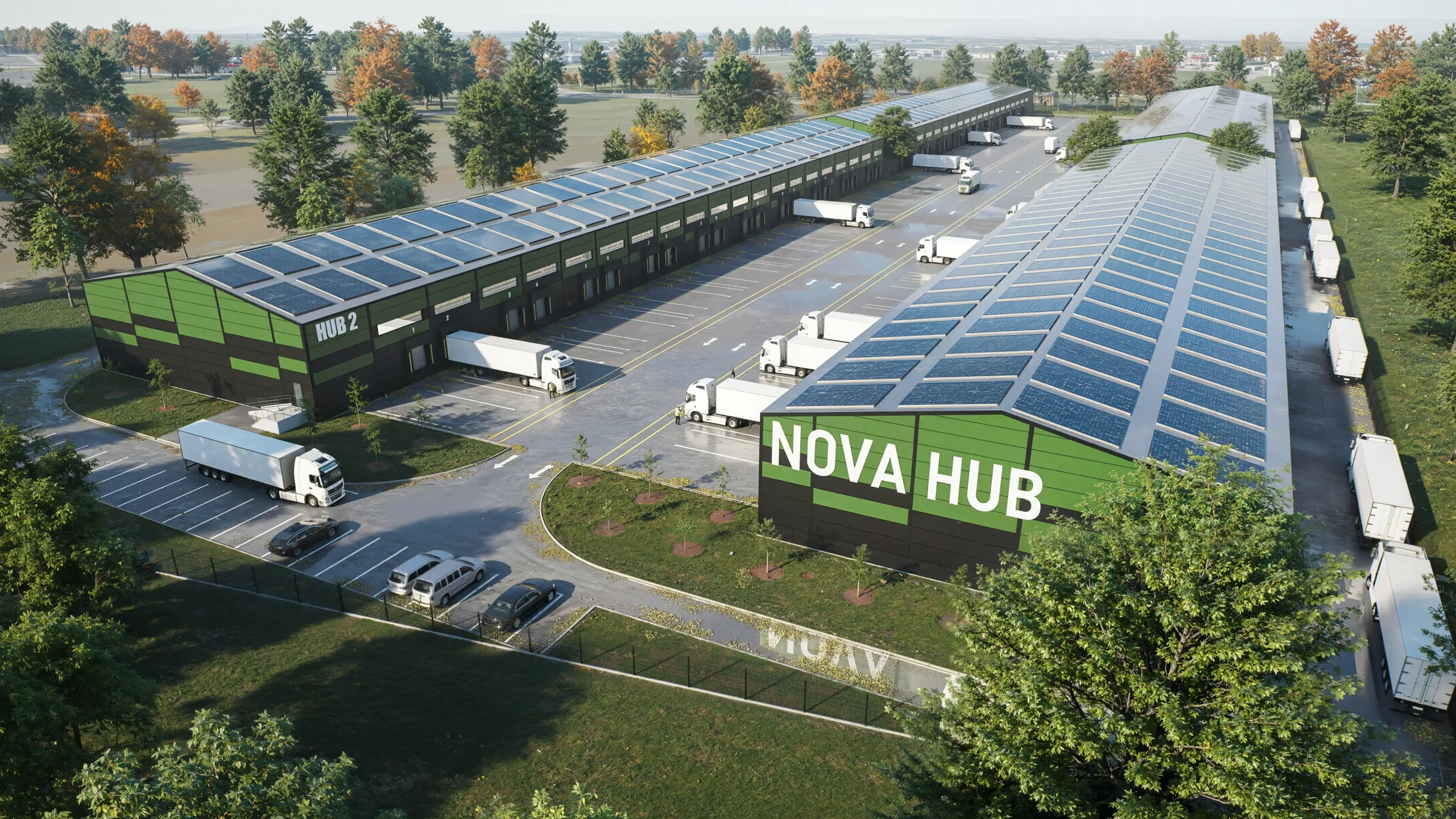
Visual tools help investors understand what they are buying before construction is completed. NovaHub provides 3D visualization and master plan information, where you can see the future building, infrastructure highlights, and surrounding service areas. This reduces uncertainty about quality and functionality.
The project advantages overview explains how location, infrastructure, and modern standards are combined. In short, detailed visual and technical information before you commit capital helps you verify that the project aligns with your strategy and expected payback period.
Example comparison: older warehouse vs new Class A unit
| Parameter | Older secondary warehouse | Modern Class A NovaHub‑type unit |
|---|---|---|
| Ceiling height | 6–8 m | 10–12 m, suitable for high‑bay racking |
| Energy efficiency | Poor insulation, higher utility costs | Modern insulation and engineering, lower operating costs |
| Tenant profile | Local small businesses | Logistics operators, e‑commerce, regional distributors |
| Typical lease term | 1–3 years | 3–7 years |
| Vacancy risk | Higher, less liquid asset | Lower, due to strong demand for modern space |
What matters most is how these features translate into cash flow. A more modern unit may cost more per square meter but often delivers greater stability and a shorter payback period because of lower vacancy and better tenants.
💼 Practical case studies: how passive warehouse income works
Case 1. Individual investor in a logistics hub near a major port
Imagine an individual investor who buys a 1,000 m² unit in a Class A logistics center located along a key highway serving a port city. The unit is leased to an e‑commerce fulfillment operator under a five‑year contract with annual indexation. The investor delegates property management to the project’s managing company.
Assuming net rental yield around 9 percent, the investor receives a steady stream of income with limited day‑to‑day involvement. The managing company handles maintenance, communication with the tenant, and reporting. This illustrates how a well‑chosen project and professional oversight turn an industrial asset into a relatively hands‑off income source.
Case 2. Small group of investors co‑owning a larger block
In another scenario, three partners pool capital to acquire a 3,000 m² block that can be subdivided. Initially they lease it to a logistics company that needs the entire space. After several years, market demand shifts and they decide to split the block into three independent units tailored to different tenants.
Because the warehouse was designed with modular organization and scalability, reconfiguration is relatively straightforward. The result is diversified income from several tenants, which further stabilizes cash flow and improves real estate investment returns over the holding period.
Case 3. Comparing two investment paths
| Aspect | Residential apartment rental | Warehouse unit in NovaHub‑type project |
|---|---|---|
| Typical lease term | 6–12 months | 3–5 years or more |
| Management intensity | High, frequent tenant turnover | Lower with professional management |
| Yield range (Ukraine) | Often 5–7% annually | Often 8–12% annually |
| Technical complexity | Minimal | Higher, but handled by specialists |
| Income stability | Moderate | Higher, depending on tenant and location |
To summarize, both options have a place in a diversified portfolio, but modern warehouses provide more institutional‑style cash flow with longer leases and yields that can outperform typical residential rentals.
⚠️ Common mistakes when investing in warehouse passive income
Focusing only on headline yield
Many beginners look only at the promised percentage yield and ignore risk factors. They accept high advertised returns without analyzing tenant quality, building standards, or market depth. This often leads to vacancy problems or unexpected repair costs.
Better practice is to compare yield with risk level and to verify that the project is supported by real demand drivers such as logistics density, e‑commerce growth, and professional management infrastructure.
Underestimating technical due diligence
Another typical mistake is skipping technical checks. Investors assume “a warehouse is just a big box,” then later discover issues with floor load, ventilation, or fire safety that limit the types of tenants who will rent the space.
Engaging engineers or relying on developers that build according to high European standards reduces this risk. NovaHub’s emphasis on modern engineering and quality construction is an example of how developers can proactively address these requirements.
Ignoring management and vacancy risk
Some investors believe that once a lease is signed, no further action is required. They ignore the possibility of tenant bankruptcy or gradual deterioration of the building. Without a management plan, they react too slowly when problems arise.
Professional property management, as recommended by Knight Frank (2024), is essential. It ensures proactive maintenance, periodic tenant reviews, and quick marketing of space if a unit becomes vacant.
Weak legal protection and unclear contracts
Inadequate leases or informal agreements expose investors to late payments and disputes. Vague clauses about maintenance responsibilities or termination conditions can result in unexpected costs or long legal conflicts.
Working with experienced legal counsel and following structured steps like those outlined by Colliers Ukraine (2024) helps prevent many of these issues before they occur.
🛠️ Practical tips to improve your warehouse investment results
Actionable recommendations for new investors
- Clarify your strategy Decide early whether you want maximum yield, highest safety, or a balance. This will guide your choice of project, location, and tenant segment.
- Prioritize Class A projects Focus on modern logistics centers with strong engineering, modular layout, and scalability. They attract better tenants and usually deliver more stable income.
- Check demand in the micro‑location Study how close the property is to major highways, ports, or urban centers. Locations that serve multiple logistics corridors tend to have lower vacancy.
- Evaluate the developer and manager Assess their track record, construction quality, and management competencies. NovaHub, for example, combines the role of developer and operating company to ensure continuity and speed of execution.
- Use visual and technical documentation Review 3D visuals, master plans, and technical specifications carefully. They help you understand how the space will function for tenants and what maintenance might cost.
- Plan for conservative scenarios When modeling returns, include potential vacancy periods, maintenance reserves, and realistic rent growth. This ensures your passive income from warehouse assets remains robust even under stress.
How to monitor performance over time
Even with a passive strategy, you should periodically review key indicators such as occupancy, rent collection, maintenance expenses, and tenant satisfaction. Quarterly or semi‑annual reports from the managing company provide enough information without overwhelming you.
Online monitoring tools like those offered by NovaHub during construction add another layer of transparency. They let you follow progress in real time so that you can plan financing, leasing, and long‑term strategy with confidence.
📚 Industry insight: what experts say about passive warehouse income
External perspectives on yields and best practices
According to CBRE Ukraine (2024), income from warehouse real estate in Ukraine is often in the 8–12 percent annual range, depending on asset class and location, which makes it an attractive component of diversified portfolios.
CBRE Ukraine, 2024
International advisors repeatedly emphasize that success in this segment comes from combining good location, modern technical standards, and strong management. This aligns with NovaHub’s strategy of delivering contemporary logistics complexes built to high standards and operated by a dedicated management team.
Why demand trends support the segment
Analysts from JLL Ukraine (2024) report that demand for Class A warehouse space in regions with active retail and e‑commerce, such as Odesa, has grown over 2023–2024. Occupancy rates have improved, and rents have shown resilience even under economic pressure.
The key takeaway is that digitalization of commerce and reconfiguration of supply chains are structural trends. They support long‑term need for modern warehouses, which in turn underpins rental stability and potential real estate investment returns for well‑chosen projects.
✅ Conclusion: building resilient passive income with NovaHub
Passive income from warehouse real estate can provide long‑term, relatively stable cash flow when you combine careful analysis, modern Class A facilities, strong tenants, and professional management. By following clear steps from investment analysis to legal structuring and outsourcing operations, you transform a complex industrial asset into a mostly hands‑off income stream.
NovaHub’s concept of high‑quality logistics centers with modular layout, contemporary engineering, and integrated management services helps investors achieve reliable returns while keeping daily involvement low. In short, a well‑selected warehouse unit in a professionally managed complex can become a cornerstone of your long‑term investment portfolio.
As the New Year approaches, many investors reassess their financial goals and look for fresh, future‑oriented opportunities with strong emotions of hope and renewal. If you are planning your next step toward dependable, portfolio‑building income, explore how NovaHub’s modern logistics projects can support your New Year resolutions for stability and growth. Visit the NovaHub website to discover current warehouse concepts, festive project news, and detailed information about available units and development stages.
Sources
— CBRE Ukraine (2024)
— Colliers Ukraine (2024)
— JLL Ukraine (2024)
— Knight Frank Research (2024)
— NovaHub Project Materials (2025)
FAQ
What exactly is passive income from warehouse real estate?
It is income you receive from leasing a warehouse or logistics unit to a business tenant while delegating construction, operations, and day‑to‑day management to professionals. In this model, you focus on choosing the right project and monitoring results, while a managing company handles tenants, maintenance, and reporting.
What annual yield can I expect from a warehouse investment in Ukraine?
According to CBRE Ukraine (2024), passive income from warehouse assets in Ukraine often falls in the 8–12 percent annual yield range, depending on location and asset class. The article explains how modern Class A projects and strong tenants help you stay within the upper part of that range.
Why are Class A logistics centers like NovaHub better for stable income?
Class A centers offer modern engineering, higher ceilings, efficient layouts, and scalable spaces, which attract logistics, e‑commerce, and distribution tenants. The article shows that this leads to longer lease terms, lower vacancy, and better real estate investment returns compared with older, secondary warehouses.
What are the main steps to start earning passive income from a warehouse?
The key steps include defining your investment goals, selecting a suitable Class A project, understanding the unit layout, structuring a strong lease agreement, and outsourcing management to professionals. The guide describes each step in detail, including how NovaHub’s developer and managing company support investors.
What common mistakes should new warehouse investors avoid?
Typical errors include chasing only high advertised yields, skipping technical due diligence, ignoring vacancy and management risk, and signing weak legal agreements. The article outlines 3–4 of these mistakes and explains how expert legal, technical, and management support can prevent them.
How does NovaHub reduce risk during the construction phase?
NovaHub offers 3D visualization, master plans, and online construction monitoring, so investors can follow the status and see photos of their units 24/7. This transparency lets you verify progress, coordinate financing, and feel confident about the asset that will later generate your passive income.
Is a warehouse unit more passive than an apartment rental?
The article compares both options and shows that a warehouse in a professionally managed logistics center usually has longer leases and fewer tenant changes than an apartment. With a management company handling operations, the investor’s involvement is lower, which makes the income more passive.
How long is the typical lease term in a logistics warehouse?
Lease terms in warehouses often run from three to seven years, especially in modern logistics centers, compared with six to twelve months in residential rentals. This longer duration supports more predictable cash flow and simplifies long‑term planning for investors.