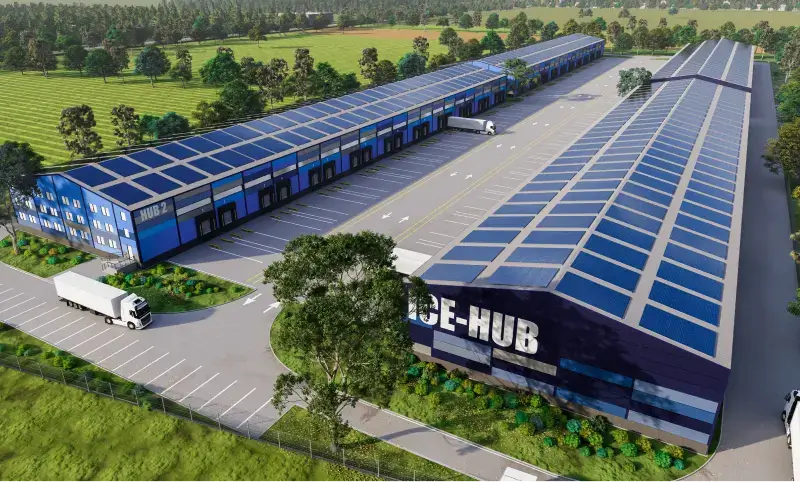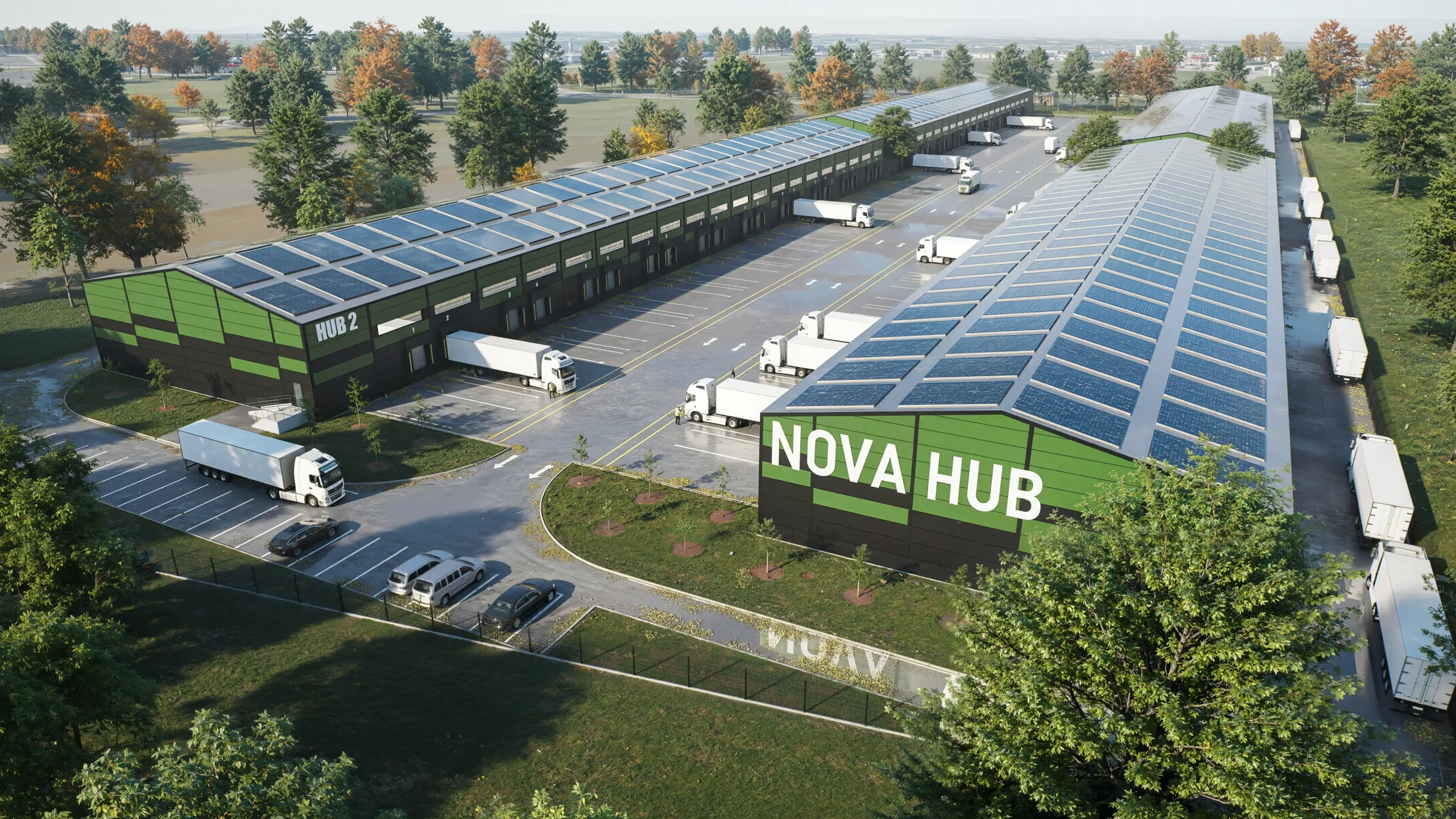


Profitability of a warehouse complex for sale depends on location, modern technical standards, realistic rent and occupancy assumptions, and careful modeling of operating and capital costs. By using conservative scenarios, checking building quality, and partnering with reliable developers like NovaHub, investors can achieve stronger, more predictable real estate investment returns.
Warehouse complex for sale: how to evaluate profitability and payback correctly
To evaluate the profitability of a warehouse complex for sale, you need to combine financial modeling with technical and location analysis. Estimate market rents, stable occupancy, operating costs, required capex, and financing terms. Then calculate cash flow, payback period, and expected return compared with alternative real estate investment returns and your risk tolerance.
Most investors today struggle not with a lack of offers but with separating attractive logistics assets from future headaches. E‑commerce growth, nearshoring, and demand for modern Class A warehouses push prices up, while operational mistakes, poor locations, or outdated buildings can destroy returns. A structured due diligence approach lets you see the real performance behind glossy presentations.
This article explains how to evaluate a profitability-focused warehouse complex, which metrics matter most, how to model warehouse investment payback, typical mistakes to avoid, and how a modern logistics hub like NovaHub can fit into a long‑term portfolio strategy.
📊 What does “profitable warehouse complex” really mean?
Financial profitability vs. strategic value
For most buyers, a profitability warehouse complex means a stable stream of rental income that beats inflation and justifies the risk. Yet a warehouse can also create strategic value through logistics optimization, service level improvements, and stronger market coverage if you use it for your own operations.
In short, true profitability is a mix of direct cash flow and indirect business benefits. A purely financial investor may focus on yield and exit value. An operating company may accept a slightly lower yield if the asset reduces delivery times or supports a new distribution model.
Key cash flow components
Net cash flow from a warehouse complex for sale is shaped by three groups of drivers.
- Income: base rent, indexation, service charges, and parking yard or office add‑ons.
- Operating costs: utilities, maintenance, facility management, property tax, insurance, and property management fees.
- Capital costs: fit‑out, automation, periodic refurbishment, and major repairs such as roof or pavement renewal.
Understanding which of these are borne by tenants and which stay with the owner is crucial for a realistic projection.
Main profitability metrics
Investors usually assess real estate investment returns with several standard indicators.
- Gross yield: annual rent divided by purchase price.
- Net yield: rent minus operating costs divided by total investment.
- Internal Rate of Return (IRR): average annualized return over the holding period including exit value.
- Payback period: number of years until net cash flows cover initial investment.
For logistics assets, a realistic holding period model of 7–15 years usually reveals more than a simple gross yield snapshot.
📍 How location and market shape profitability
Macro location: region and demand drivers
Even a perfectly built warehouse will struggle in a weak location. When screening a warehouse complex for sale, start with regional demand drivers such as population density, industrial base, cross‑border trade, and the presence of large retailers, 3PLs, and manufacturers.
Proximity to major cities, logistics corridors, and customs hubs usually translates into stronger rents and lower vacancy, which directly improves warehouse investment payback.
Micro location: accessibility and labor
Micro location determines day‑to‑day operating costs and tenant satisfaction.
- Transport access: direct exits to highways, connection to ring roads, and safe truck routes.
- Public transport: bus and rail links for blue‑ and white‑collar staff.
- Labor availability: local wage levels and competition for warehouse workers.
In summary, a “B+” building in an “A” location often outperforms an “A” building in a “B” location over the full investment cycle.
Market rent and occupancy assumptions
Your profitability model stands or falls on rent and occupancy assumptions. Use comparable leasing deals, broker reports, and published statistics where available. One often‑cited benchmark from logistics market surveys is that modern Class A warehouses in prime corridors can command 10–30 percent higher rents than older stock, while also enjoying lower structural vacancy.
“High-spec, well-located logistics assets continue to show the most resilient occupancy and rent growth among commercial real estate segments.”
— Global Logistics Real Estate Outlook, JLL Research
Stress‑test your model with at least two downside scenarios: slower lease‑up and lower market rents.
🏗️ How building characteristics influence returns
Technical specifications that matter
Modern specifications typically reduce operating costs and attract better tenants. Clear height, floor load, dock ratio, column grid, and energy efficiency directly affect usability and long‑term rental potential.
For example, at NovaHub you can study detailed warehouse characteristics such as building class, clear height, power capacity, and parking areas. These parameters help you compare the asset with competing logistics centers in the region.
Layout and operational efficiency
The internal layout determines how efficiently tenants can run their logistics processes and how much automation they can implement. A flexible master plan with modular units, separate office blocks, and generous truck courts usually appeals both to single large tenants and multi‑tenant configurations.
Studying the master plan of the complex helps you understand circulation, loading zones, and potential expansion phases. Well‑designed traffic flows reduce congestion and accidents, which tenants often translate into higher willingness to pay.
Construction quality and ESG aspects
Contemporary warehouse projects like NovaHub are developed to high European standards with reliable materials, modern fire safety, and efficient building envelopes. Better insulation, LED lighting, and renewable options may cost more at the outset but can reduce service charges for tenants and support premium rents.
In brief, sustainable features and robust construction support longer lease terms, lower obsolescence risk, and stronger real estate investment returns.
💰 How to calculate payback and investment returns
Basic payback and yield model
A simple comparative table helps structure the input data for evaluating payback.
| Indicator | Conservative scenario | Target scenario |
|---|---|---|
| Total investment (purchase + capex) | $12,000,000 | $12,000,000 |
| Stabilized occupancy | 90% | 97% |
| Average net rent per sq ft/year | $6.50 | $7.20 |
| Annual net operating income | $1,950,000 | $2,350,000 |
| Net yield | 16.3% | 19.6% |
| Simple payback period | 6.1 years | 5.1 years |
This example is simplified, but it shows how small differences in rent and occupancy heavily influence warehouse investment payback.
Including financing and exit value
Most investors use bank financing and expect to sell or refinance after 7–10 years. A more advanced model should include interest costs, principal repayment, and an assumed exit capitalization rate. The resulting IRR gives a comparable measure of performance against other asset classes.
Key point. Always compare the modeled IRR with your required return, and consider the risk profile of logistics assets in your country versus offices, retail, or alternative investments.
Scenario analysis and sensitivity
To summarize, any profitability warehouse complex analysis should include at least three scenarios.
- Base case: most likely rent, occupancy, and cost assumptions.
- Upside: faster lease‑up, higher rent, or cheaper financing.
- Downside: delayed leasing, rent pressure, higher vacancy, or unexpected capex.
Run sensitivity checks on 2–3 key variables, for example rent level, exit cap rate, and occupancy. This will show you where the project is most vulnerable.
⚖️ Pros and cons of investing in a warehouse complex
Advantages of modern logistics real estate
- Stable demand: growth in e‑commerce, retail distribution, and manufacturing supports long‑term need for quality storage and cross‑dock facilities.
- Predictable cash flow: multi‑year leases and indexation clauses can provide inflation‑protected income.
- Operational flexibility: modular layouts allow reconfiguration for different tenant types, reducing structural vacancy risk.
- Lower management intensity: compared with retail or residential assets, warehouses often have fewer small tenants and less daily interaction.
- Value-add potential: upgrading to contemporary standards can unlock higher rents and better tenants.
Limitations and risks to consider
- Location dependency: poor macro or micro location can result in long vacancies and rent discounts.
- Tenant concentration: dependence on one or two large tenants increases risk if they relocate or renegotiate terms.
- Obsolescence risk: older buildings with low clear height or weak floors may become uncompetitive versus new hubs.
- Market cycles: logistics is resilient but not immune to economic downturns or shifts in trade routes.
- Capex surprises: roof, yard, or technical system replacements can heavily impact returns if not budgeted.
📌 Practical examples: how profitability plays out in real life
Example 1: Investor buying a stabilized complex
Imagine a private investor acquiring a fully leased 200,000 sq ft logistics park near a major ring road. The complex has modern docks, 12 m clear height, and efficient LED lighting. Leases have 5 years remaining with rent indexed annually to inflation.
The investor pays $18 million, receives annual net operating income of $2.7 million, and budgets $150,000 per year for reserves. The resulting net yield is about 14.2 percent, and projected payback is around 7 years, assuming stable occupancy. Because the building quality is high and the location is prime, the investor also expects a competitive exit price with a low cap rate.
Example 2: Developer completing a new logistics hub
Now consider a developer partnering with NovaHub to complete a new multi‑building complex with phased construction. Pre‑leases with 3PL operators cover 60 percent of phase one, and tenant demand studies show strong interest from regional distributors.
By carefully planning the layout, the developer optimizes truck circulation and yard space using the published project advantages such as modern engineering, flexible unit sizes, and reliable construction management. As occupancy stabilizes above 95 percent with premium rents for Class A space, the project’s IRR surpasses initial expectations, and the warehouse investment payback shortens by more than one year compared with the conservative case.
Comparison of outdated vs. contemporary warehouse
| Parameter | Older warehouse | Modern complex (NovaHub-type) |
|---|---|---|
| Clear height | 7–8 m | 10–12 m |
| Energy efficiency | Basic insulation, conventional lighting | Improved envelope, LED lighting, energy‑saving systems |
| Typical tenant | Local distributor, limited automation | 3PL, e‑commerce, automated operations |
| Expected rent level | Lower | Medium to premium |
| Vacancy risk | Higher in long term | Lower due to better specs |
This simple comparison illustrates why paying slightly more for a modern complex can still result in better real estate investment returns.

🚫 Common mistakes when assessing warehouse profitability
Underestimating operating and capital expenses
Many buyers focus on headline rent and forget that property tax, insurance, maintenance, and future roof or pavement replacements can erode returns. This often happens when past owners deferred capex or when cost allocations between landlord and tenant are not clearly documented.
To avoid this, request detailed historical operating statements, technical reports, and life‑cycle maintenance plans, and then build realistic cost reserves into your model.
Ignoring building obsolescence
Another common mistake is assuming today’s tenant will always stay and accept the current specification. Changes in logistics technology, pallet systems, or sustainability standards can make low‑spec buildings less attractive within a decade.
Check whether clear height, floor load, dock equipment, and energy performance are aligned with leading Class A projects such as NovaHub. If the gap is large, factor in modernization costs or expect lower long‑term rents.
Over‑optimistic lease‑up and rent growth
Some models assume a nearly instant lease‑up at top‑of‑market rents. This usually reflects optimism rather than data, especially in secondary locations or early‑stage logistics markets.
Base your assumptions on signed leases in comparable parks, not brochure asking rents, and always run a downside scenario with slower absorption and slightly lower rents.
Neglecting legal and technical due diligence
Skipping thorough review of land titles, building permits, and as‑built documentation can lead to compliance issues, unregistered encumbrances, or uninsurable structures. Technical defects discovered after acquisition also reduce effective profitability.
Engage specialized legal and technical advisors, insist on full documentation sets, and tie final pricing to any risks revealed during due diligence.
🛠️ Practical tips to improve and secure profitability
1. Standardize your investment checklist
Create a consistent checklist that covers location, technical standards, tenant mix, lease terms, operating costs, and capex risk. Use it for every warehouse complex for sale you consider so you can compare assets objectively instead of relying on marketing materials.
2. Focus on modern, future‑proof design
Prioritize complexes built to contemporary European standards with reliable structures, good fire protection, and efficient energy systems. These assets, like the hubs developed by NovaHub, tend to retain tenants longer and command better rents through economic cycles.
3. Build conservative financial models
Model your warehouse investment payback using conservative assumptions about rent, occupancy, and financing costs. Then treat any upside as a bonus. This approach protects you if market conditions soften shortly after acquisition.
4. Diversify tenant and sector exposure
A tenant mix that combines 3PLs, retail chains, and light industrial users is usually more resilient than dependence on a single sector. Aim for staggered lease maturities to avoid a large portion of rent expiring in the same year.
5. Plan value‑add initiatives upfront
Look for assets where moderate investments in yard improvements, ESG upgrades, or additional mezzanine storage can justify higher rents or attract better tenants. In summary, proactive asset management often adds more value than simply waiting for market appreciation.
6. Use transparent, reliable partners
When you work with an experienced developer and manager, you reduce construction delays, quality issues, and documentation gaps. NovaHub focuses on reliability, contemporary solutions, and fast yet high‑quality execution, which together support stronger long‑term returns for investors and occupiers.
🎯 How NovaHub supports profitable warehouse investments
Modern logistics center concept
NovaHub develops and sells contemporary warehouse and logistics complexes designed around real operator needs. The projects combine high technical standards, rational master planning, and robust utilities, which together increase attractiveness for international 3PLs, retailers, and manufacturers.
This modern concept strengthens the cash‑flow profile of the asset and gives investors more confidence in long‑term real estate investment returns.
Transparent data for profitability assessment
Investors can review detailed project documentation, including technical specs, advantages, and layout, in order to build precise financial models. Access to clear information shortens due diligence and reduces uncertainty when estimating payback.
By combining this data with your own market analysis, you can model several scenarios and understand how a NovaHub warehouse complex might perform under different macro conditions.
Speed, quality, and long‑term reliability
NovaHub emphasizes speed and quality in project execution while maintaining high construction standards. Reliable scheduling and quality control lower the risk of delays or technical defects, which often damage profitability in logistics developments.
In short, partnering with a developer that delivers modern, compliant facilities on time is one of the most effective ways to protect your warehouse investment payback.
✅ Conclusion: how to make a warehouse complex investment pay off
Evaluating the profitability of a warehouse complex for sale requires more than a quick look at headline yield. You need to understand location quality, building specification, tenant demand, lease structures, operating and capital costs, and realistic exit options. A structured financial model with scenario analysis helps you see whether the project truly meets your return expectations.
Modern, well‑located logistics hubs with strong technical standards and reliable partners like NovaHub usually show stronger and more stable real estate investment returns than outdated or poorly documented assets. By avoiding common mistakes and following a clear checklist, you can turn a warehouse acquisition into a durable income stream.
As the New Year approaches, many companies rethink their logistics footprint and long‑term investment strategies. It is an ideal moment to explore how a modern NovaHub warehouse can support faster deliveries, higher service levels, and more resilient cash flow. Visit our website to discover current opportunities, feel the festive momentum of fresh projects, and plan a logistics upgrade that will work for you all year round.
Sources
— Global Logistics Real Estate Outlook, JLL Research (2023)
— CBRE Industrial & Logistics MarketView (2023)
— Savills World Logistics Report (2022)
— McKinsey & Company, Future of Logistics Real Estate (2022)
— Deloitte Real Estate Predictions: Logistics (2023)
FAQ
What is the first step in evaluating a warehouse complex for sale?
Start with a combined location and market analysis. Assess macro and micro location, demand from 3PLs and retailers, and realistic rent and occupancy levels based on comparable properties. Only then build a financial model that includes income, operating costs, and expected capex.
Which metrics are most important for warehouse investment payback?
The key metrics are net yield, annual net operating income, internal rate of return (IRR), and the payback period in years. In the article’s example, small changes in rent and occupancy moved the simple payback from about 6.1 years to roughly 5.1 years, which significantly affected overall returns.
How do building characteristics like clear height affect profitability?
Higher clear height, stronger floors, and efficient loading docks allow tenants to use vertical racking and modern automation. This increases the value they obtain from the space, which supports higher rent and longer lease terms. As a result, such features improve real estate investment returns and reduce vacancy risk.
Why are modern complexes like NovaHub often more profitable than older warehouses?
Modern complexes typically offer better technical standards, energy efficiency, and layouts that match current logistics workflows. As shown in the comparison table, they attract higher quality tenants, command better rents, and face lower obsolescence risk than older buildings with low clear height and basic installations.
How can I avoid underestimating operating and capital expenses?
Request full historical operating statements, technical reports, and maintenance plans during due diligence. Then include realistic allowances in your model for property tax, insurance, repairs, and periodic major works like roof or pavement replacement. This approach prevents your projected warehouse investment payback from being overly optimistic.
What are the most common mistakes investors make when buying warehouses?
Investors often underestimate expenses, ignore building obsolescence, assume overly fast lease‑up at top rents, and neglect detailed legal and technical due diligence. The article explains each of these errors and recommends solutions such as conservative modeling, expert advisors, and strict documentation checks.
How can I improve the profitability of an existing warehouse asset?
You can enhance returns by upgrading energy efficiency, improving yard and circulation, adding mezzanine storage, or reconfiguring units for modern tenants. Proactive asset management and a diversified tenant mix across sectors are also effective ways to stabilize income and strengthen long‑term real estate investment returns.
What role does NovaHub play in reducing investment risks?
NovaHub focuses on reliable, high‑quality construction to contemporary European standards, supported by transparent technical and planning information. This combination shortens due diligence, reduces construction and documentation risks, and helps investors model more predictable cash flows from logistics assets.