


A developer defines warehouse reliability through site choice, structural and systems design, utilities, and team selection. Evaluating these factors in projects like NovaHub’s complex helps investors and tenants reduce long term operational risk.
Developers are no longer just land owners who put up four walls and a roof. In modern industrial real estate, they are risk managers who decide how resilient your warehouse or logistics hub will be for the next 20 to 30 years. The way a developer selects the site, designs the building, chooses partners, and manages permits directly translates into uptime, safety, energy costs, and your ability to scale operations.
This article explains how a developer influences warehouse project reliability from the very first feasibility study to long term operation. We will walk through site selection, structural and engineering design, power and water resilience, team selection, and typical mistakes to avoid. You will also see how these principles are applied in a contemporary project in Ukraine, so you can better evaluate any modern logistics center you consider for your business.
Along the way, we will look at practical examples, including an innovative complex near the Odesa Kyiv corridor, and finish with a checklist and recommendations for investors and tenants comparing different warehouse space in Ukraine.
Why the developer is the main reliability architect of a warehouse project
Strategic alignment with the business model
Reliable warehouses start from a clear understanding of what the facility must support. A strong developer begins with your business model, not with a generic building template. They clarify volumes, turnover speed, types of goods, temperature requirements, automation levels, and labor intensity.
This strategic phase drives critical decisions such as ceiling height, column grid, dock count, traffic flows, and fire zoning. When a developer treats the warehouse as a strategic asset rather than a neutral box, reliability is baked into the early concept instead of being patched later at a higher cost.
Risk management mindset across the life cycle
Reliability is not only about static strength. It is about the probability that the facility will perform as intended under everyday loads and rare stresses over many years. Experienced developers apply a risk management lens to each decision. They consider power interruptions, extreme weather, regulatory changes, and traffic growth.
This mindset is visible in redundancy of critical systems, the choice of construction materials such as structural steel for main frames, and the flexibility to reorganize interior layouts. When risk is managed from day one, tenants see fewer unplanned shutdowns and less operational firefighting.
Reliability as a long term commitment
A developer that stays engaged beyond commissioning usually builds with a longer horizon. They understand that future tenants will demand modernization, additional docks, or new automation. This drives them to select modular systems, use clear spans where possible, and provide capacity reserves in power and utilities.
In the Ukrainian context, where supply chains and regulations continue to evolve, this long view is especially important. Investors and tenants should look at how the developer plans for upgrades and whether they view the warehouse as a living asset rather than a finished product.
How site selection determines the resilience of logistics operations
Access to multimodal transport and markets
The first major reliability lever is location. A logistics facility that depends on a single congested road is inherently more fragile than one linked to multiple transport modes. Competent developers study regional flows, congestion patterns, and future infrastructure plans before committing to land.
For example, positioning close to the Odesa Kyiv highway with access to seaport, dry port, and rail creates a robust transport backbone. This is precisely the logic behind choosing sites for advanced logistics centers in Ukraine that need to serve both export and internal distribution flows.
Land characteristics, zoning, and infrastructure readiness
Beyond the pin on the map, the quality of the land matters for reliability. Soil conditions influence foundation design and long term structural performance. Zoning affects what can be built and how quickly. Access to public utilities defines the cost and feasibility of connecting power, water, and sewage.
Experienced developers conduct detailed due diligence. They confirm industrial zoning, check existing and planned utility capacities, and assess any environmental restrictions. This work prevents unpleasant surprises that could delay opening or limit future expansion of industrial premises in Odesa and other regions.
Regional specifics in Ukraine
In Ukraine, proximity to key export corridors and resilience to regional disruptions are particularly important. A site that combines highway access, nearby port infrastructure, and rail connectivity provides more routing choices when conditions change.
Developers who understand these specifics design sites with sufficient yard space for trucks, room for future rail spurs where relevant, and navigation that supports both domestic and international flows. The result is a logistics center in Ukraine that can keep operating even when normal routes are temporarily constrained.
Design decisions that make a warehouse dependable
Structural systems and load bearing capacity
The structural concept sets the physical limits of the warehouse. Developers committed to reliability favor robust systems that carry heavy pallet racking, mezzanines, and rooftop installations such as solar power stations. They pay attention to live loads on slabs, racking anchorage, and resistance to wind and snow loads.
Using strong structural steel frames and well designed foundations helps the building maintain performance over decades. This is especially important for tenants who plan to install high bay racking, automated systems, or additional rooftop equipment in the future.
Scalability and flexible layouts
Business needs change faster than concrete cures. Reliable warehouse projects anticipate this by integrating flexibility into the floor plan. Developers can use modular bays, standardized column grids, and generous clear heights to enable reconfiguration without structural intervention.
In practice this means you can split or combine units, add office space within the envelope, or change from cross docking to deep storage as your profile evolves. Facilities that provide 2,460 square meters of office space within a larger logistics complex, for example, allow tenants to adapt the balance between administrative and operational areas without relocation.
Safety, fire protection, and human factors
High reliability also means low risk for people. Developers influence this through circulation planning, emergency exits, and fire compartmentation. They integrate automatic fire alarm systems, clearly marked evacuation routes, and sheltered zones where staff can safely gather if needed.
Good design reduces collision risks between forklifts, trucks, and pedestrians. It also improves productivity with logical flows from receiving to storage and dispatch. Safety is not an add on but a fundamental part of a dependable warehouse that must function under heavy traffic and tight schedules.
Technology, energy, and infrastructure choices
Power capacity and redundancy
Power is the lifeblood of modern warehouse operations. Conveyor systems, automated storage, refrigeration, lighting, and IT infrastructure all depend on stable electricity. A developer who secures sufficient capacity, such as 1 megawatt for a complex, creates a solid baseline for future growth.
When power reserves are planned, tenants can introduce automation, chargers for electric forklifts, or additional IT rooms without expensive grid upgrades. Provision for backup solutions and clear electrical zoning further supports operational continuity.
Water, communications, and security systems
Autonomous water supply is another important reliability factor. It protects operations during municipal outages and supports both domestic use and fire protection needs. Developers also ensure robust telecommunications infrastructure for WMS, ERP, and security systems.
Security itself is a core part of a dependable logistics asset. Around the clock video surveillance, controlled access, and integrated alarm systems reduce theft risk and support insurance requirements. Facilities that include dedicated shelters also improve resilience against extreme scenarios while protecting staff.
Green energy and long term performance
Dependability is not only about staying online. It is also about managing operating costs and regulatory pressure over time. Developers who integrate solar power stations and other sustainable technologies help stabilize energy costs and align the asset with evolving environmental expectations.
According to several logistics real estate reviews, facilities that generate part of their own energy not only reduce emissions but become more attractive to multinational tenants that prioritize ESG indicators. Over the long term, this can translate into higher occupancy and stronger asset value.
Governance, permitting, and project team selection
Permitting strategy and schedule discipline
Even the best design fails if permits are not secured on time. Developers influence reliability by planning realistic permitting schedules and coordinating with authorities. Clear milestones for design, approval, and construction help all parties manage expectations.
A structured timeline, for example design from early April to late November, permitting from August to early January, and construction start shortly after, shows that the developer understands administrative lead times. When commissioning is targeted for a specific month, such as August 2026, tenants can plan their own ramp up with more confidence.
Choosing a qualified general contractor
The general contractor translates drawings into reality. A poor choice can ruin a solid concept through workmanship issues, delays, and cost overruns. Developers who prioritize reliability select contractors with proven industrial experience and a record of on time delivery.
When a company such as TOV “BAU CENTER” leads the build under a strong developer, it suggests that construction practices, safety culture, and quality control are taken seriously. This reduces the likelihood of latent defects that could appear years after handover.
The role of a professional project management company
Large warehouse complexes benefit from dedicated project management that coordinates design, permitting, construction, and stakeholder communication. Firms like TOV “SK GROUP” can act as the glue between developer, contractors, engineers, and future tenants.
Experienced project managers monitor risks, track schedules, and ensure that design intent is preserved on site. This governance layer adds another safeguard for reliability, since deviations or shortcuts are more likely to be detected and corrected early.
Pros and cons of developer driven warehouse projects
Key advantages
When you work with a strong developer, you benefit from their expertise, capital, and relationships. Yet it is still important to understand both upside and trade offs before committing to a long term lease or investment.
- Integrated vision: One party coordinates site, design, engineering, and construction, which reduces interface risks and inconsistencies.
- Speed to market: Established developers can move quickly through permitting and construction thanks to standardized processes and trusted partners.
- Quality control: Professional teams enforce technical standards, safety rules, and testing before commissioning.
- Future readiness: Scalable layouts, power reserves, and green energy make it easier to upgrade operations over time.
Limitations and risks
There are also potential drawbacks that investors and tenants should evaluate objectively. Awareness of these limitations helps you negotiate better terms and technical specifications.
- Standardization pressure: Developers may push standard solutions that fit most tenants but not specific niche requirements.
- Upfront constraints: Structural and utility capacities, once built, can limit extreme future modifications.
- Dependency on one party: Tenants rely on the developer’s governance for maintenance, upgrades, and common area management.
- Cost structure: Premium locations and high specification buildings often come with higher rental rates or investment tickets.

Practical example: an innovative logistics complex near Odesa
Location and multimodal connectivity
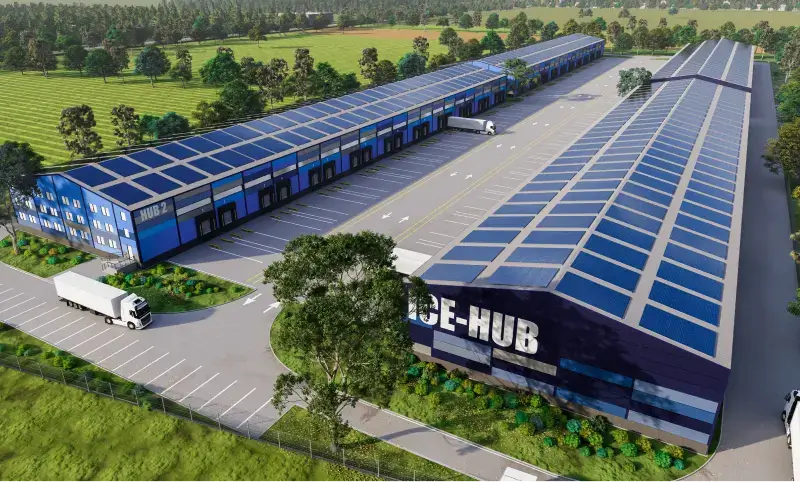
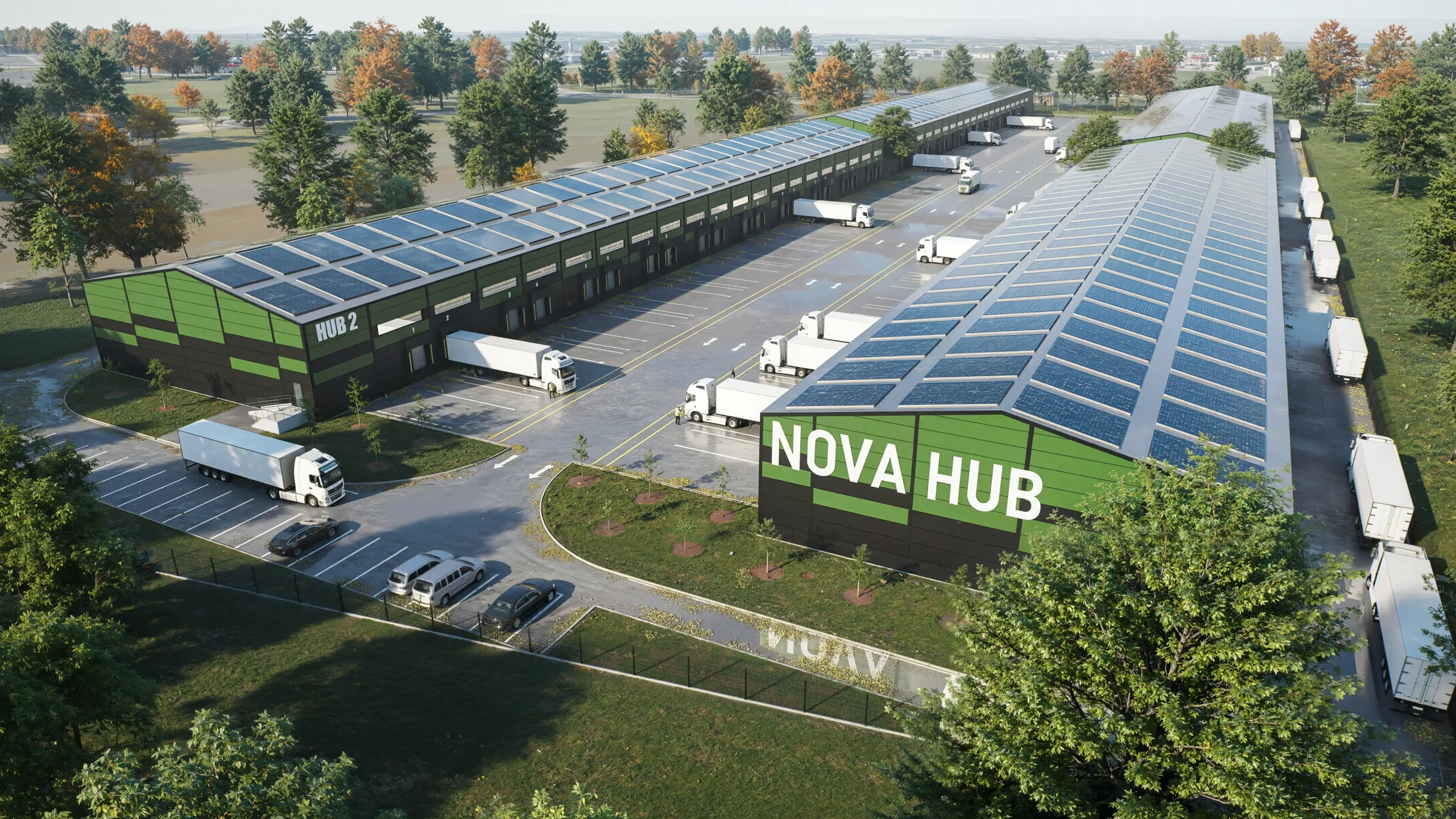
To see how these principles work in practice, consider an innovative logistics complex with a total land plot of 41,970 square meters and a built up area of 19,174 square meters. The site is strategically located near the Odesa Kyiv highway with direct access to sea port, dry port, and railway infrastructure.
This combination supports both import export flows and regional distribution. For companies seeking industrial premises in Odesa that can serve national and international routes, such a location greatly reduces transport related reliability risks.
Engineering systems and safety features
The complex is designed with autonomous water supply and 1 megawatt of electrical capacity, which provides a strong base for intensive operations and future automation. An automatic fire alarm system, continuous video surveillance, and an integrated shelter enhance both operational and personal safety.
In addition, a rooftop solar power station supports green energy generation. This not only reduces dependency on grid electricity but also aligns the facility with tenant sustainability goals and potential regulatory trends.
Investment logic, office space, and payback
The project includes 2,460 square meters of office space integrated into the logistics complex, which simplifies management and coordination for tenants. From an investor perspective, the expected payback period of seven years reflects the combination of attractive location, modern specifications, and demand for high quality logistics center capacity in Ukraine.
Project management is handled by TOV “SK GROUP”, while TOV “BAU CENTER” acts as general contractor. This partnership allows the developer, NovaHub, to focus on strategic decisions while experienced partners execute design and construction.
| Parameter | Specification |
|---|---|
| Total land area | 41,970 m² |
| Total complex area | 19,174 m² |
| Office space | 2,460 m² |
| Electrical capacity | 1 MW |
| Key systems | Autonomous water, fire alarm, 24/7 CCTV, shelter, solar power |
| Expected payback | 7 years |
For investors and tenants who want reliable warehouse space in Ukraine, these figures help quantify how design and engineering choices contribute to financial performance.
Common mistakes when assessing developer reliability
Underestimating utility and power requirements
Many companies focus on rent and location but overlook the importance of power and water resilience. This leads to frequent issues when automation grows faster than anticipated.
- Typical error: Assuming that existing power capacity can easily be increased later.
- Why it happens: Utility constraints and grid upgrade timelines are underestimated during lease negotiations.
- How to avoid: Ask the developer to document available capacity, reserve margins, and feasible upgrade paths before signing.
Ignoring flexibility and future growth
Another frequent mistake is choosing a warehouse that perfectly fits today’s volumes but leaves no room for expansion. This creates operational stress and forces premature relocation.
- Typical error: Prioritizing only current rental cost over expansion potential or modularity.
- Why it happens: Short planning horizons and pressure to cut immediate expenses.
- How to avoid: Evaluate possibilities to lease adjacent bays, add mezzanines, or increase office space within the same complex.
Weak assessment of the project team
Tenants often focus on the brand name of the developer but underestimate the importance of the specific general contractor and project manager for a given project.
- Typical error: Not checking who will actually build and manage the project day to day.
- Why it happens: Assumption that all contractors under a known developer are equal in quality.
- How to avoid: Request references and track record for the proposed contractor and project management company, especially in similar warehouse projects.
Practical recommendations for investors and tenants
Key questions to ask the developer
To quickly gauge how a developer influences reliability of a warehouse project, focus on targeted questions rather than generic marketing claims. This helps you separate truly modern, high standard facilities from basic industrial sheds.
- On location: Which transport modes can serve the site today and which are planned in the next five years.
- On power: What is the installed electrical capacity, reserve margin, and procedure for capacity increases.
- On water and safety: Is there autonomous water supply, and how are fire alarm and shelter systems designed.
- On flexibility: How easily can units be combined or divided, and what ceiling height and column grid are provided.
- On partners: Who is the general contractor and project manager, and what similar projects have they delivered.
Checklist for site visits
During a physical inspection, you can confirm many reliability factors with your own eyes. A structured checklist will make the visit more productive and comparable across different facilities.
| Aspect | What to look for |
|---|---|
| Transport access | Condition of access roads, distance to major highways, turning radii for trucks |
| Building envelope | Quality of joints, absence of visible cracks, insulation finishing |
| Power and water | Substations, generators if any, water tanks or wells, documentation on capacities |
| Safety systems | Fire alarm panels, sprinklers if installed, marked evacuation routes, shelters |
| Security | CCTV coverage, perimeter fencing, access control points |
When NovaHub is a strong fit
For companies seeking a modern logistics center with high reliability standards, NovaHub focuses on speed, quality, and European level construction. Projects are designed with robust infrastructure, including autonomous water, strong electrical capacity, and advanced safety systems.
If your strategy depends on long term stability, multimodal access, and the ability to scale, it is worth exploring investment in an innovative logistics complex developed under NovaHub initiatives. In many cases, this can offer a better balance of reliability and cost compared with retrofitting legacy warehouses.
In essence, the reliability of any warehouse or logistics hub is determined by the developer long before the first tenant arrives. Site selection, structural design, engineering systems, and the choice of contractors and project managers all translate directly into uptime, safety, and cost stability.
Examples from contemporary projects in Ukraine show how multimodal access, autonomous utilities, and green energy integration can create a resilient foundation for logistics operations. When you evaluate options for logistics centers or industrial premises, focus less on façade aesthetics and more on these underlying reliability drivers.
By asking the right questions and partnering with developers such as NovaHub that prioritize modern standards and speed of delivery, you significantly reduce long term operational risk. This allows your business to concentrate on serving customers instead of solving infrastructure problems.
Sources
— Industry Report by McKinsey (2023)
— Global Logistics Real Estate Review, Logistics Insight Group
— Warehouse Safety and Design Guidelines, International Warehouse Association
— Emerging Markets Logistics Infrastructure Overview, Regional Development Institute
FAQ
What makes a developer so critical for warehouse project reliability?
The developer chooses the location, designs the structure and systems, and selects the general contractor and project manager. These early decisions define transport access, power and water resilience, safety, and the ability to expand or modernize over time.
How does the Odesa–Kyiv corridor location improve logistics resilience?
A site near the Odesa Kyiv highway with access to sea port, dry port, and railway allows multiple routing options for cargo. This reduces dependence on a single road and makes operations more robust during disruptions or traffic peaks.
Why is 1 MW of electrical capacity significant for a logistics complex?
One megawatt of power provides a solid base for intensive warehouse operations with room for future automation and electrification. It allows tenants to add equipment and systems without immediate grid upgrades, which supports reliable long term growth.
What are the main pros and cons of working with a developer driven project?
The benefits include integrated vision, faster delivery, and high construction standards with future readiness. The limitations are potential standardization pressure, fixed capacity constraints, dependence on one party, and typically higher rental or investment costs compared with basic facilities.
How does autonomous water supply enhance warehouse reliability?
Autonomous water supply protects operations from municipal outages and supports both domestic use and fire protection needs. This is especially important for large complexes where even short interruptions can disrupt handling processes and safety systems.
What timeline should I expect from design to commissioning?
In the example discussed, design runs from early April to late November, permitting overlaps from mid August to early January, construction starts in mid January, and commissioning is targeted for August the following year. This structured schedule helps tenants plan their own ramp up.
How can I avoid underestimating future power needs for my warehouse?
Discuss power capacity, reserve margins, and upgrade procedures with the developer before signing any agreement. Include planned automation, charging infrastructure, and IT loads in your calculations so the warehouse systems can accommodate them without major retrofits.
What indicates that a logistics center in Ukraine is future ready?
Key signs include multimodal connectivity, scalable layouts, high electrical capacity, autonomous water, advanced safety and security systems, and integration of green energy like solar power. Together, these features support modernization and stable operations in a changing environment.
Why is the seven year payback period important for investors?
A projected seven year payback reflects a balance between construction quality, location strength, and market demand. It suggests that the combination of rent levels and occupancy can recover the investment within a relatively short horizon for industrial real estate.
How does NovaHub differentiate itself in the warehouse market?
NovaHub focuses on reliability, modern European level construction standards, and speed of delivery. By combining strong locations, robust infrastructure, and qualified partners, NovaHub aims to provide logistics complexes that remain efficient and competitive over their full life cycle.