


Define your logistics needs, prioritize location and access, and assess technical, safety, and energy features. Compare total ownership costs and future flexibility, favoring modern logistics complexes when efficiency and resilience are critical.
Companies in Ukraine are rethinking storage and distribution. War risks, changing supply chains, and the growth of e‑commerce are pushing businesses to move from improvised storage to professionally designed facilities. Choosing the right warehouse is no longer only about cheap rent. It is about resilience, safety, and the ability to scale operations when the market finally stabilizes and grows. For any business that needs reliable warehouse space in Ukraine, a structured approach to selection is now a strategic necessity, not a side task.
This article walks you through a practical, stepwise method for choosing a warehouse or logistics complex. You will learn how to define your requirements, assess locations and access, compare technical specifications, understand warehouse classes, evaluate modern logistics centers, and avoid costly mistakes. We will also look at a real investment case of an innovative logistics complex near the Odesa–Kyiv corridor, so you can see how a professional project is structured in practice.
How to define your business needs before searching for a warehouse?
Clarify your operational model and goods profile
Before you look at any specific property, you need a clear picture of what will happen inside the warehouse daily. The type of goods, their value, turnover speed, and handling method directly shape your technical requirements. Slow‑moving spare parts require different zoning and shelving than fast‑moving consumer goods with frequent inbound and outbound flows.
List the basic characteristics of your stock. Include average and peak pallet count, size and weight of cargo, need for temperature stability, and sensitivity to humidity or dust. This will help you understand minimum storage area, ceiling height, and whether special flooring or climate controls are required.
Calculate required storage and auxiliary areas
Once you understand your product profile, you can translate it into space requirements. In practice, companies often underestimate the need for auxiliary areas such as receiving and dispatch zones, technical rooms, and staff facilities. As a rule, useful storage space should not be the only metric you consider.
Plan separate squares for loading docks, marshalling areas, vehicle maneuvering, and parking. Also consider office space within or next to the warehouse, especially if you plan to place logistics, customer service, or procurement teams on site. A modern logistics complex in Ukraine often integrates several thousand square meters of offices into the total area so that management and operations work as one system.
Set clear performance and budget parameters
Define what “success” looks like for your warehouse decision. Typical performance indicators include required throughput per day, lead times for order processing, and allowed loading queuing time. Link these to your budget framework, both in terms of rent or capital expenditure and operating costs such as energy, security, and staff.
In many cases, slightly higher rent or investment in a more efficient building is justified by lower operational expenses and fewer failures. That is especially relevant for facilities with energy efficient designs or solar power systems that reduce dependence on the grid.
Why location and access are decisive for a warehouse in Ukraine?
Evaluate proximity to markets, ports, and corridors
For companies in Odesa and the wider south of Ukraine, location can make or break logistics efficiency. Proximity to ports, the Odesa–Kyiv highway, and key dry ports or rail lines significantly impacts import and export operations as well as domestic distribution. A warehouse that reduces empty runs and transit times will usually win over a cheaper but remote facility.
When comparing options, map your suppliers, customers, and main transport corridors. Estimate typical delivery distances and travel times. Even a 30‑minute saving on each trip can accumulate into large efficiency gains over a year.
Check urban access and truck maneuverability
Within cities such as Odesa, the specific district and street access are just as important as regional positioning. Narrow roads, complex junctions, or weight restrictions can significantly slow down operations and increase fuel costs. You want a site where heavy vehicles can approach, turn, and park without creating bottlenecks or security issues.
Inspect gates, internal roads, and turning radiuses during your site visits. Confirm that there is sufficient space for both trucks and staff vehicles. A professional warehouse project usually includes designed parking and traffic flows so that trucks do not interfere with employee and visitor movement.
Integrate resilience and safety considerations
Today, companies in Ukraine must consider not only convenience but also resilience. Facilities that include shelters and robust engineering systems provide an additional layer of risk management. When supply chains are disrupted, the ability to continue at least partial operations on site quickly becomes a competitive advantage.
Check whether the complex has redundant power sources, stable water supply, and secure communications. Autonomous water systems and high electrical capacity help keep critical processes running. This is especially valuable for logistics centers that support essential goods or time‑sensitive cargo.
What technical specifications should you look at first?
Structural parameters and ceiling height
Technical condition and suitability for your business model are primary factors when selecting any warehouse. Pay attention to the structural quality of the building, the condition of floors and walls, and the height from floor to ceiling. High ceilings enable modern racking systems and higher storage density, which can significantly improve the economic efficiency of the space.
Inspect the building for visible cracks, moisture marks, or uneven flooring. For high‑bay storage, floor flatness and load capacity are especially important to keep equipment and staff safe.
Energy, utilities, and fire safety
Adequate and reliable electricity supply is a must. Even for small operations, you may need substantial power for lighting, handling equipment, IT infrastructure, and possibly refrigeration. For large facilities, dedicated electrical capacity in the megawatt range allows future expansion of operations without expensive upgrades.
Check the presence and condition of fire detection and suppression systems. According to industry best practice, modern warehouses should have automatic fire alarm systems throughout the storage areas, with clearly marked evacuation routes and accessible fire fighting equipment. Ask for maintenance records and compliance documents.
Security and environmental stability
Security is now a competitive differentiator in logistics real estate. Look for continuous video surveillance, controlled access points, and on‑site security personnel. Proper lighting and well‑designed fencing are also important to deter theft and vandalism.
The dryness of the space is vital to prevent damage to goods. Inspect for signs of leaks, condensation, or mold. Ask about humidity control, roof condition, and wall insulation. Continuous environmental stability reduces product losses and insurance risks.
How do warehouse classes A, B, C, and D differ in practice?
Overview of warehouse classification
Warehouses in Ukraine are usually classified into classes A, B, C, and D based on their technological level and condition. This classification helps investors and tenants quickly understand what type of infrastructure they can expect from a facility, from basic storage rooms to high specification distribution centers.
Class A facilities are purpose built for logistics and meet modern standards. Lower classes often represent converted industrial buildings or older storage that may lack advanced features but can be cost effective for less demanding operations.
Key features by class
The table below summarizes the typical differences between classes, based on common market practice.
| Parameter | Class A | Class B | Class C | Class D |
|---|---|---|---|---|
| Building origin | Purpose built logistics facility | Modernized industrial or semi‑modern | Older industrial or storage | Outdated or temporary space |
| Ceiling height | High, suitable for modern racking | Medium, limited high‑bay use | Often low or uneven | Low, unsuitable for racking |
| Infrastructure | Advanced utilities, docks, IT | Good basic utilities | Partial utilities, older systems | Minimal utilities |
| Management | Professional property management | Mixed, some professional | Owner managed | Informal management |
Class A buildings are typically aligned with modern European standards, including energy efficient design, thought through traffic flows, and integrated office areas. They are attractive for companies that need predictable costs and scalable operations.
When does a higher class pay off?
For high turnover operations or those that require strict service levels, the additional cost of a Class A facility is often compensated by lower handling costs, fewer incidents, and better working conditions. Automated fire safety, high quality flooring, and modern docks directly support productivity.
For simpler storage tasks where goods can tolerate more variability, a lower class building can be acceptable. However, you should still check security, dryness, and technical condition carefully. Hidden defects in older properties can lead to unplanned repair expenses and downtime.
What are the pros and cons of modern logistics complexes?
Advantages of contemporary logistics centers
Modern logistics centers in Ukraine offer a very different value proposition compared to legacy storage buildings. They integrate engineering, location, and management to support efficient, safe, and scalable operations.
- Operational efficiency: Purpose designed layouts, high ceilings, and loading docks allow faster handling and higher storage density.
- Resilience and safety: Advanced fire alarm systems, 24/7 video surveillance, and the presence of shelters increase business continuity in crisis conditions.
- Energy performance: Facilities that include solar power stations can reduce energy costs and dependence on external supply.
- Integrated offices: Substantial office space inside the complex makes it easier to locate logistics, management, and support teams on site.
- Professional management: Dedicated project and property management ensure consistent maintenance and predictable service quality.
Limitations and potential drawbacks
At the same time, high specification complexes are not a universal solution for every company. You should consider their limitations carefully.
- Higher entry cost: Rent or investment per square meter is usually higher than older storage buildings.
- Longer planning horizon: To justify a new facility or long term lease, you must have reasonable visibility on business volumes for several years ahead.
- Contract rigidity: Professional complexes may require longer lease terms and stricter operational rules.
- Location trade offs: Strategic positions near highways and ports may be further from city centers, which can affect staff commuting.
- Customization limits: Some standardized design elements may restrict very specific or niche operations without additional investment.
Stepwise way to balance pros and cons
To balance these factors, start with an honest forecast of your growth and risk tolerance. If you expect higher volumes, more SKUs, and strict service expectations, the advantages of a modern complex usually outweigh the additional cost.
If your operations are stable and simple, you may choose a midrange facility but still borrow design principles from high quality complexes when negotiating upgrades with the owner.
Case study: innovative logistics complex near the Odesa–Kyiv corridor
Key parameters of the project
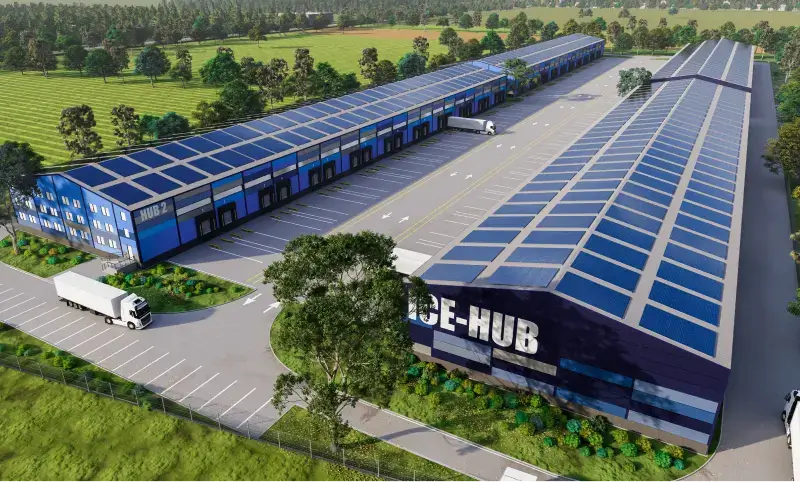
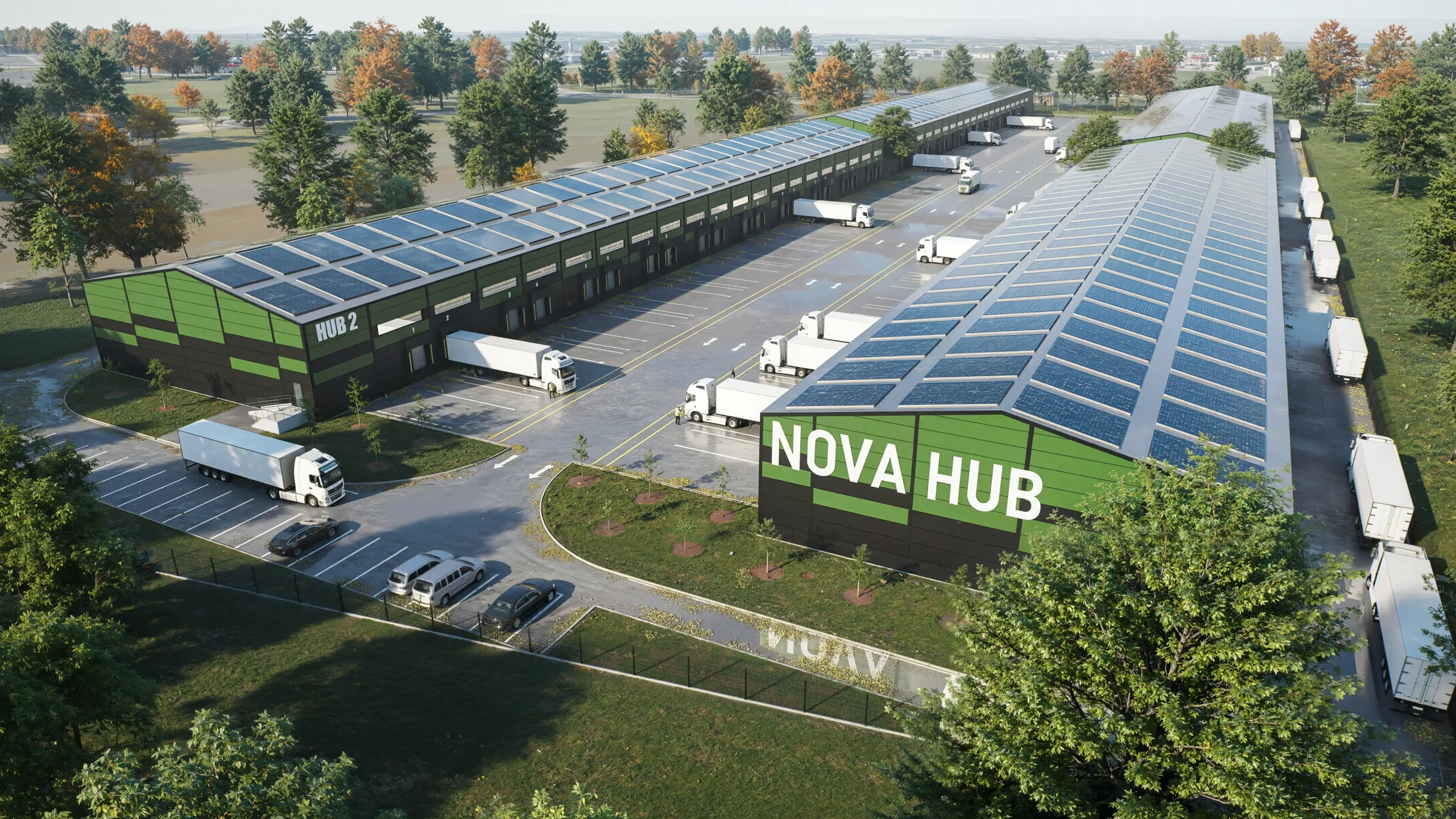
A practical way to understand what a modern logistics complex looks like is to review a real investment case. One example is an innovative facility with a total land area of 41,970 square meters and a total building area of 19,174 square meters. The project includes about 2,460 square meters of office space integrated into the complex.
The location is near the Odesa–Kyiv highway with convenient access to a sea port, a dry port, and railway infrastructure. This combination supports both international flows and domestic distribution. The site is designed for efficient truck access and maneuvering.
Engineering, safety, and green energy
The complex is planned with an autonomous water supply and electrical capacity of approximately one megawatt. This ensures stable operation of equipment and room for future expansion. For safety, the design includes an automatic fire alarm system that covers the facility and 24/7 video surveillance. There is also a shelter on site, which raises operational resilience during emergencies.
Energy efficiency is strengthened by a solar power station that provides green electricity. This reduces operating expenses and supports sustainability objectives. For logistics operators with high energy consumption, such features can significantly improve the total cost of ownership.
Investment and implementation timeline
The project is managed by a dedicated project company with professional coordination and a general contractor responsible for construction. The typical timeline includes design, permitting, construction start, and commissioning. In this case, design work is planned over several months, followed by a permitting phase of a similar duration. Actual construction is scheduled to start at the beginning of 2026 with commissioning in August 2026.
The investment model anticipates a payback period of about seven years, which is consistent with high quality logistics assets in strategic locations. This horizon assumes stable demand for professional storage and distribution services in the region.
How NovaHub leverages such projects for clients
NovaHub focuses on the sale and construction of modern warehouses and logistics complexes and relies on similar high standard projects to serve clients that prioritize reliability, contemporary design, and European level construction quality. By working with strong project management and experienced general contractors, the company combines fast implementation with attention to structural and safety details.
If you are considering participating in or leasing space at an innovative logistics complex, review the engineering, safety, and energy features described above. You can also explore this type of investment opportunity through NovaHub’s logistics complex project overview, which illustrates how such facilities are structured in practice.
How to compare existing buildings with a modern logistics project?
Key comparison criteria
When deciding between renting an older building and moving into a newly built complex, you should compare not only rent but also performance and risk. The following table illustrates a simplified comparison between a typical older warehouse and a modern logistics complex similar to the project described earlier.
| Criterion | Older warehouse | Modern logistics complex |
|---|---|---|
| Technical condition | Variable, may require repairs | New construction, high standards |
| Ceiling height | Limited, often uneven | Optimized for racking and efficiency |
| Energy and utilities | Basic electricity, no redundancy | High capacity power, autonomous water |
| Fire safety | May rely on partial or outdated systems | Integrated automatic fire alarm |
| Security | Guard at gate, limited cameras | 24/7 video surveillance and access control |
| Resilience | No shelters or backup systems | Shelter and designed resilience |
| Energy efficiency | Basic, high energy bills | Solar power and efficient systems |
In short, the total operational impact of higher specification buildings often exceeds the difference in rental rate, especially for companies with complex logistics operations or high value goods.
Example scenario: regional distributor in Odesa
Imagine a distributor in Odesa that handles imported consumer goods and supplies several regions of Ukraine. The company currently uses an older converted industrial building with limited ceiling height and no modern docks. Trucks often wait because loading is slow, and occasional roof leaks lead to damaged packaging.
By relocating to a Class A logistics center near the Odesa–Kyiv highway with proper docks, higher ceilings, and 24/7 security, the distributor could reduce loading times, decrease product damage, and improve staff working conditions. The slightly higher rental cost would be offset by lower losses, higher throughput, and better customer service.
Example scenario: e‑commerce fulfillment operator
A fast growing e‑commerce operator expects order volumes to double in three years. In an older space, expansion would require renting additional scattered units, which complicates management. By choosing a modern complex with 19,000+ square meters of total area and available office space, the operator can centralize operations, integrate IT systems more easily, and scale within one site.
This strategic move supports quick order processing, reliable service levels, and lower per unit handling costs, which are critical in competitive online retail markets.

What are the most common mistakes when choosing a warehouse?
Typical errors and why they occur
Many companies repeat similar mistakes when selecting warehouse premises, especially under time pressure or cost cutting initiatives. Understanding these traps can help you avoid expensive corrections later.
- Focusing only on rent per square meter: Businesses sometimes ignore operational costs, which can be higher in older or inefficient buildings.
- Underestimating access and traffic: Good internal processes cannot compensate for a location with constant truck delays or urban restrictions.
- Neglecting building dryness and condition: Small leaks or humidity issues at the start often become serious problems after the first winter.
- Ignoring fire and security systems: Lack of alarms or surveillance raises insurance costs and exposes you to severe losses in case of incidents.
- Insufficient future proofing: Choosing a space that fits only current volumes leads to fragmentation when your business grows.
How to avoid these mistakes in practice
To avoid focusing only on rent, calculate a full cost scenario that includes energy, maintenance, insurance, and expected damage or shrinkage. When evaluating access, visit the site at peak traffic hours and talk to neighboring businesses about typical bottlenecks.
For dryness and technical condition, conduct inspections during or after heavy rain if possible. Bring a technical specialist to check roofing, drainage, and flooring. Request documentation for fire alarm systems and ask about independent security audits or insurance requirements.
Expert opinion on safety priorities
In markets with elevated operational risks, companies that systematically invest in fire safety, security, and resilient engineering significantly reduce the probability of catastrophic loss and unplanned downtime.
— Logistics Risk Management Review (2023)
In other words, economic optimization should not come at the cost of basic safety measures. For many businesses, a major incident in the warehouse can eliminate several years of profit.
Practical step‑by‑step plan to choose a warehouse or logistics center
Step 1: Define requirements and classify your needs
Start with a concise technical brief that includes your storage area, ceiling height, and load requirements, as well as desired office space and parking. Identify whether you need a simple storage space or a full logistics center that supports distribution, value added services, and office functions.
Classify your needs by priority. Separate “must have” features, such as security and fire safety, from “nice to have” advantages, such as premium office finishes or extra parking capacity.
Step 2: Shortlist locations and inspect access
Choose several potential zones, for example near major highways, ports, or rail nodes relevant to your supply chain. Within each zone, shortlist specific properties that meet your basic size and budget criteria. Verify both regional and local access in person.
Drive the same routes your trucks will use. Check bridge heights, weight limits, and typical congestion at different times of the day. If you operate in Odesa, pay special attention to access to port terminals and the Odesa–Kyiv corridor.
Step 3: Assess technical condition and safety systems
Once you have a shortlist of locations, perform a more detailed technical review. Inspect structural elements, utilities, and fire safety. Confirm that electricity capacity is sufficient for your operations and that water supply is stable.
Ask the owner or developer to explain how 24/7 security is organized, which areas are covered by video surveillance, and where the control rooms are located. Request information about shelters or other protective infrastructure if relevant for your risk assessment.
Step 4: Compare total cost of ownership and flexibility
Calculate total cost of ownership for each option over your planned horizon, for example seven years. Include rent or investment, maintenance, energy, insurance, and possible refurbishment costs. Consider also the potential impact of solar power or other energy saving measures on your operating budget.
Evaluate flexibility. Can you expand within the site if required? Are there options to adjust your leased area or add more office space? A well planned logistics complex normally allows staged growth without changing location.
Practical tips and recommendations for decision makers
Actionable advice to strengthen your selection process
To put everything together in a usable way, consider the following practical tips when you evaluate premises for storage and logistics.
- Use a standardized checklist: Create a template that covers location, technical specifications, safety, and costs so that you compare objects consistently.
- Involve operations early: Ask warehouse managers and transport planners to join site visits, they will spot issues that are not visible from the office.
- Simulate peak scenarios: Model how many trucks, staff, and pallets you will handle during seasonal peaks to test whether the space and engineering can support this.
- Plan for resilience: Prioritize facilities with autonomous water, strong power capacity, and shelters where possible, especially for critical goods.
- Negotiate improvements: If a nearly suitable building lacks some features, discuss upgrades with the owner or developer as part of the deal.
- Think in life cycles: Evaluate not only initial fit, but how the building will support your strategy during at least the next five to seven years.
How NovaHub can support your warehouse strategy
NovaHub specializes in the development and sale of modern warehouse and logistics complexes that meet high European construction and safety standards. The company focuses on reliability, fast delivery of projects, and consistent quality of execution, which is reflected in the technical and organizational level of its facilities.
If you are planning to secure new warehouse space, involve NovaHub at the stage of requirement definition. This will help you align your operational needs with realistic technical and investment options, and choose between existing objects and participation in new logistics projects.
Choosing the right warehouse or logistics complex in Ukraine requires a structured approach that balances location, technical specifications, safety, and long term economics. Short term rent savings rarely compensate for poor access, unreliable engineering, or inadequate security. Modern logistics centers with thoughtful design, integrated offices, and resilient infrastructure offer a solid foundation for sustainable growth and risk management.
By following a clear step by step plan, comparing total cost of ownership, and avoiding the common mistakes outlined above, you can select premises that support both your current operations and future expansion. If you need a partner that understands modern logistics requirements and works to European construction standards, consider involving NovaHub early in your planning. The right decision today can secure stable and efficient logistics for many years ahead.
Sources
— Logistics Risk Management Review (2023)
— Ukrainian Commercial Real Estate Market Overview (2024)
— Regional Industrial and Logistics Report, Black Sea Corridor (2023)
— Statista Research, Global Warehouse Automation and Efficiency (2024)
— NovaHub Internal Project Materials on Logistics Complex Development (2025)
FAQ
What is the first step when choosing a warehouse in Ukraine?
The first step is to define your operational needs in detail, including goods profile, required storage area, ceiling height, and necessary office space. This helps you filter out properties that cannot support your basic processes before you spend time on site visits.
Why is proximity to the Odesa–Kyiv highway and ports so important?
Proximity to the Odesa–Kyiv corridor and nearby ports reduces transit times and empty runs for import, export, and regional distribution. According to regional logistics reports, access to major highways and ports is one of the strongest drivers of cost efficiency and service reliability.
What technical features distinguish a modern logistics complex from an older warehouse?
A modern logistics complex usually offers high ceilings, purpose designed docks, autonomous water supply, high capacity electricity, automatic fire alarms, and 24/7 video surveillance. Older warehouses often lack some of these features and may require costly upgrades over time.
How long is the typical payback period for an innovative logistics complex?
In the case study discussed, the investment payback period is about seven years. This reflects the higher initial specification of the complex, its strategic location near the Odesa–Kyiv highway and ports, and the expectation of stable demand for high quality logistics space.
What are the main advantages of Class A warehouse facilities?
Class A warehouses are purpose built for logistics, with modern infrastructure, high ceilings, professional management, and efficient layouts. They support higher throughput, better safety, and lower handling costs, which is especially important for fast growing or service critical operations.
What common mistakes should companies avoid when selecting warehouse space?
Typical mistakes include focusing only on rent per square meter, underestimating access and traffic, ignoring dryness and building condition, neglecting fire and security systems, and not planning for future expansion. Avoiding these errors helps prevent costly relocations and operational disruptions.
How does solar power benefit a logistics center?
Solar power reduces dependence on external electricity supply and can lower operating expenses for energy intensive facilities. In the innovative complex example, the solar station supports green energy goals and improves the total cost of ownership over the seven year payback horizon.
When does it make sense to choose a modern logistics complex over an older building?
It makes sense when you have high throughput, strict service level requirements, valuable goods, or plans for rapid growth. In such cases, the benefits of better safety, higher ceilings, efficient docks, and integrated offices usually outweigh the higher initial cost.
How can NovaHub help with choosing or building a warehouse?
NovaHub focuses on modern warehouse and logistics complex development that meets high European construction and safety standards. The company helps clients define requirements, compare options, and either select existing space or participate in new projects with reliable engineering and fast, high quality delivery.