

Verify land titles, building rights, permits, utilities, and contracts through structured legal and technical due diligence before buying any warehouse complex in Ukraine to reduce risks and support a realistic investment plan.
Investors looking at modern logistics assets in Ukraine face a double challenge. The legal framework is evolving, while demand for high-quality storage near key transport hubs keeps growing. A single missed document or unclear land status can turn a promising deal into a long and expensive dispute. That is why a structured, professional review of all legal and technical papers is essential before you commit to a warehouse acquisition.
This article explains how to verify documentation step by step when you plan to buy a logistics facility or warehouse complex. You will learn what to check in land and building titles, urban planning papers, permits, technical specifications, and contracts. We will also look at real-world style examples, typical mistakes, and practical tips for investors who want to buy a warehouse in Odesa or other regions of Ukraine with confidence.
📁 What documents do you need to request for a warehouse acquisition?
Land ownership and use rights
The starting point is always the land. You must understand who owns it, on what legal basis, and whether the type of use allows industrial and logistics activity. Ask for extracts from the State Register of Property Rights that confirm ownership or long-term lease, along with cadastral data.
Check that the designated land use category fits a warehouse or logistics complex. If the zoning is agricultural or residential, you may face restrictions or need a lengthy change-of-use procedure, which affects timelines and the viability of any warehouse complex for sale.
Building titles and technical passports
For the buildings themselves, you should receive title documents that identify the owner, the total area, and the functional purpose of each structure. Technical passports or similar technical inventory documents need to show actual dimensions and layouts.
If the complex includes offices, truck docks, cold storage, or a shelter, these should be reflected in the documentation. Any mismatch between the physical site and the technical passport is a red flag that may cause problems during financing, insurance, or future resale.
Urban planning and zoning documentation
Urban planning papers show whether the facility complies with the city master plan and local zoning regulations. For assets close to major transport infrastructure, such as the Odesa–Kyiv highway or railway lines, local plans can be quite strict about access routes, noise, and environmental impact.
Request the relevant urban planning conditions, zoning extracts, and any detailed development plans that cover the land plot. These will help you confirm that logistics, storage, and office functions are permitted and that future expansion remains possible.
Key documents checklist
To put it simply, you should never move to a term sheet without at least the following items:
- Land documents: Ownership or lease agreement, cadastral extract, permitted land use.
- Building documents: Ownership title, technical passport, commissioning certificate.
- Urban planning: Extract from zoning plan, urban planning conditions, development restrictions.
- Technical and utility papers: Power, water, gas, and sewage connection terms or contracts.
- Permits: Construction permits, commissioning acts, fire safety approvals where applicable.
⚖️ How to verify land and building titles with minimal risk
Confirming the chain of ownership
Beyond seeing that the seller is registered as the owner, you should analyze how they obtained the property. Review previous sale contracts, privatization documents, or lease-to-own arrangements to make sure there are no unresolved claims.
Special attention is needed when a commercial property for sale has changed hands multiple times in recent years. Rapid re-sales can signal hidden disputes, tax issues, or an attempt to move assets away from creditors.
Encumbrances, mortgages, and court disputes
Always obtain a full extract from the State Register of Property Rights that lists encumbrances. This includes mortgages, lease rights granted to third parties, easements, arrests, or other restrictions.
If there are ongoing court cases concerning the land or buildings, request documents from the relevant courts and consult your legal advisor. Buying a property under dispute can lock your investment for years.
Verifying compliance with building standards
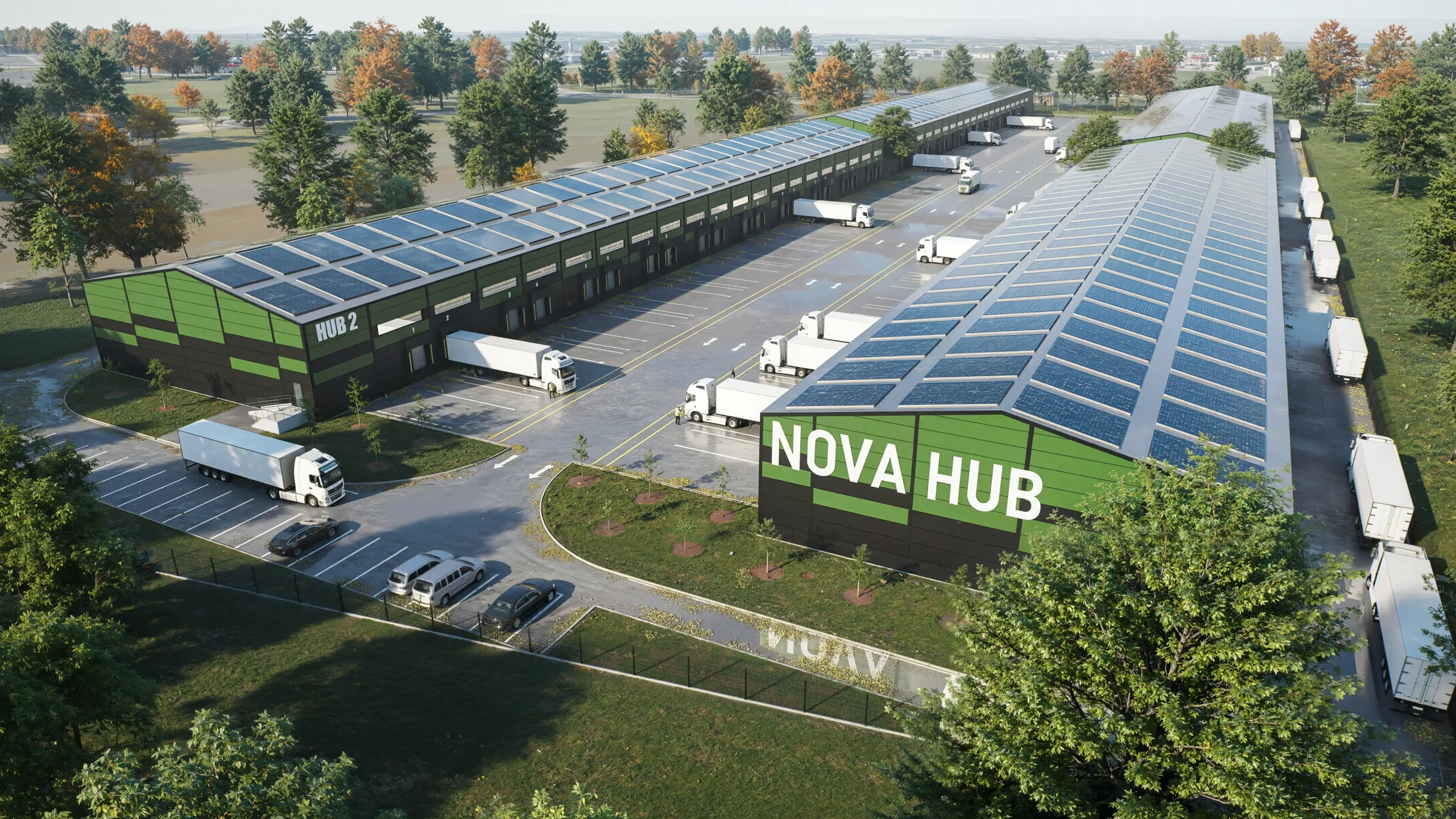
Modern logistics assets must comply with construction standards, fire codes, and safety requirements. For example, NovaHub’s innovative logistics project near the Odesa–Kyiv route is designed with autonomous water supply, about 1 MW of power capacity, automatic fire alarm, 24/7 video surveillance, and a shelter, which are all reflected in its technical and design documentation.
Ask for commissioning certificates for each stage of construction and any later reconstruction. If parts of the complex were built or expanded without proper permits, you may inherit the legalization problem along with the building.
Comparison of clean vs risky title situations
| Aspect | Clean title | Risky title |
|---|---|---|
| Owner in register | Matches seller, long-term ownership | Recent changes, unclear previous owners |
| Encumbrances | No mortgages or disputes | Mortgages, arrests, pending litigation |
| Permitted use | Industrial / logistics compatible | Agricultural or residential only |
| Construction status | All buildings commissioned properly | Uncommissioned or “temporary” structures |
🔌 Which technical and utility documents are critical?
Power supply and energy solutions
Energy capacity is a decisive factor for any logistics hub. Request technical specifications from the power distribution company that confirm available capacity and connection terms. For large centers, at least several hundred kilowatts are usually required, especially with refrigeration or automated systems.
The NovaHub logistics investment project near Odesa includes around 1 MW of electricity capacity and a solar power station. Such details need to be visible not only in marketing materials, but also in technical documentation and contracts with the utility provider.
Water, sewage, and fire safety systems
Check utility connection contracts or technical terms for water and sewage, particularly if the site has an autonomous water supply. Make sure the design supports fire safety requirements, including hydrants, fire water reserves, and pressure parameters.
Obtain design documents and certificates for the automatic fire alarm and smoke detection systems, as well as inspection reports from the responsible fire safety authority if available.
Transport access and logistics infrastructure
For investors who plan to buy warehouse premises in Ukraine, proximity to highways, railways, seaports, and dry ports is a key advantage. However, access roads, crossings, and loading yards must have clear legal and technical documentation.
Ask for documents that prove rights to use the access roads and loading platforms. If the site relies on easements or rights of way across neighboring land, verify that they are registered and long term.
Summary table of utility checks
| Utility | What to request | Why it matters |
|---|---|---|
| Electricity | Technical specs, connection agreement, capacity confirmation | Supports equipment, lighting, cold storage, and expansion |
| Water & sewage | Contracts or specs, autonomous system passports | Sanitary conditions, fire safety, staff comfort |
| Fire systems | Design, certificates, inspection reports | Risk management, insurance, compliance |
| Access roads | Land rights, easements, permits | Truck access, 24/7 logistics operations |
📜 How to review permits, construction timeline, and planning documents
Construction permits and project design
New or under-construction logistics complexes require a detailed review of the project pipeline. For instance, the NovaHub site near Odesa has a clear schedule: design works during 2025, permitting completed by early 2026, construction start in January 2026, and commissioning planned for August 2026.
Request copies of design assignments, building permits, and environmental documents that support this timeline. This allows you to verify that the development is realistic and that deadlines for a seven-year investment payback align with actual construction phases.
Commissioning and acceptance acts
For completed facilities, the commissioning certificate confirms that the building was constructed in line with the approved project and regulations. Acceptance acts between the general contractor and the project owner, such as those involving companies like TOV “BAU-CENTER”, demonstrate that the works were delivered and accepted.
If commissioning is partial or staged, clarify which parts of the complex are fully legalized and which still depend on future works or approvals.
Project management and responsibility distribution
When reviewing a development-stage logistics complex, check contracts with project management firms and general contractors. In the NovaHub example, project management is handled by a dedicated company, while another acts as the general contractor.
These contracts should define quality standards, timelines, responsibilities for defects, and penalties for delays. Strong documentation here lowers your execution risk as an investor.
Pros and cons of investing in a documented development project
- Advantage: Transparent construction schedule helps you plan cash flows and leasing strategy.
- Advantage: Clear roles for project manager and contractor reduce coordination risk.
- Advantage: Early-stage entry can secure better pricing and future upside.
- Limitation: You rely on the developer’s ability to obtain remaining permits on time.
- Limitation: Market conditions may shift before commissioning is completed.
✅ Pros and cons of buying a warehouse complex in Ukraine
Main advantages for investors
Logistics assets in Ukraine, especially near major routes like the Odesa–Kyiv corridor, offer a combination of strategic location and growth potential. Well-located sites can serve seaport flows, dry ports, and rail freight at the same time.
- Strategic access: Facilities close to ports, highways, and rail can attract long-term tenants.
- Growing demand: E-commerce and regional trade increase the need for modern storage.
- Modern standards: Complexes built to European-level specifications reduce operating risks.
- Energy efficiency: Solar power stations and efficient engineering cut long-term costs.
- Professional management: Structured project management increases reliability and transparency.
Limitations and risk factors
Despite the opportunities, logistics investments remain complex assets that require professional due diligence. Documentation quality directly influences financing terms and exit options.
- Regulatory changes: Shifts in planning or construction rules may slow approvals.
- Documentation gaps: Missing permits or unclear land rights can be expensive to fix.
- Infrastructure dependency: Access roads or utilities controlled by third parties add risk.
- Market volatility: Rental rates and occupancy can fluctuate in a changing economy.
- Security considerations: Geopolitical factors must be factored into long-term planning.
How NovaHub’s approach mitigates some of these risks
In short, a well-structured development strategy reduces the number of surprises. NovaHub focuses on reliability, construction speed, and adherence to high European standards for logistics real estate, which is reflected in detailed project documentation.
Clear timelines, predefined power capacity, advanced fire safety, and a protected shelter area improve both operational resilience and the quality of technical files that you will review as an investor.
📉 Common mistakes when checking documents before purchase
Overlooking land-use conflicts
One of the most frequent errors is assuming that any industrial-looking area can serve as a logistics hub. Investors sometimes ignore zoning plans and just focus on what has already been built on the land.
This can lead to situations where a local authority demands changes to the use of the property or refuses to approve expansion. Always confirm that the permitted land use is compatible with long-term warehouse and logistics functions.
Relying solely on copies from the seller
Another mistake is reviewing only scanned PDFs provided by the seller without confirming them in official registers. Copies can be outdated or incomplete.
To avoid this, your legal advisor should obtain fresh extracts from state registers, verify signatures and stamps, and cross-check data such as areas, cadastral numbers, and encumbrances.
Ignoring technical capacity and fire safety documents
Some buyers focus on location and rental income projections while largely ignoring technical files. Missing or outdated energy and fire safety documents can block insurance, bank financing, or even operational permits.
Make sure there are up-to-date technical specifications, test reports, and certificates for all critical engineering and safety systems before closing the deal.
Underestimating construction timeline risks
When buying into a development, investors sometimes accept optimistic timelines without reviewing the underlying documents. If design, permitting, or construction contracts do not support the promised schedule, commissioning can be delayed significantly.
The solution is to compare the promised milestones with actual permits, contracts with contractors, and realistic construction durations for similar warehouse projects.

🧩 Practical examples: how document checks change investment decisions
Example 1: Odesa highway logistics complex with clear documentation
Imagine an investor considering a logistics complex near the Odesa–Kyiv highway, with land area close to 42,000 m² and a total building footprint around 19,000 m², including about 2,500 m² of offices. The developer provides full title documents, zoning extracts, and technical specifications confirming autonomous water supply, roughly 1 MW of power, a solar power station, and a modern fire alarm system.
Independent checks of the land and building registers show no encumbrances or disputes. Construction and commissioning timelines match permits and contractor agreements, and the business plan projects a payback period of about seven years. In this scenario, thorough document verification supports the investor’s decision to proceed, possibly with only minor contract adjustments.
Example 2: Regional warehouse with hidden encumbrances
Now consider another warehouse in a regional town. The site looks functional, and tenants are already operating. However, during due diligence, your lawyer finds a mortgage in favor of a bank and a court case over unpaid construction works that affect the property.
Because previous contracts did not clearly separate land and building rights, there is a risk that a negative court decision could limit your future control over the asset. This example shows why document checks must include all historical encumbrances and litigations, not just current rent rolls or physical inspections.
Example 3: Development-stage complex with incomplete permits
An investor receives an offer to participate in a promising cross-dock facility still under construction. The project team claims that all permits are in place. Yet, a closer review reveals that only design approval has been granted, while key building and commissioning permits are still in progress.
Armed with this information, the investor renegotiates the deal structure. Part of the payment is tied to specific permitting milestones, and additional warranties are included in the contracts. Document verification does not kill the project, but it changes the risk-reward balance in favor of the buyer.
🛡️ Practical tips and best practices for document due diligence
Engage specialized local advisors early
Use legal and technical consultants with proven experience in Ukrainian logistics real estate. They understand local registers, permitting authorities, and typical risks for warehouse and industrial sites.
Early involvement helps shape your term sheet and conditions precedent so that critical documents become mandatory before closing.
Structure your due diligence into clear workstreams
Break your review into legal, technical, financial, and environmental streams. Each stream should have its own checklist, timeline, and deliverables, but all of them should feed into an integrated risk matrix.
For example, legal findings on zoning might affect the technical scope of potential expansions, which in turn changes the financial model for rent and payback periods.
Use a standardized checklist for each acquisition
To summarize the practical approach, create a repeatable checklist so that no key category is missed:
- Titles and land: Registers, encumbrances, zoning, easements.
- Construction and permits: Design approvals, building permits, commissioning acts.
- Technical and safety: Utilities, energy capacity, fire and security systems.
- Contracts: Leases, service agreements, project management and contractor contracts.
- Litigation and compliance: Court disputes, fines, past inspections.
Leverage developer transparency and digital data rooms
Professional developers such as NovaHub often use structured digital data rooms for their projects. When this is the case, request controlled access so your advisors can review documents efficiently and ask targeted follow-up questions.
Look at how complete and up to date the data room is. Serious gaps signal that the developer may not have full control over paperwork, which should influence your negotiation strategy.
🎯 How document checks support your investment strategy with NovaHub
Aligning documents with your investment model
When you consider a logistics complex from NovaHub, every key assumption in your model should be backed by documentation. Land size, built-up area, office component, and available power all need to match the project data and legal papers.
If your model expects a seven-year payback, your advisors must confirm that construction timelines, permitting status, and market leasing assumptions are realistic for that horizon.
Finding the right asset: existing vs development projects
Investors comparing an existing logistics facility with a development-stage asset should weigh documentation status alongside price and yields. Existing fully commissioned complexes may be easier to finance, while development projects with strong documentation and reputable contractors can offer higher returns.
Some buyers looking for a warehouse complex for sale might prefer stabilized cash flow, while others focus on build-to-suit opportunities with advanced specifications and green energy features.
Where to start your search and analysis
If you plan to buy a warehouse in Odesa, begin with assets that combine strong locations near key routes and ports with transparent documentation. NovaHub’s logistics project is one such example, pairing a strategic site with autonomous utilities, modern safety systems, and a clear construction roadmap.
You can learn more about this investment opportunity by reviewing the official project description on the NovaHub logistics complex investment page, then aligning it with your legal and technical due diligence process.
Holiday-season next steps with NovaHub
As the New Year approaches, many investors reassess their portfolios and set fresh goals for the upcoming year. This is a perfect moment to shortlist logistics and commercial property for sale that offer both resilience and growth potential.
During the festive season, take time to review your documentation strategy and engage with NovaHub’s team to discuss modern warehouse premises in Ukraine that match your risk profile. Visit the company’s site to explore current and future projects, then enter the new year with a clear, well-documented logistics investment plan.
Thorough document verification turns a warehouse purchase from a risky bet into a managed investment decision. By reviewing land rights, building titles, utilities, permits, and contracts in an organized way, you reduce surprises and negotiate better terms.
Examples from the Odesa–Kyiv logistics corridor show how strong documentation supports realistic construction schedules, energy capacity, and long-term payback. NovaHub’s focus on reliability, speed, and high European construction standards helps create projects where documentation and physical reality match.
Use the checklists and tips above as a framework for your advisors, whether you are considering an existing facility or a development project. Start early, demand transparency, and let high-quality documentation guide you toward safe and profitable logistics investments in the coming year.
Sources
— Industry Logistics Real Estate Review (2024)
— Statista Research on European Warehouse Markets (2023)
— World Bank Logistics Performance Insights (2022)
— Regional Commercial Property Report, Ukraine (2023)
— NovaHub Internal Project Documentation Summary (2024)
FAQ
Which core documents should I always check before buying a warehouse complex?
You should review land and building titles, cadastral and zoning extracts, construction and commissioning permits, technical specifications for utilities and safety systems, and all key contracts. These categories form the backbone of any serious due diligence process.
Why is permitted land use so important for a logistics investment?
Permitted land use must allow logistics or industrial activity, otherwise authorities may block operation or expansion. Incompatible categories, such as agricultural or purely residential use, can create expensive delays and even force you to change your business plan.
How do technical documents like power capacity influence my decision?
Energy and utility documents confirm whether the complex can support your intended operations, from basic lighting to cold storage and automation. For example, an asset with about 1 MW of power and a solar station offers more flexibility and lower long-term operating costs.
What risks arise if commissioning certificates are missing or incomplete?
Without proper commissioning certificates, a building may be considered unauthorized or only partially legalized. This can limit financing, make insurance more complex, and expose you to potential penalties or even demolition orders in extreme cases.
How can I avoid hidden mortgages or court disputes on a property?
Your legal advisor should obtain fresh extracts from the State Register of Property Rights and check court databases for active disputes. This independent verification helps you identify mortgages, arrests, and other encumbrances that seller-provided copies might not show.
What is the benefit of having a clear construction timeline like in NovaHub’s project?
A documented timeline, such as design, permitting, construction start, and commissioning dates, lets you align your investment model and payback expectations with reality. It also makes it easier to include milestone-based conditions in your contracts with the developer.
Is it safer to buy an existing warehouse or a development-stage project?
Existing fully commissioned warehouses usually offer lower documentation risk and faster income, while development projects can deliver higher returns if documentation and contractors are strong. The right choice depends on your risk appetite and how thoroughly you can verify permits and contracts.
How does NovaHub help reduce documentation risks for investors?
NovaHub focuses on reliable project management, clear construction schedules, and adherence to high European standards, which all translate into better, more complete documentation. This transparency supports investor due diligence and facilitates financing and future exit strategies.
When is the best time to start legal and technical due diligence?
You should start due diligence as soon as you are seriously considering a property, before signing binding purchase agreements. Early checks on land rights, permits, and technical capacity help you negotiate price, conditions precedent, and risk-sharing mechanisms.